How Wide is Monaco F1 Track?
Have you ever wondered what makes the Monaco F1 Track so unique?
From its history to the challenges it presents to drivers, this iconic street circuit has a lot to offer.
In this article, we will explore the dimensions of the track, including its length and width, as well as the challenges drivers face when racing on its narrow streets.
We will compare the width of the Monaco F1 Track to other famous F1 circuits around the world.
So, buckle up and let’s dive into the world of Monaco Grand Prix racing!
Key Takeaways:
What is the Monaco F1 Track?
The Monaco F1 Track, officially known as Circuit de Monaco, is a legendary street circuit that hosts the prestigious Formula One Grand Prix.
This iconic track situated in the heart of Monte Carlo is renowned for its challenging layout, narrow streets, and rich history in the world of motorsport. The Monaco Grand Prix has been held here since 1929, making it one of the oldest races in the F1 calendar.
Drivers often cite Monaco as the most demanding circuit on the calendar due to its tight corners, elevation changes, and lack of run-off areas. The close barriers and limited overtaking opportunities make it a true test of skill and precision for both man and machine.
Memorable races at Monaco include Ayrton Senna’s extraordinary pole lap in 1988, where he outpaced his rivals by over a second, as well as the intense battles between rivals like Alain Prost and Michael Schumacher in the past.
History of the Monaco F1 Track
The history of the Monaco F1 Track dates back to the vision of Antony Noghès, with the track witnessing iconic races featuring legendary winners, constructors, and representing countries.
Founded in 1929 by Antony Noghès, the Monaco F1 Track graced the racing world with its challenging twists and turns, set against the stunning backdrop of Monaco. Over the years, this track has hosted some of the most memorable races in Formula 1 history, attracting top talent from around the globe. Drivers like Ayrton Senna and Michael Schumacher have left their mark on this prestigious circuit, solidifying its reputation as the ultimate test of skill and precision. Not only do the race winners bask in glory, but the constructors also strive for engineering excellence to conquer the unique demands of the Monaco Grand Prix.
Why is the Monaco F1 Track Unique?
The Monaco F1 Track stands out for its uniqueness as a challenging street circuit with tight corners, elevation changes, and modifications that test drivers over multiple laps.
The narrow streets of Monaco pose a real challenge to drivers, requiring utmost precision in navigating the tight corners where any small error can lead to disastrous consequences. The technical demands of corners like Tabac and the iconic Loews Hairpin demand both finesse and boldness from drivers. Despite having numerous faster zones, drivers need to constantly adapt to the track’s fluctuating elevation changes, adding another layer of complexity to the race.
The track’s historic significance is accentuated by the constant modifications made over the years to ensure safety and enhance the racing experience. These alterations, like the recent widening at Portier and Rascasse, not only aim to improve driver visibility but also maintain the essence of the original layout, reminding everyone of the track’s classic charm.
Street Circuit
The Monaco F1 Track is renowned for being a challenging street circuit that requires precision and skill from drivers navigating narrow roads amidst the cityscape of Monaco.
The unique setting of the Monaco street circuit adds an extra layer of complexity and allure to the Formula 1 race. The tight corners, elevation changes, and unforgiving barriers demand utmost concentration and control from the drivers, as one wrong move can lead to a race-ending collision. The limited space on the track also means that there is minimal margin for error, turning every lap into a high-stakes gamble.
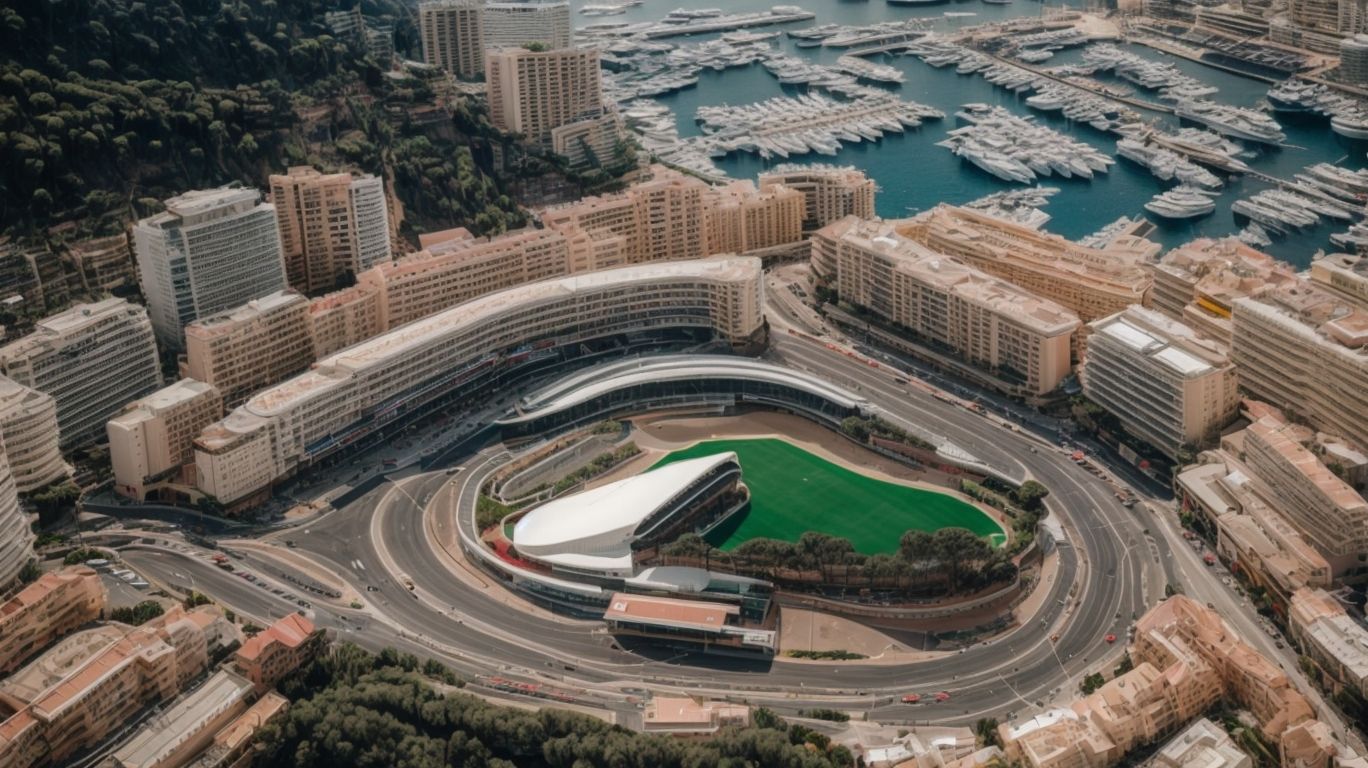
Monaco’s urban landscape provides a picturesque backdrop for the race, with the gleaming yachts in the harbor and the iconic Casino Square showcasing the glamour and elegance of the principality. Amidst the opulence, the drivers are faced with the daunting task of threading their cars through the narrow streets at breakneck speeds, inches away from the barriers that line the circuit.
Tight Corners
The Monaco F1 Track is notorious for its tight corners that demand precise control, testing the skills of drivers over numerous laps in the intense race environment.
One of the most iconic corners on the Monaco F1 track is the Grand Hotel Hairpin, a slow and tight turn that forces drivers to drastically reduce their speed, making it a challenging spot for overtaking.
The Casino Square corner, located right after the start-finish line, requires drivers to quickly change their trajectory, showcasing their ability to react swiftly.
Moving on to the Lowes Hairpin, this sharp 180-degree turn demands exceptional braking control and smooth acceleration on exit to avoid losing significant time.
Elevation Changes
Elevation changes at the Monaco F1 Track add complexity and excitement to the race, requiring drivers to adapt swiftly to the altered track dynamics and modified conditions.
The Monaco F1 Track is renowned for its challenging elevation changes that can significantly impact a driver’s performance. As drivers navigate the narrow streets of Monaco, they face steep ascents and descents, testing their skill and precision.
The changes in elevation not only affect the speed at which drivers can take corners but also impact braking distances and acceleration. Drivers must carefully manage their approach to each section of the track to maintain optimal performance.
Strategically, elevation changes at Monaco play a crucial role in race outcomes. Understanding how these variations influence tire wear, fuel consumption, and overall car handling is vital for teams to devise winning strategies.
Memorable moments at Monaco often stem from how drivers master or struggle with the elevation shifts. Dramatic overtakes, daring maneuvers, and heart-stopping near-misses are all part of the excitement that elevation changes bring to this iconic circuit.
How Long is the Monaco F1 Track?
The Monaco F1 Track spans a unique distance, challenging drivers to set lap records and adapt to its ever-evolving track conditions.
The Monaco F1 Track, known for its prestigious street circuit, measures approximately 3.337 kilometers long.
Lap records achieved on this historic track carry immense significance in Formula 1 history, showcasing the drivers’ skill and determination.
As the track undergoes changes and constantly evolves, it poses a fresh set of challenges to drivers, forcing them to recalibrate their strategies and techniques.
These alterations can significantly impact race outcomes, making Monaco a true test of skill and precision for all drivers.
What is the Width of the Monaco F1 Track?
The width of the Monaco F1 Track, including the pit lane, plays a crucial role in shaping race dynamics and presenting challenges to drivers aiming for precision and speed.
At Monaco, the narrow track width demands utmost concentration from drivers to navigate the twists and turns without veering off course. The pit lane, significantly narrower than at other circuits, adds an extra layer of complexity during pit stops, requiring impeccable teamwork and precision timing.
Track width directly impacts overtaking opportunities, as the limited space makes it difficult for drivers to execute passing maneuvers, forcing them to rely on strategic positioning and clever tactics to gain an edge. As drivers jostle for position in close quarters, the importance of maintaining control and avoiding contact is amplified, highlighting the significance of track width in determining race outcomes.
Track Width
The track width at Monaco F1 Track poses a unique challenge for drivers, affecting their ability to maneuver and overtake competitors on the narrow and demanding circuit.
Due to the narrowness of the track at Monaco, drivers have limited room to strategically position their cars, especially during high-speed sections and tight corners. This leads to intense battles for track position and makes every overtaking opportunity crucial for gaining an advantage. Car placement becomes critical as drivers need to carefully navigate through the winding streets without making contact with barriers or other cars, adding an extra layer of pressure to an already demanding race.
Pit Lane Width
The pit lane width at Monaco F1 Track is a critical area where split-second decisions and efficient maneuvers are essential for teams seeking to gain an edge during races.
The restricted nature of the Monaco circuit accentuates the importance of the pit lane width as teams strategically utilize the narrow space to execute quick pit stops and strategic maneuvers.
Teams carefully plan their pit stop strategies to take advantage of the limited opportunities available in the tight confines of the pit lane, often opting for fast pit stops over those involving substantial setup changes.
Any modifications in the pit lane width can significantly affect the timing and success of pit stops, impacting overall race outcomes and positions on the track.
What are the Challenges of Racing on the Monaco F1 Track?
Racing on the Monaco F1 Track presents a myriad of challenges, including limited overtaking opportunities, navigating narrow sections, and the constant risk of crashes in high-pressure situations.
Drivers at Monaco face the intricate task of finding opportunities to overtake, given the tight twists and turns of the circuit. Due to the narrow sections and lack of long straights, it becomes extremely challenging to pass rivals during the race. The risk of collisions is heightened as drivers push their limits in close proximity to walls and barriers, leaving no room for error. Strategies such as strategic pit stops, tire management, and precise timing of maneuvers are crucial to avoid incidents that could potentially ruin their race.”
Limited Overtaking Opportunities
The Monaco F1 Track’s layout restricts overtaking opportunities, forcing drivers to rely on strategic maneuvers and flawless execution to gain positions during races.
Due to the narrow, winding nature of the circuit, it becomes incredibly challenging for drivers to find moments where they can successfully pass their competitors. This leads to a high-pressure environment where each overtaking move requires calculated precision and split-second decision-making.
Strategic planning becomes paramount as drivers must anticipate the limited opportunities and position themselves strategically to capitalize on any slightest openings that may arise.
Whether it’s timing a dive into a hairpin turn or setting up a daring move at the iconic Monaco tunnel, every overtaking attempt at this circuit demands a blend of courage, skill, and sheer instinct.
Narrow Track Width
The narrow track width at Monaco F1 Track demands precision from drivers, as the limited space requires exceptional control and focus to navigate corners and straights effectively.
One of the biggest challenges faced by drivers in Monaco is the lack of margin for error; a slight miscalculation can result in a collision with the barriers, ending their race prematurely. To cope with this, drivers often adopt a conservative approach during practice sessions, gradually increasing their pace as they gain confidence in the confined layout.
Risk of Crashes
The Monaco F1 Track exposes drivers to a heightened risk of crashes due to the unforgiving nature of the circuit’s barriers and the minimal margin for error in intense racing conditions.
Racing at Monaco is renowned for its narrow streets lined with tight barriers, leaving no room for error as drivers navigate the challenging twists and turns. This unique urban circuit, set against the backdrop of Monaco’s glamorous surroundings, adds an extra layer of complexity to the race. The slightest miscalculation can result in a collision with the unforgiving barriers, leading to spectacular crashes that remain etched in Formula 1 history.
How Does the Width of the Monaco F1 Track Compare to Other F1 Tracks?
Comparing the width of the Monaco F1 Track to other iconic circuits like Circuit Gilles Villeneuve, Silverstone Circuit, and Yas Marina Circuit provides insights into the diverse challenges faced by drivers on varying tracks.
Monaco, known for its narrow track width that demands precision and skill, contrasts sharply with the broader expanses of tracks like Silverstone, which allow for higher speeds and more overtaking opportunities. The implications of track width on racing dynamics are profound; narrower tracks often favor cars with better handling and slower speeds, while wider tracks enable drivers to use more aggressive tactics and wide racing lines.
For driver strategies, the track width determines the feasibility of certain maneuvers and affects the risk-reward balance. At Monaco, where overtaking is limited, drivers must capitalize on every opportunity due to the slim track margins, whereas at wider tracks like Silverstone, they can afford to take more calculated risks.
Circuit de Monaco vs. Circuit Gilles Villeneuve
Contrasting the track width at Circuit de Monaco and Circuit Gilles Villeneuve offers a fascinating study of how driver skills and strategies are tested differently on each circuit due to unique width characteristics.
At the narrow and winding Circuit de Monaco, the track’s tight confines demand precision driving and a cautious approach. The limited width leaves little margin for error, challenging drivers to navigate the twists and turns with utmost accuracy. In contrast, the wider expanses of Circuit Gilles Villeneuve provide more opportunities for overtaking and strategic maneuvers. Drivers can push the limits more aggressively and exploit the additional space to outmaneuver their opponents.
Circuit de Monaco vs. Silverstone Circuit
Comparing the track width between Circuit de Monaco and Silverstone Circuit reveals contrasting challenges faced by drivers on the narrow, technical Monaco track and the high-speed, wide expanses of Silverstone.
At Monaco, the track width typically ranges between 10 to 12 meters, demanding precision and focus as drivers navigate the tight corners and unforgiving barriers. This narrowness requires drivers to have exceptional control over their cars and sharp reflexes to avoid collisions.
On the other hand, Silverstone boasts wider track widths, often exceeding 15 meters, allowing for higher speeds and more overtaking opportunities. These wide expanses provide drivers with the chance to stretch their engines and make daring maneuvers without the constant fear of brushing against the track limits.
Circuit de Monaco vs. Yas Marina Circuit
Contrasting the track width at Circuit de Monaco with the Yas Marina Circuit showcases how varying track widths shape driver strategies and emphasize different aspects of racing skills on each unique circuit.
In motorsport, track width plays a crucial role in determining the dynamics of a race. Monaco’s narrow track, with its limited passing opportunities challenges drivers to be precise in every maneuver, making overtaking a daring feat requiring skillful execution.
On the other hand, the wider track at Yas Marina Circuit offers more chances for overtaking, encouraging bold strategies that involve setting up for turns and maximizing speed in longer straights to gain positions.
The distinct track widths also influence tire degradation rates and fuel consumption, with Monaco’s tight turns demanding careful tire management and precise throttle control, while the wider layout at Yas Marina allows for more aggressive driving without compromising traction.
Drivers must adapt their driving techniques and consider how track width affects their racing line, braking points, and overall race pace to optimize performance and race strategy based on the specific challenges posed by each circuit.
Frequently Asked Questions
How Wide is Monaco F1 Track?
The Monaco F1 track is known for its narrow and winding roads, but just how wide is it? Find out the answer to this question and more below!
What is the width of the Monaco F1 track?
The width of the Monaco F1 track varies throughout the course, with the narrowest point measuring at just 10 feet wide and the widest point being 39 feet wide.
How does the width of Monaco F1 track compare to other F1 tracks?
The Monaco F1 track is known for being the narrowest track on the Formula One circuit, with many other tracks being at least 50 feet wide.
Why is the Monaco F1 track so narrow?
The Monaco F1 track is narrow due to its location in the streets of Monte Carlo, making it a challenging and unique track for drivers to navigate.
Are there any specific challenges for drivers due to the width of the Monaco F1 track?
Yes, the narrow width of the track makes it difficult for drivers to overtake each other, leading to a strategic and exciting race for spectators.
Has the width of the Monaco F1 track always been the same?
No, the width of the track has been changed over the years to accommodate the growing size of F1 cars and to improve safety for drivers.