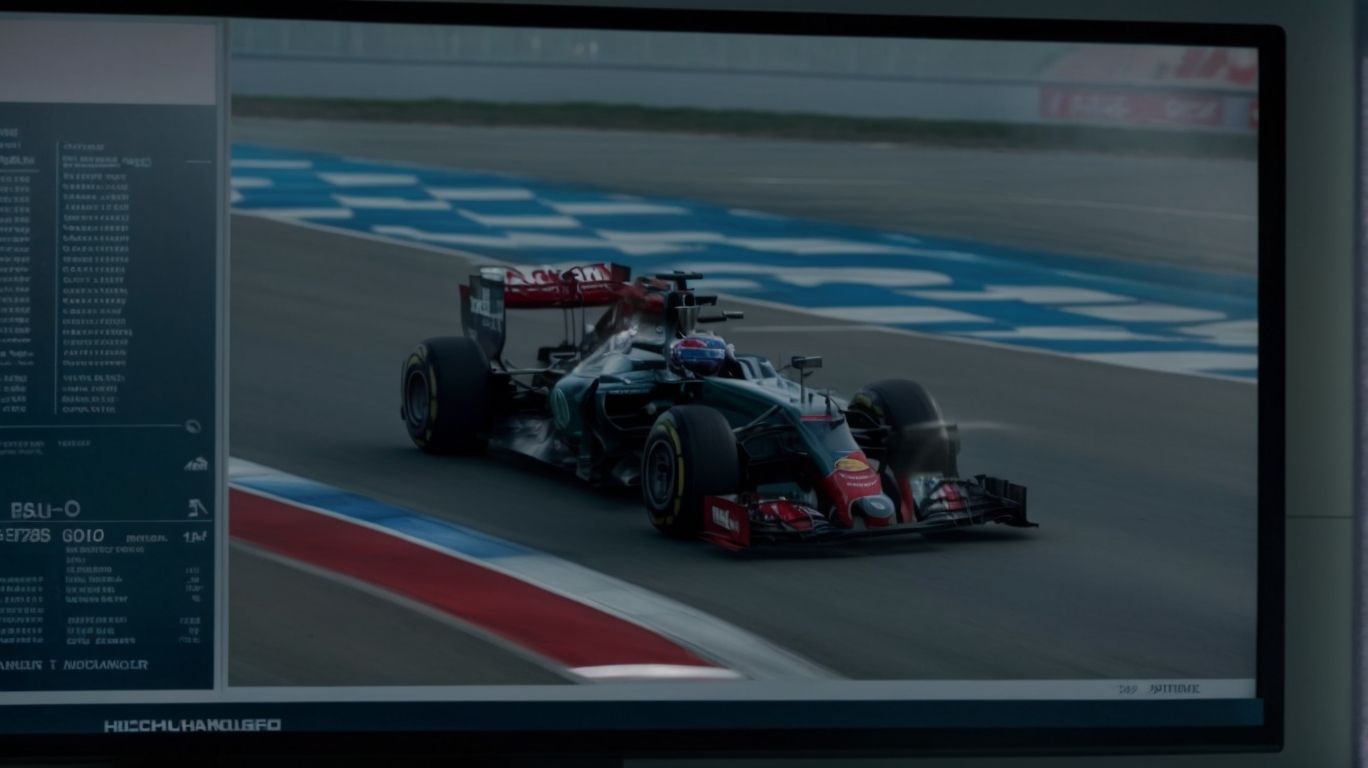
Why Can’t F1 Cars Go Slow?
Have you ever wondered why Formula 1 cars are so fast? The answer lies in a combination of factors, from aerodynamics to lightweight materials and high-powered engines.
But what happens when F1 cars go slow? We explore the reasons why F1 cars can’t go slow, including design and engineering, track conditions, and driver skill and strategy.
Buckle up and get ready to dive into the world of Formula 1 racing!
Key Takeaways:
What Is Formula 1 Racing?
Formula 1 Racing, governed by the FIA, involves high-speed racing of cars on specialized tracks, where safety is a top priority.
The FIA, also known as the Fédération Internationale de l’Automobile, sets the regulations and oversees all aspects of Formula 1 to ensure fair competition and safety for drivers and spectators.
The excitement of Formula 1 races lies in the intricate technical design of the cars, capable of reaching mind-boggling speeds approaching 230 mph on straightaways. These specially crafted tracks feature challenging turns, elevation changes, and varied surfaces to test the skills of even the most seasoned drivers.
Despite the thrill of speed, safety remains paramount, with strict safety protocols, advanced safety features in the cars, and dedicated medical teams ready to respond to any incidents.
What Makes F1 Cars So Fast?
The incredible speed of F1 cars is attributed to a combination of advanced aerodynamics, lightweight materials, and high-powered engines.
Regarding aerodynamics, F1 cars are meticulously designed to minimize drag and maximize downforce, allowing them to slice through the air with precision. The design decisions made by renowned engineers like Tombazis play a crucial role in achieving optimal aerodynamic performance. The lightweight materials used in the construction of these cars contribute to their agility and speed on the track.
The engines in F1 cars are powerhouses, producing immense amounts of horsepower to propel the cars forward at breakneck speeds. The combination of all these factors results in the blistering pace that defines Formula 1 racing, making it a thrilling spectacle for motorsport enthusiasts worldwide.
Aerodynamics
Aerodynamics play a crucial role in F1 car speed, with designs optimized for maximum downforce and minimal drag.
Downforce is the force pushing the car down onto the track, increasing grip and stability through corners. This is achieved through features like front and rear wings, diffusers, and bargeboards which manipulate the airflow around the car.
On the other hand, drag is the aerodynamic resistance that limits speed. To reduce drag, F1 teams use sleek bodywork, smooth contours, and clever airflow management to minimize the air resistance the car faces.
The Federation Internationale de l’Automobile (FIA) regulates the aerodynamic design of F1 cars to ensure safety, fair competition, and to control speeds. These regulations cover aspects like the size and positioning of aerodynamic components to prevent excessive speed increase and promote driver safety.
Lightweight Materials
F1 cars leverage cutting-edge lightweight materials to reduce weight and enhance speed without compromising safety.
One of the key lightweight materials extensively used in F1 car construction is carbon fiber. This material offers an exceptional strength-to-weight ratio, crucial for maintaining structural integrity while keeping the overall weight minimal. By incorporating carbon fiber into the chassis, modifications can be made to improve aerodynamics by enhancing airflow and reducing drag.
The use of lightweight materials allows for better weight distribution, enhancing the car’s performance around tight corners. This weight reduction not only aids in improving acceleration but also increases braking efficiency, reducing the risk of accidents due to delayed response time.
High-Powered Engines
F1 cars are equipped with high-powered engines that deliver exceptional speed and performance on the race track.
These engines are finely-tuned marvels of engineering, meticulously designed to provide the optimal balance between power and reliability. With advanced technologies like turbocharging and hybrid systems, F1 engines can generate upwards of 1000 horsepower, propelling the cars to mind-boggling speeds in a matter of seconds.
Engine specifications play a crucial role in determining a team’s performance on the track, influencing factors such as acceleration, top speed, and fuel efficiency. Teams constantly strive to push the boundaries of engine development, seeking innovative solutions to gain a competitive edge over their rivals.
What Are the Rules and Regulations for F1 Cars?
The FIA sets strict rules and regulations for F1 cars to ensure fair competition and driver safety across various racing circuits.
These regulations cover a wide array of technical aspects, ranging from aerodynamics to engine specifications, aimed at maintaining a balance between competitiveness and safety on the track.
For example, regulations concerning the implementation of chicanes at certain points on circuits like Spa are crucial in enhancing both the spectacle of the sport and ensuring driver safety by slowing down cars in high-speed sections.
By upholding a stringent safety record, the FIA plays a pivotal role in elevating the standards of safety in motorsport, which is imperative given the inherent risks associated with high-speed racing.
Minimum Weight Requirements
F1 cars must meet specific minimum weight requirements as per FIA regulations to maintain fairness and performance standards.
These weight regulations play a crucial role in balancing the competition on the track. The minimum weight limit set by the FIA has a direct impact on the design and engineering of Formula One cars. Teams often find themselves straddling the fine line between achieving the lightest possible car for speed and ensuring it meets the mandated weight threshold for safety and compliance.
One iconic corner where weight considerations are paramount is the revered Eau Rouge at Spa-Francorchamps. Here, the physics of car weight and aerodynamics combine in a thrilling dance of speed and control. Each kilogram shaved off the car can have significant performance implications, affecting acceleration, braking, and handling through the fast and sweeping corners of the circuit.
Engine Restrictions
The FIA enforces strict engine restrictions on F1 cars to control power output and maintain competitive balance.
These restrictions govern various aspects of the engine design, such as the number of cylinders, fuel flow rate, and energy recovery systems. The FIA aims to prevent teams from gaining an unfair advantage through engine performance, ensuring that races are won through a combination of driver skill, car aerodynamics, and strategic decision-making.
By limiting engine power, the FIA creates a level playing field, encouraging teams to focus on other areas of performance improvement. This leads to innovations in aerodynamics, tire management, and pit stop strategies becoming critical factors in achieving success on the track.
Tire Regulations
F1 cars operate under stringent tire regulations mandated by the FIA to ensure safety, performance, and fair competition.
These regulations cover aspects such as tire specifications, including the type of compounds allowed, tire dimensions, and limitations on the number of sets that can be used during a race weekend.
Tires in Formula 1 play a crucial role in determining a car’s performance on the track, affecting everything from grip levels to wear rates. Teams meticulously analyze tire performance data to optimize their strategies during races, deciding when to make a crucial pit stop for fresh rubber.
Why Can’t F1 Cars Go Slow?
F1 cars are designed for high speeds due to a combination of engineering excellence, track demands, and safety considerations.
Porpoising, a phenomenon where the car’s nose and tail bounce alternately, is a critical factor.
At slower speeds, the aerodynamics aren’t optimized, causing a loss of downforce. Engineers strike a delicate balance between designing for stability and speed.
Modern F1 tracks are tailored for high-speed performance, featuring long straights and challenging corners that demand precision and agility.
To ensure driver safety, cars must meet stringent regulations, hence the relentless pursuit of speed without compromise on safety.
Design and Engineering
The design and engineering of F1 cars prioritize speed, agility, and performance to excel in competitive racing environments.
One of the key aspects that contribute to the remarkable speed and agility of F1 cars is their aerodynamic design. These vehicles are crafted with precision to minimize air resistance and maximize downforce, ensuring optimal performance on the track. Innovations such as the introduction of hybrid power units have revolutionized the sport, enhancing both speed and energy efficiency while complying with stricter environmental regulations. Advancements in materials technology have led to lighter yet stronger chassis, improving both performance and safety record.
Track Conditions
F1 cars rely on optimal track conditions for high-speed racing, with variables like temperature, surface grip, and elevation affecting performance.
In Formula 1 racing, the track conditions play a crucial role in shaping the outcome of races. One of the essential factors is surface grip, which directly impacts how the tires interact with the road. A track with low grip levels can cause the cars to slide, affecting their ability to accelerate and corner efficiently. The temperature of the track surface can alter tire performance, influencing the amount of grip the rubber provides. Proper clearance between the car’s underbody and the track surface is also vital, as any bouncing or scraping can disrupt aerodynamics.
Driver Skill and Strategy
The exceptional skill and strategic acumen of F1 drivers are essential for navigating challenging tracks and overtaking opponents at high speeds.
Regarding Formula 1 racing, every maneuver a driver makes is a delicate dance between precision and risk. Whether it’s finding the perfect racing line, mastering braking points, or anticipating the opponent’s moves, a driver’s skill is truly put to the test on the racetrack. These drivers possess an innate ability to adapt to ever-changing track conditions, making split-second decisions that can determine their success or failure on that particular lap.
The strategic acumen of F1 drivers goes beyond mere actions behind the wheel. It involves making calculated decisions on when to push the limits, when to conserve tires, and when to pit for fresh rubber. The element of strategy adds an extra layer of complexity to the already intense racing spectacle, showcasing that these drivers are not just racers but tacticians in their own right.
What Happens When F1 Cars Go Slow?
When F1 cars slow down, issues like overheating, reduced downforce, and increased tire wear can affect performance and safety.
Reduced speeds in F1 racing not only impact the mechanical aspects of the car but also influence the driving dynamics significantly. With slower speeds, the cars struggle to generate adequate downforce, making them less stable and harder to handle, especially around high-speed corners on racing circuits. As a result, drivers find passing maneuvers more challenging as they rely heavily on aerodynamic grip, which diminishes at reduced speeds.
To counter these consequences, teams may need to rethink their strategies and setup choices. Potential solutions could involve optimizing cooling systems to prevent overheating, adjusting car setups to compensate for decreased downforce, and managing tire wear more efficiently to maintain grip levels throughout the race. By addressing these issues effectively, teams can mitigate the risks associated with reduced speeds and ensure both performance and driver safety are safeguarded.”
Overheating
Overheating in F1 cars can lead to engine performance issues, component failures, and compromised race outcomes, necessitating prompt intervention.
When an F1 car overheats, it disrupts the delicate balance of performance and reliability that these high-speed machines require. The engine, which is the heart of the car’s power, is particularly vulnerable to excessively high temperatures, leading to decreased horsepower and potential malfunctions.
Heat management is crucial in the fast-paced world of Formula 1 racing, where split-second decisions can determine victory or defeat. Teams employ innovative cooling systems and aerodynamic designs to combat overheating, ensuring that the cars perform at peak levels throughout the race.”
Loss of Downforce
A loss of downforce in F1 cars hampers cornering grip, stability, and overall performance, challenging drivers and teams to adapt during races.
When an F1 car experiences a drop in downforce, it means less pressure pushing the car onto the track, which can lead to reduced grip levels as the tires struggle for traction. This lack of downforce affects the car’s ability to maintain speed through corners, forcing drivers to adjust their racing line and apex points to compensate for the decreased stability.
The reduced downforce can impact aerodynamic efficiency, affecting the car’s ability to slice through the air with precision. This not only results in lower cornering speeds but also affects the overall handling balance of the vehicle, making it more challenging for drivers to find that sweet spot during high-speed maneuvers. The strategic timing of pit stops becomes crucial in such situations, as teams must decide the best moment to make adjustments and maintain optimal performance while ensuring driver safety amidst these demanding conditions.
Tire Wear
Excessive tire wear in F1 cars compromises grip, traction, and overall handling, requiring strategic adjustments and pit stops to maintain performance.
The effects of tire wear in Formula 1 racing extend beyond just the visible degradation on the rubber. As the tires wear down, drivers must carefully navigate the racing circuits as they approach challenging corners such as the iconic chicane. This impacts their performance by influencing their lap times and cornering speeds. The strategy during a race also shifts, as teams need to make quick decisions on when to bring the driver in for a pit stop to swap out worn tires for fresh, high-performance alternatives.
How Do F1 Cars Slow Down?
F1 cars employ braking systems, engine mapping adjustments, and aerodynamic features to decelerate safely and efficiently on the race track.
Regarding reducing speed, the braking systems in F1 cars play a pivotal role. These cars are equipped with state-of-the-art carbon-ceramic disc brakes that can withstand immense heat and pressure during deceleration, providing precise and powerful braking performance.
Engine mapping strategies are utilized to adjust the power delivery and throttle response, allowing drivers to modulate their speed with precision, especially on challenging tracks like Spa or at notorious corners like Eau Rouge.
The aerodynamic configurations of F1 cars also contribute significantly to slowing down the vehicles. Advanced aerodynamic elements such as wings, diffusers, and air ducts create drag and downforce, enhancing stability and grip while cornering and braking.
Brakes
Braking systems in F1 cars are precision-engineered components crucial for controlled speed reduction and cornering stability on the track.
These cutting-edge braking systems not only allow drivers to slow down rapidly before entering a turn but also play a pivotal role in the overall performance of the car. The technological advancements in brake systems in Formula 1 have evolved tremendously over the years, with a strong focus on achieving optimal stopping power while maintaining durability and weight considerations.
When a driver is approaching a corner at high speed, the ability to brake efficiently can mean the difference between overtaking or losing a position. During a pit stop, a well-coordinated braking system ensures the car can come to a quick and safe stop, allowing the team to change tires and refuel swiftly.
Engine Mapping
Engine mapping adjustments allow F1 teams to optimize power delivery, fuel efficiency, and traction control for varying race conditions and performance requirements.
Engine mapping in Formula 1 plays a crucial role in determining how a car performs on the track, influencing the car’s throttle response, torque delivery, and overall drivability.
The process of tuning engine maps involves fine-tuning electronic settings to suit specific track conditions, weather factors, and even the driver’s style and preference.
Strategically, teams must balance power output with fuel consumption, making real-time adjustments during races to maximize performance without compromising efficiency.
Effective engine mapping not only enhances a car’s speed but also the balance between power and traction, crucial for maintaining competitive edge and allowing for those thrilling lead changes that keep F1 fans on the edge of their seats.
Aerodynamic Features
Aerodynamic features on F1 cars, such as adjustable wings and air ducts, facilitate speed control, stability, and drag reduction during races.
These aerodynamic enhancements play a crucial role in determining the F1 car’s performance capabilities on the racing circuit. The evolution of aerodynamics in Formula 1 has led to significant improvements in handling characteristics, allowing drivers to navigate corners at higher speeds with enhanced stability. By optimizing airflow around the car, the changes made to the aerodynamic profile not only boost straight-line speed but also augment overall cornering abilities.
Frequently Asked Questions
Why Can’t F1 Cars Go Slow?
F1 cars are designed for high speeds and optimal performance, making it difficult for them to go slow.
What factors determine the minimum speed for F1 cars?
The aerodynamic design, engine power, and tire grip of F1 cars all contribute to their minimum speed requirements.
Can F1 cars be modified to go slower?
F1 cars are built for speed, so it is not feasible to modify them to go significantly slower without compromising their performance.
Do F1 cars have a reverse gear for slower speeds?
No, F1 cars do not have a reverse gear. They are designed to only go in one direction, which is forward at high speeds.
Why are F1 cars not allowed to go below a certain speed during races?
F1 races are highly competitive and require drivers to maintain a certain level of speed for safety and fairness on the track.
Are there any exceptions for F1 cars to go slow?
F1 cars may go slower during caution periods or in the pit lane, but they are still expected to maintain a relatively high speed compared to other vehicles.