How Do Nascar Change Tires So Fast?
Ever wondered how Nascar teams manage to change tires in a matter of seconds during a race?
Discover the tools and training methods that contribute to their lightning-fast efficiency.
We explore the tools used for changing tires in Nascar, how teams practice for tire changes, the process involved in changing tires during a race, tips for fast and efficient tire changes, and how teams overcome challenges during this crucial aspect of the race.
Key Takeaways:
What Are the Tools Used for Changing Tires in Nascar?
In NASCAR, the tools used for changing tires play a crucial role in ensuring fast and efficient pit stops.
Among these tools, impact guns are instrumental in swiftly removing and securing lug nuts, while hydraulic jacks efficiently lift the car for tire changes. The pit crew’s skillful operation of these tools can make the difference between gaining or losing valuable seconds on the track. Utilizing technology to monitor tire wear and performance further enhances the team’s ability to strategize effectively during races, maintaining a competitive edge. With tire changers working in sync with these tools, seamless transitions can be achieved, allowing drivers to get back on track swiftly and safely.
Impact Wrenches
Impact wrenches are critical tools for NASCAR pit crews, used by tire changers to swiftly remove and secure lug nuts during pit stops.
These powerful tools are designed to deliver high torque output within seconds, streamlining the tire changing process and reducing pit stop times significantly.
- Speed is a critical factor in NASCAR races, where seconds can make all the difference between winning and losing.
- Thanks to their ability to quickly and precisely fasten lug nuts, impact wrenches enable tire changers to efficiently swap out tires, keeping the race car on track without wasting valuable time.
Technology advancements have further improved these tools, enhancing their performance and durability to meet the rigorous demands of professional racing.
Jacks
Hydraulic jacks are essential equipment for NASCAR pit crews, enabling quick and stable elevation of the car for tire changes during races.
These jacks play a crucial role in the lightning-fast pace of a NASCAR pit stop, where every second counts. The stability provided by hydraulic jacks is especially vital in high-pressure race scenarios, ensuring the safety of the pit crew and efficiency in the tire change process. Proper usage and regular maintenance of these jacks are paramount to guarantee seamless operation during the intense and adrenaline-filled moments on the track.
Air Hoses
Air hoses are vital components in a NASCAR pit crew’s arsenal, providing the necessary pneumatic power for tool operation and tire change efficiency.
In the high-stakes environment of a NASCAR race, every second counts, and the role of air hoses in that realm cannot be overstated. These hoses deliver the pressurized air needed to operate impact wrenches swiftly and efficiently, ensuring that each lug nut is securely fastened in a matter of seconds. The seamless coordination between the tire changers and the support crew handling the air hoses is essential for maintaining a seamless pit stop performance. Teams rely on the consistency and durability of these hoses to deliver quick and reliable air supply without any interruptions.”
Lug Nuts
Lug nuts are critical components in NASCAR tire changes, requiring precision handling by pit crew members to ensure secure wheel attachment.
Proper installation and removal of lug nuts play a crucial role in avoiding mishaps during high-speed pit stops. Cross-threading, where the threads of the lug nut and wheel stud aren’t aligned correctly, can lead to dangerous wheel detachment. Pit crews meticulously tighten lug nuts using high-performance tools, ensuring they are secure but not over-torqued. This balance is essential to maintain the integrity of the wheel and prevent issues like warping or damage.
How Do Nascar Teams Practice for Tire Changes?
NASCAR teams hone their tire changing skills through rigorous pit stop practice sessions overseen by experienced NASCAR coaches.
These practice sessions are meticulously structured to simulate race day conditions, ensuring that the pit crew is well-prepared for the intense pressure of a live pit stop. Coaching plays a pivotal role in providing real-time feedback to crew members, helping them to refine their techniques and shave off precious seconds during tire changes.
Teamwork is another critical aspect, with every member of the pit crew being synchronized like a well-oiled machine to execute lightning-fast pit stops. Advanced technology is also employed to analyze performance metrics and identify areas for improvement, allowing teams to continuously enhance their efficiency and reduce pit stop times.
Pit Stop Practice Sessions
Pit stop practice sessions are integral to a NASCAR team’s preparation, allowing pit crews to refine their tire changing techniques under simulated race conditions.
During these practice sessions, the pit crew members work together in a synchronized manner, each with specific roles and responsibilities to execute a seamless tire change. Through structured drills and repetitive practice, they hone their coordination, speed, and accuracy, crucial for gaining valuable seconds during a pit stop. Feedback mechanisms such as video analysis and real-time critiques from team managers help identify areas for improvement and ensure continuous enhancement of performance.
Simulation Training
Simulation training provides NASCAR pit crews with realistic scenarios to practice tire changes, helping them adapt to varying race conditions and challenges.
One of the key benefits of simulation training is its ability to replicate the intense pressure of a live pit stop. Pit crews are able to experience the adrenaline rush and time constraints that come with changing tires during a race.
- This type of training allows crews to fine-tune their communication and coordination skills, ensuring that each member knows their role and can react quickly to unexpected situations.
- Teamwork plays a crucial role in these simulations, as crew members must work seamlessly together to execute a successful tire change under pressure.
Plus improving speed and efficiency, simulation training also helps crews anticipate and react to various obstacles that may arise on race day. Whether it’s a stuck lug nut or a misaligned wheel, pit crews learn to troubleshoot and adapt swiftly to keep their driver in contention.
Video Analysis
Video analysis is a valuable tool used by NASCAR teams to review and improve pit crew performance during tire changes, identifying areas for refinement and enhancement.
By utilizing high-definition cameras positioned strategically around the pit area, teams can capture each tire change from multiple angles, allowing them to dissect the sequence of movements and execution of each crew member.
This in-depth analysis provides valuable insights into the efficiency and effectiveness of the crew’s performance, highlighting any inefficiencies or errors that may occur during the high-pressure moments of a race.
What Is the Process for Changing Tires in Nascar?
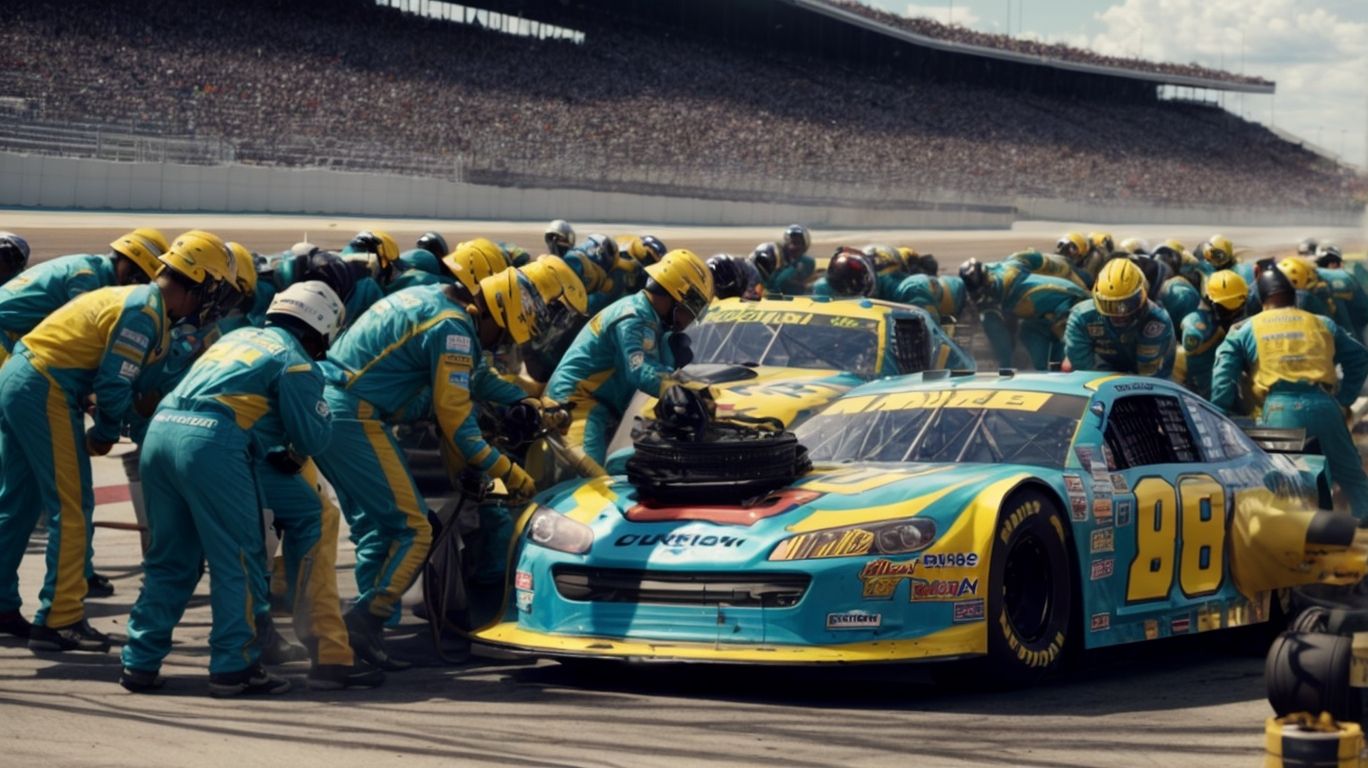
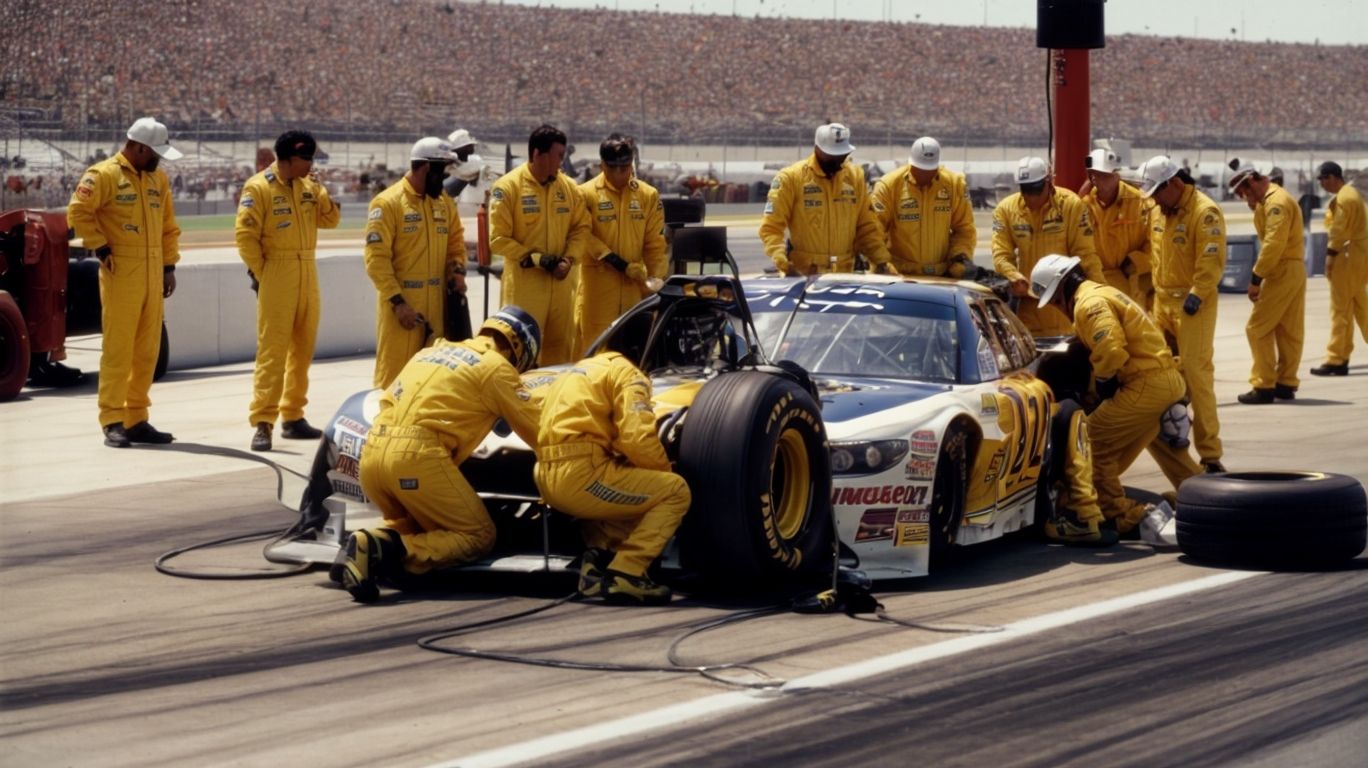
The tire changing process in NASCAR involves a coordinated sequence of actions by the pit crew, including tire removal, replacement, and refueling for a swift pit stop.
During a pit stop, the crew members swiftly remove the old tires using powered impact wrenches, racing against the clock in a synchronized effort. Once the worn tires are off, new ones are swiftly fitted onto the wheel hubs, ensuring that the lug nuts are securely fastened. This step is crucial, as any loose lug nut can lead to dangerous consequences on the track. Simultaneously, another crew member engages in the precise task of refueling, ensuring that the car is topped up with fuel for the next racing stint.
Car Enters Pit Road
When a NASCAR car enters pit road, the pit crew springs into action, preparing for a seamless tire change and refueling operation to minimize race time loss.
The crew members, each with their assigned tasks, hustle around the pit box with practiced precision. One mechanic swiftly removes the lug nuts while another stands at the ready with the fresh set of tires.
The crew chief closely monitors the operation, coordinating the team’s movements like a well-oiled machine. Communication is key as they work in synchronized harmony, aiming to complete the pit stop in a matter of seconds.
Car Stops at Pit Box
As the NASCAR car stops at the pit box, the pit crew swiftly initiates tire changes and refueling, aiming for a seamless operation to maintain the team’s competitive position.
Each crew member plays a distinct role in the orchestrated chaos, with tire changers swiftly removing the worn tires, mechanics checking the car’s vital signs, and fuelers engaging in a synchronized routine to top up the tank with utmost precision.
The air is tense as every split second counts, and the crew’s communication is vital for cohesion and efficiency. Tools are passed with precision, lug nuts securely fastened, and fuel hoses connected swiftly to optimize the pit stop duration.
Tires Are Removed and Replaced
During a NASCAR pit stop, the pit crew efficiently removes worn tires and replaces them with fresh ones, ensuring optimal performance and grip for the upcoming race segment.
The process of tire removal and replacement in a NASCAR pit stop is a well-oiled machine that requires a flawless execution. As the car pulls into the pit, the crew swiftly jacks up the vehicle, unbolts the lug nuts, and removes the old tires with remarkable precision. Each second counts, and the pressure is on for the crew to complete the swap quickly without compromising quality.
Once the old tires are off, the crew then secures the new tires onto the wheel hubs, making sure to align them perfectly. The lug nuts are fastened back on with lightning speed, ensuring the tires are securely in place.
Tire weight plays a crucial role in enhancing performance, with the crew carefully selecting tires that are not only durable but also lightweight to improve the car’s handling. Lug nut torque is critical to prevent any issues during the race, requiring the crew to tighten them to specific specifications.
To further enhance tire performance, tire glue is applied to create a bond between the tire and the wheel, improving traction and stability on the track. This meticulous attention to detail and efficient teamwork are essential for a successful pit stop, allowing the driver to get back on the track quickly with confidence in their tires.
Car Exits Pit Road
As the NASCAR car exits pit road after a successful tire change and refueling, the pit crew’s efforts contribute to maintaining the team’s competitive edge towards the finish line.
The final phase of the tire-changing process in NASCAR is crucial for the overall race performance. In this fast-paced environment, every second counts, and it is the seamless coordination between the pit crew members that ensures a quick and efficient pit stop. Each crew member has a specific role, from the tire changers to the gasmen, all working in unison to get the car back on the track swiftly. The precision of their movements and the synchronization of their actions are what set apart a standard pit stop from a record-breaking one.
What Are Some Tips for Fast and Efficient Tire Changes in Nascar?
Achieving fast and efficient tire changes in NASCAR requires impeccable teamwork, speed, and precision from the pit crew members to minimize time loss during pit stops.
One crucial aspect of enhancing pit crew performance is the seamless coordination between all team members. Each member must know their role inside out, ensuring a well-oiled machine of individuals working towards a common goal. Communication plays a pivotal role in executing flawless tire changes, with clear and concise instructions being passed swiftly to avoid any confusion or delays.
Coordination and Communication
Effective coordination and communication are vital in NASCAR tire changes, ensuring seamless teamwork and synchronized actions for quick and efficient pit stops.
Clear and concise instructions play a crucial role in directing the crew members’ movements during the high-pressure seconds of a pit stop.
Smooth hand signals serve as an additional communication method in the loud and fast-paced pit environment, enhancing the crew’s ability to respond swiftly.
Assigning specific roles to each team member, from tire changers to gas men, ensures that everyone knows their responsibilities and can execute their tasks with precision.
When these elements come together harmoniously, the pit crew operates like a well-oiled machine, achieving lightning-fast tire changes that can make all the difference in NASCAR races.
Proper Equipment Maintenance
Maintaining and optimizing pit crew equipment is essential for NASCAR tire changes, ensuring that tools like impact guns and hydraulic jacks operate at peak performance levels.
Proper equipment maintenance not only helps in increasing efficiency during tire changes but also plays a crucial role in minimizing downtime, ensuring that the pit crew can swiftly execute their tasks without any hindrances. When equipment is well-maintained, it functions reliably, allowing for smooth and quick operations during high-pressure situations on race day.
Consistent and Accurate Tire Pressure
Maintaining consistent and accurate tire pressure is crucial in NASCAR tire changes, as it directly impacts the car’s handling and performance on the track.
During pit stops, NASCAR teams closely monitor and adjust tire pressure to optimize race performance and ensure safe handling. Precision and calibration play a vital role in maintaining tire pressure within optimal ranges. By fine-tuning the tire pressure based on track conditions and temperature fluctuations, teams can enhance grip, stability, and cornering capabilities.
Not only does the right tire pressure improve acceleration and braking, but it also maximizes tire lifespan, preventing premature wear and ensuring consistent performance throughout the race. Making calculated adjustments to the tire pressure on each pit stop can make a significant difference in a car’s speed, agility, and overall competitiveness on the race track.
How Do Nascar Teams Overcome Challenges During Tire Changes?
NASCAR teams navigate challenges during tire changes by practicing resilience, maintaining composure under pressure, and adapting swiftly to unexpected scenarios in the pit lane.
Teamwork plays a crucial role as crew members synchronize their movements with precision, aiming for seamless tire changes that can make or break a race. In the heat of the moment, quick decision-making becomes imperative as drivers rely on their pit crew to execute flawlessly. Each second saved during a tire change can translate into valuable positions gained on the track. Efficient equipment troubleshooting ensures that any technical hitches are swiftly addressed, preventing delays that could jeopardize the team’s performance.
Adapting to Changing Track Conditions
Adapting to dynamic track conditions is a key challenge for NASCAR pit crews during tire changes, requiring quick adjustments and strategic decisions to maintain race performance.
One of the critical factors impacting tire changes in NASCAR races is the ever-changing track conditions. Track surfaces evolve throughout the duration of a race, influenced by various elements such as temperature, grip levels, and weather. Pit crews must closely monitor these changes and adjust their tire choices, pressures, and strategies accordingly.
Effective communication plays a pivotal role in ensuring seamless adjustments based on real-time data and observations. Pit crew members must relay valuable information to the driver, helping them make informed decisions on when to pit and what type of tire adjustments are needed.
Dealing with Unexpected Incidents
Handling unexpected incidents like lug nut issues or equipment malfunctions poses a challenge for NASCAR pit crews during tire changes, requiring quick problem-solving and teamwork to mitigate disruptions.
One of the key strategies employed by pit crews to address such incidents is the implementation of meticulous contingency plans. These plans are meticulously designed to prepare the team for any possible scenario that may arise during a tire change. By having predetermined steps and protocols in place, pit crews can swiftly adapt to unforeseen challenges without sacrificing precious time on the track.
Effective communication plays a crucial role in minimizing the impact of mistakes on race outcomes. Pit crew members must maintain clear and concise communication channels with each other to ensure that everyone is on the same page. Through efficient coordination and quick decision-making, the crew can swiftly overcome obstacles and keep the race strategy on track.
Staying Focused and Calm Under Pressure
Maintaining focus and composure under pressure is crucial for NASCAR pit crews during intense tire changes, ensuring precision and teamwork in high-stakes race situations.
The mental resilience required by pit crews goes beyond just physical agility. It involves staying calm amidst roaring engines and quick movements. With tire changes being a matter of milliseconds, each crew member must exhibit unwavering focus and coordination. Strategies like controlled breathing techniques and positive self-talk help manage stress, while regular team-building exercises foster camaraderie and trust. This supportive team environment not only enhances performance efficiency but also creates a sense of unity that drives them to strive for perfection on the fast-paced track.
Frequently Asked Questions
1. How do NASCAR change tires so fast?
NASCAR pit crews train extensively and use specialized equipment to change tires in less than 15 seconds during a race. They also have a well-coordinated process and a team of skilled professionals who work together to make tire changes efficient and quick.
2. What equipment do NASCAR pit crews use to change tires quickly?
NASCAR pit crews use air guns, jacks, and impact wrenches to change tires quickly during a race. These tools are specially designed for speed and precision, allowing the pit crew to change all four tires in a matter of seconds.
3. How long does it take for a NASCAR pit crew to change all four tires?
On average, it takes a NASCAR pit crew about 12-15 seconds to change all four tires during a race. However, some pit stops can be completed in as little as 11 seconds, displaying the impressive speed and precision of the pit crew.
4. What techniques do NASCAR pit crews use to change tires quickly?
NASCAR pit crews use several techniques to change tires quickly, such as the “tire carrier” technique, where four crew members work together to carry and position the new tire onto the car. They also utilize synchronized movements and precise hand signals to communicate and coordinate during the tire change process.
5. How do NASCAR pit crews prepare for quick tire changes?
NASCAR pit crews prepare for quick tire changes by practicing extensively and studying the track conditions before the race. They also use advanced technology and data analysis to determine the optimal tire pressure and wear for maximum performance during the race.
6. How important are quick tire changes in NASCAR races?
Quick tire changes are crucial in NASCAR races as they can determine the outcome of a race. With races often being won or lost by a matter of seconds, a fast and efficient tire change can give a driver a competitive edge and ultimately lead them to victory.