Can F1 Cars Drift?
Have you ever wondered if Formula 1 cars can drift like the ones you see in movies and videos?
This article explores the fascinating world of drifting and what it takes for a car to slide effortlessly around corners. From the techniques used to the specific characteristics needed in a vehicle, we delve into whether F1 cars are capable of performing this thrilling maneuver.
Stay tuned to find out the truth behind drifting in the world of Formula 1 racing.
Key Takeaways:
What Is Drifting?
Drifting is a driving technique where the driver intentionally oversteers, causing loss of traction in the rear wheels while maintaining control of the car.
This technique requires a delicate balance of throttle control, steering input, and precise timing to execute smoothly. By purposefully breaking traction in the rear wheels, the driver is able to skillfully maneuver the car through corners at high speeds without losing control.
- Speed plays a crucial role in drifting, as drivers aim to maintain momentum while sliding sideways, creating a visually captivating spectacle.
The art of drifting originated in Japan in the 1970s, evolving from illegal street racing to a recognized motorsport discipline with specific rules and competitions.
What Makes A Car Drift?
Several factors contribute to making a car drift, including rear-wheel drive, a high power-to-weight ratio, and the use of manual transmission.
Regarding drifting, having rear-wheel drive is crucial as it allows for better control over the vehicle’s acceleration and tires during the drift. A high power-to-weight ratio ensures the engine can deliver enough power to break traction easily, essential for initiating and maintaining drifts. Manual transmission plays a significant role in drifting as it provides the driver with more control over gear shifts, allowing for precise adjustments to keep the car in the optimal power band for drifting maneuvers. Paying attention to factors like the grip level of the tires and the engine’s responsiveness is essential for achieving those perfect drifts.
Rear-Wheel Drive
Rear-wheel drive is a critical feature for enabling drifting as it allows the rear wheels to break traction easily, facilitating controlled slides and sideways motion.
One of the primary advantages of rear-wheel drive in drifting is its ability to provide more grip to the rear tires. This allows the driver to utilize the weight transfer of the vehicle effectively, initiating and maintaining slides with precision. Unlike front-wheel drive vehicles that tend to understeer, rear-wheel drive cars are known for their ability to induce and manage controlled oversteer, which is essential in drifting. The rear-wheel drive setup also allows for smoother transitions between drifting techniques, minimizing the risk of sudden skidding or loss of control.
High Power-To-Weight Ratio
A high power-to-weight ratio is crucial for drifting as it provides the necessary acceleration and wheel spin to initiate and maintain controlled drifts.
Regarding drifting, the weight of the vehicle plays a vital role in maintaining control during the maneuver. A high power-to-weight ratio ensures that the engine power can effectively overcome the inertia of the car, allowing for quick acceleration and controlled slides. A lower weight means less tire loading, which reduces the chances of wheel spin, providing more precise control over the drift.
Aerodynamics also come into play in drifting performance. The downforce generated by aerodynamic features can help increase traction, aiding in maintaining stability during high-speed drifts. By balancing power, weight, and aerodynamics, drivers can achieve the perfect combination for executing smooth and precise slides on the track.
Manual Transmission
Manual transmission is preferred for drifting due to the driver’s ability to precisely control gear changes and engine speed, essential for maintaining drift angles and control.
When engaging in the intricate manoeuvre of drifting, drivers rely on this manual control to execute swift gear shifts and smoothly adjust the engine speed to match the dynamics of the drift. This hands-on approach allows for instant responses to the vehicle’s feedback, enhancing the driver’s connection with the car and the road. In drifting, the technology of a manual transmission give the power tos drivers to fine-tune their wheel movements and maintain precise angles throughout the exhilarating slides, showcasing both skill and mastery.
What Is The Technique For Drifting?
Mastering the technique for drifting involves various methods, including the clutch kick, handbrake turn, and feint and lift maneuvers.
Each of these techniques plays a crucial role in how a driver maintains control of the vehicle while performing high-speed drifts.
- The clutch kick involves a sudden and deliberate press of the clutch pedal while maintaining some throttle, initiating a quick change in the car’s direction.
- On the other hand, a handbrake turn relies on pulling the handbrake to lock up the rear wheels, allowing for a smooth slide around corners.
- The feint and lift technique, which involves shifting weight in the car to encourage an oversteer moment, is another skillful move that seasoned drifters utilize to perform stylish and controlled drifts.
Each of these maneuvers requires a deep understanding of the vehicle’s dynamics and the ability to adapt to various driving conditions.
Clutch Kick
The clutch kick technique involves the rapid disengagement and engagement of the clutch to upset the rear traction and initiate a controlled drift.
By abruptly releasing and then engaging the clutch while keeping the throttle down, the driver accelerates and then decelerates quickly, causing the vehicle’s weight to shift and the rear wheels to lose grip momentarily. This sudden change in momentum destabilizes the balance of the car, encouraging it to slide sideways in a controlled manner.
Mastering the clutch kick method provides drivers with a significant advantage when navigating sharp corners or hairpin turns during a drift. It allows them to swiftly transition from a straight-line acceleration to a sideways slide, showcasing skillful car control and precision.
Improper execution of the clutch kick can lead to over-rotation, loss of control, or even a spin-out, resulting in potential damage to the vehicle and diminished performance on the track. It’s crucial for drifters to practice this technique diligently to harness its benefits while minimizing the consequences of mistimed or excessive clutch manipulation.
Handbrake Turn
The handbrake turn is a popular drifting technique where the driver pulls the handbrake to induce rear wheel lock-up and initiate a controlled slide.
By pulling the handbrake, the driver impairs the traction of the rear wheels, causing them to lose grip and slide sideways, leading to a sideways drift around a corner on the circuit. Not only does this create a visually appealing display of skill and precision, but it also enables drivers to navigate tight turns with finesse.
Mastering the handbrake turn requires a delicate balance of timing and technique. Fernando Alonso, a renowned racing driver, has demonstrated exceptional proficiency in executing handbrake turns, showcasing its strategic value in competitive racing.
Feint And Lift
Feint and lift is a technique that involves a sudden weight transfer to unsettle the car’s balance, followed by lifting off the throttle to induce controlled oversteer.
During this maneuver, the driver swiftly shifts the car’s weight towards the front to trick the rear end into losing grip, allowing the car to turn more responsively. By lifting off the throttle, the rear tires regain traction, aiding in steering input and making corrections. The feint and lift technique is particularly useful on tight corners where traditional braking or turning alone might not be enough to initiate the desired change in direction. It helps in preventing skidding and spin-outs by maintaining control over the car’s slide through precise throttle control.
Can F1 Cars Drift?
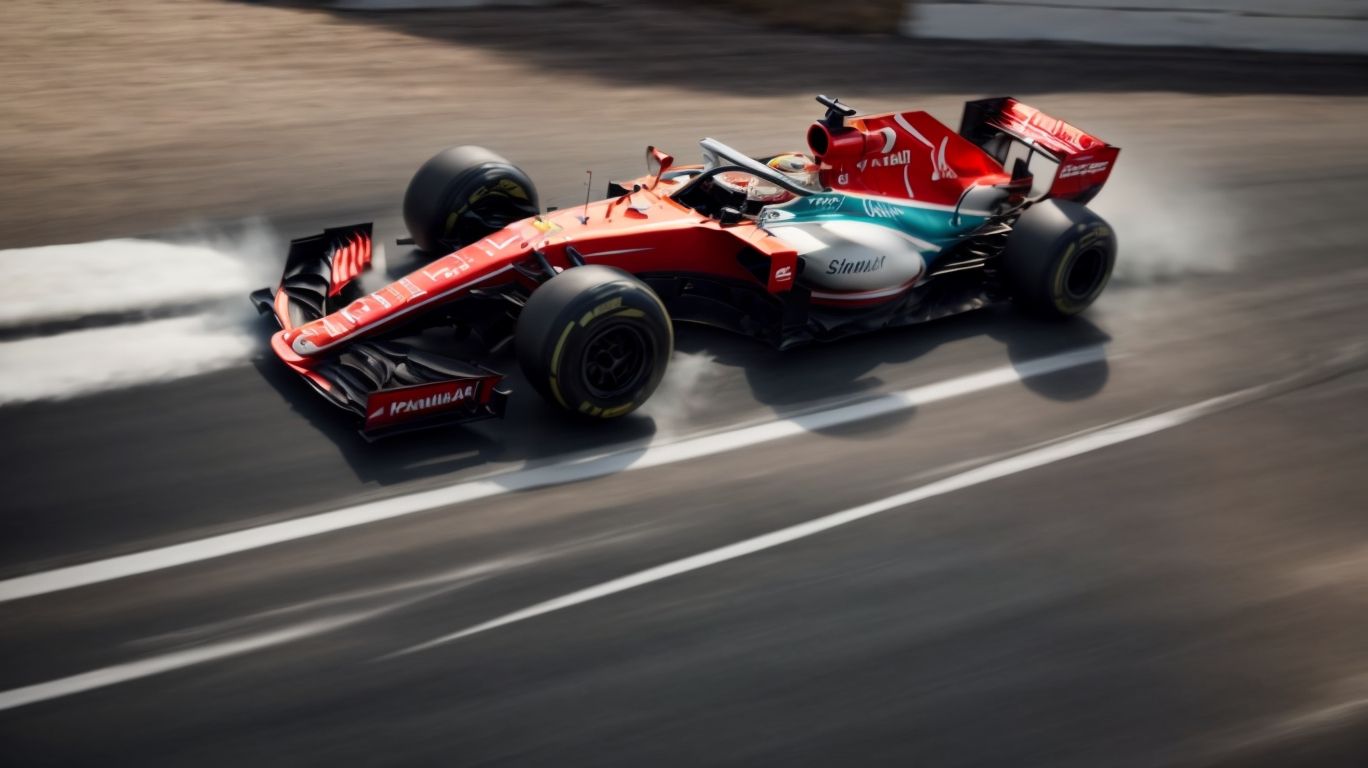
While F1 cars are not designed for drifting due to their high downforce and precision aerodynamics, skilled drivers like Max Verstappen can intentionally induce controlled slides for brief periods.
These high-performance racing machines are engineered for speed and cornering prowess, prioritizing stability and grip to maximize traction on the track.
The challenge in drifting with F1 cars lies in managing the immense downforce generated by the intricate aerodynamic components, which press the car down onto the track surface to enhance grip and cornering speeds.
When drivers like Verstappen execute controlled slides, they must delicately balance the weight transfer and throttle inputs to maintain the technology-laden machines’ stability.
F1 Cars Are Not Designed For Drifting
The design and technology of F1 cars prioritize speed, stability, and precision handling, making them unsuitable for traditional drifting maneuvers.
F1 cars are engineered to optimize aerodynamics, downforce, and grip levels to enhance cornering speeds and overall performance. The meticulous focus on achieving high speeds on corners and straights means these vehicles are built with intricate suspension systems, advanced materials, and powerful engines. While this design philosophy accentuates their performance on tracks with fast, smooth turns, it limits their ability to adhere to the high-speed sideways slides characteristic of drifting. Due to their purpose-built nature, F1 cars lack the necessary characteristics for sustained slides and handling in slippery or unpredictable conditions.
F1 Cars Have High Downforce
The high downforce generated by F1 cars enhances cornering grip and stability but hinders the ability to drift due to the increased traction and grip levels.
Downforce plays a crucial role in maximizing a Formula 1 car’s performance, especially during high-speed cornering where aerodynamic forces exert a significant impact. The combination of downforce and grip allows drivers to take corners at much higher speeds, thereby reducing lap times. During drifting, which requires intentional oversteering and loss of traction, the abundance of grip provided by high downforce can make initiating and controlling drifts more challenging.
F1 Cars Are Difficult To Control In A Slide
Managing a slide in an F1 car requires exceptional skill and precision due to the car’s inherent grip, acceleration, and sensitivity to changes in track conditions.
When a driver initiates a slide intentionally to gain an advantage on the track, the engine power, weight distribution, and tire grip all come into play. The driver must delicately balance throttle input and steering angle to maintain control while sliding through corners at high speeds.
The complexity intensifies when factoring in varying track conditions, such as rain, heat, or debris, further challenging a driver’s ability to manage drifting situations effectively. A well-timed acceleration and deceleration, coupled with finesse in steering adjustments, are crucial to minimizing time lost in these scenarios.
F1 Drivers Are Trained To Avoid Drifting
F1 drivers undergo extensive training to maintain optimal grip and traction, avoiding drifting scenarios to maximize performance and minimize time loss on the track.
These training protocols focus on enhancing the driver’s ability to anticipate the vehicle’s behavior, ensuring consistent control and stability through corners. By honing their skills in understanding how to distribute weight effectively, drivers can achieve a balance that optimizes wheel grip and minimizes the risk of sliding or spinning out. Maintaining grip and traction is crucial in competitive racing as it allows drivers to take corners at higher speeds with precision and confidence.
Drifting, where a car loses traction and slides sideways uncontrollably, can lead to severe consequences in high-speed environments, jeopardizing not only the driver’s ability to navigate the track effectively but also potentially causing accidents due to the loss of control.”
Are There Any Instances Of F1 Cars Drifting?
Some instances of F1 cars drifting have been observed in wet conditions where reduced grip and increased slipperiness allow for controlled slides during races or practice sessions.
Weather plays a crucial role in creating opportunities for drifting in Formula 1. When the rain pours down on the track, the reduced friction between the tires and the road surface challenges drivers to skillfully maneuver their cars through the corners with controlled slides. This allows them to demonstrate their mastery over speed and acceleration in challenging conditions. For example, in races like the Brazilian Grand Prix where rain is common, F1 drivers often intentionally initiate drifts to gain an advantage over their opponents. By understanding the physics of drifting, these drivers can harness the slippery conditions to their benefit, showcasing their precision and control behind the wheel.
F1 Cars Drifting In Wet Conditions
Wet track conditions challenge F1 drivers with reduced grip and stability, occasionally leading to controlled drifts as drivers navigate the slippery surface.
These wet conditions can significantly impact the performance of F1 cars during races. The reduced grip makes it challenging for drivers to maintain control and prevent skidding. The weight distribution of the car plays a crucial role in how it responds to the wet track, affecting both acceleration and braking. Drivers must adapt their driving techniques to prevent spinning out of control, requiring a delicate balance between speed and caution. Techniques like subtle throttle control and precise steering inputs are essential to managing the unpredictable nature of wet tracks.
F1 Cars Drifting During Qualifying Laps
In high-speed scenarios during qualifying laps, F1 cars may exhibit brief moments of controlled drifts as drivers push the limits of acceleration and cornering capabilities.
These controlled drifts are a result of the delicate balance between speed and agility required on the track’s intricate layouts. Drivers need to master the art of feathering the throttle to maintain traction while navigating tight corners.
The aerodynamics of F1 cars also play a crucial role in determining how well they can handle drifts at high speeds. The downforce generated by the car’s aerodynamic elements helps keep the car planted on the track, reducing the risk of spinning out during intense maneuvers.
F1 Cars Drifting During Stunt Performances
During stunt performances or non-competitive events, F1 cars may be showcased in drifting displays to highlight the precision driving skills of the drivers and the agility of the vehicles.
Drifting stunts with F1 cars require a unique set of skills from the drivers. These high-speed maneuvers demand not only expert handling of the powerful machinery but also a deep understanding of the physics involved in controlled slides. Challenges like maintaining control while inducing controlled oversteer and executing perfect transitions add an extra layer of complexity to these performances.
One prominent event where F1 cars often partake in such displays is the Goodwood Festival of Speed. This prestigious gathering of automotive enthusiasts provides a platform for showcasing the heritage and capabilities of iconic cars, including the F1 beasts.
Conclusion
While F1 cars are not designed for traditional drifting, occasional instances of controlled slides demonstrate the skill and adaptability of both the drivers and the vehicles in challenging conditions.
Technology plays a crucial role in assisting drivers in managing drifting scenarios in high-speed races. Advanced traction control systems, aerodynamic designs, and precise steering mechanisms are essential components that aid in maintaining control during drifts.
The driver’s expertise, honed through rigorous training and experience, is equally pivotal in executing complex drift maneuvers. Their ability to read and react to changing track conditions allows them to push the limits of their cars while maintaining control.
Frequently Asked Questions
Can F1 Cars Drift?
Yes, F1 cars are capable of drifting but it is not a common technique used in races.
What is drifting in the context of F1 racing?
Drifting is a driving technique where the driver intentionally oversteers the vehicle, causing the rear wheels to lose traction and the car to slide sideways.
Why is drifting not a common technique in F1 races?
F1 races are all about speed and precision, so drifting is not the most efficient way to navigate through a race track.
Are there any instances of F1 cars drifting during a race?
Yes, there have been rare instances where F1 drivers have intentionally drifted their cars during a race for tactical or showmanship purposes.
Is drifting allowed in F1 racing?
While drifting is not specifically prohibited in F1 racing, it is not a part of the standard driving techniques and can result in penalties if used excessively or recklessly.
What are the risks associated with drifting in an F1 car?
Drifting in an F1 car can be extremely dangerous as it requires the driver to lose control of the vehicle and increases the chances of accidents and collisions.