
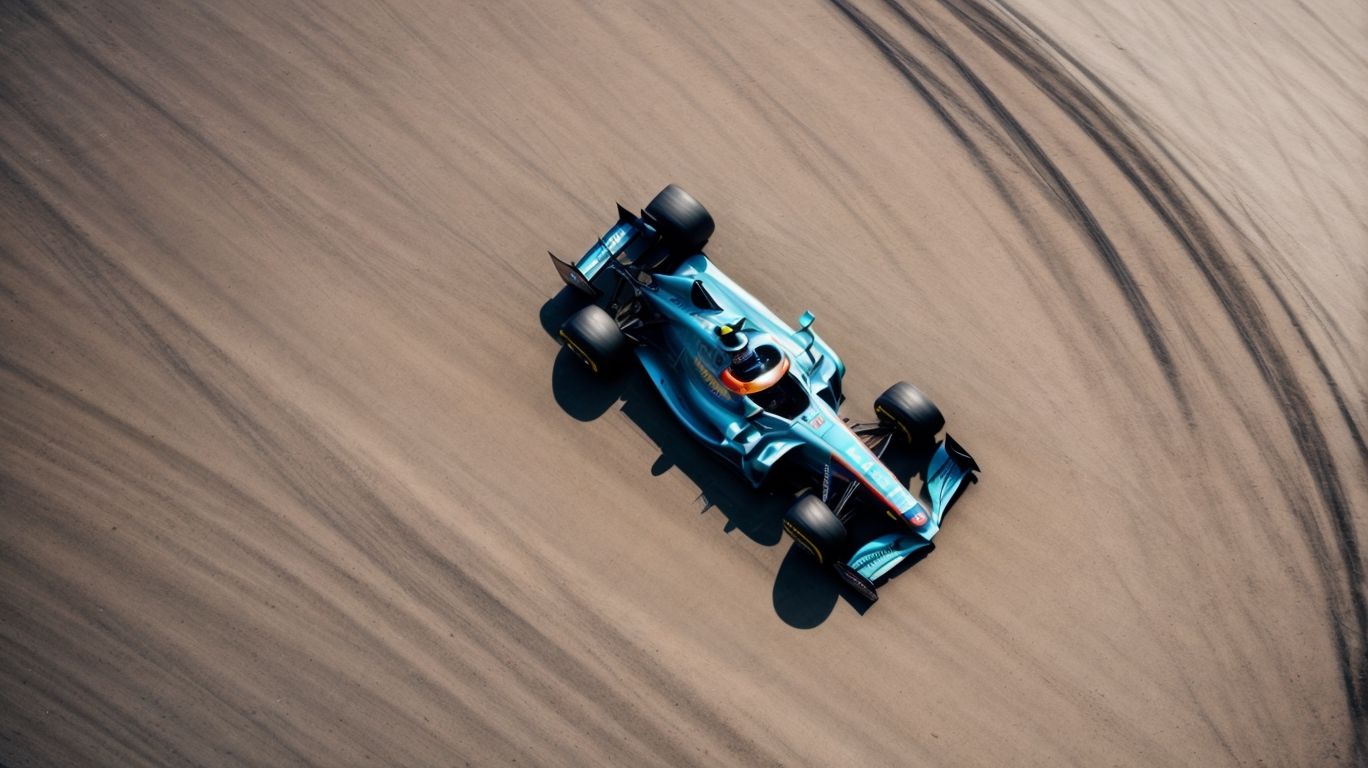
How Low Are F1 Cars?
Have you ever wondered just how low an F1 car sits on the track?
We will explore the ground clearance and dimensions of these high-speed machines. From the sleek aerodynamics to the safety measures in place, we will delve into what makes F1 cars some of the fastest and most advanced vehicles in the world.
Get ready to learn all about the fascinating world of F1 racing!
Key Takeaways:
What is the F1 Car?
F1 cars, also known as Formula 1 cars, are advanced racing vehicles designed with cutting-edge aerodynamics, including ground effect and Venturi tunnels to maximize performance.
One of the key features of F1 cars is their intricate aerodynamic design, focused on achieving the perfect balance between downforce and drag. The ground effect principle involves creating a low-pressure area beneath the car, effectively sucking it onto the track for enhanced grip and cornering stability.
Venturi tunnels, on the other hand, are channels underneath the car that accelerate airflow, further enhancing downforce generation. Engineers meticulously optimize every aspect of the car’s bodywork, such as the front wing, diffuser, and rear wing, to ensure maximum aerodynamic efficiency.
How Fast Can F1 Cars Go?
F1 cars are capable of reaching incredible speeds on the track due to their aerodynamic downforce and exceptional cornering abilities in the world of motorsports.
The aerodynamic design of F1 cars plays a crucial role in achieving these high speeds and ensuring optimal cornering performance. Aerodynamic downforce, generated by the intricate design of the car’s wings, diffusers, and bodywork, pushes the car onto the track, increasing its grip and stability.
This downforce allows F1 cars to maintain high speeds through corners with precision and control, enabling drivers to navigate tight turns at remarkable velocities without losing traction. The balance between downforce and drag is a delicate art, finely tuned by teams to extract the maximum performance from their cars.
What is the Top Speed of an F1 Car?
The top speed of an F1 car is a result of a delicate balance between aerodynamics, downforce, and the optimal positioning of the center of gravity.
Regarding aerodynamics, factors such as the vehicle’s body shape, front and rear wing designs, and overall airflow management play a crucial role in reducing drag and enhancing speed.
The downforce generated by these components pushes the vehicle onto the track, allowing it to corner faster and maintain stability at high speeds.
The center of gravity position determines how quickly the car can change direction without compromising speed. Ensuring a low and centralized center of gravity aids in quick acceleration and superior handling capabilities.
What is the Average Speed of an F1 Car?
The average speed of an F1 car is influenced by various factors such as suspension settings, airflow management, and the ability to maintain high cornering speeds.
Regarding suspension tuning, F1 teams meticulously adjust components such as dampers, springs, and anti-roll bars to find the right balance between stability and responsiveness on different terrains. The smoother the suspension setup, the better the car can maintain traction and control, thus affecting its overall speed.
In terms of airflow optimization, extensive wind tunnel testing and aerodynamic design play a crucial role in reducing drag and maximizing downforce. By sculpting the bodywork and wings to manipulate airflow, engineers enhance grip levels and overall performance.
Cornering speeds, on the other hand, heavily impact lap times in F1. The faster a car can take corners without losing grip or momentum, the shorter the overall lap time. Drivers skilled at pushing the limits of grip through precise steering, braking, and acceleration can significantly elevate the average speed of the car on the track.
What Makes F1 Cars So Fast?
The exceptional speed of F1 cars can be attributed to their powerful engines, high horsepower outputs, and specialized tires designed for maximum performance.
Modern Formula 1 engines are marvels of engineering, featuring turbocharged V6 power units that can reach speeds of over 15,000 RPM. These engines produce an incredible amount of power, often exceeding 1000 horsepower, allowing the cars to accelerate from 0 to 60 mph in just around two seconds.
Tire technology plays a crucial role in enhancing the overall performance of an F1 car. The aerodynamic design, weight distribution, and grip of the tires are meticulously optimized to provide maximum traction, cornering stability, and minimal rolling resistance.
What Type of Engine Do F1 Cars Have?
F1 cars are equipped with highly sophisticated engines that are meticulously designed to deliver exceptional power output and fuel efficiency under the guidance of renowned experts like Gary Anderson.
These cutting-edge engines are a pinnacle of engineering achievement in the world of motorsports, designed to strike a perfect balance between power, reliability, and efficiency. The engines used in Formula One cars are meticulously crafted to withstand the extreme conditions of racing, where every fraction of a second counts. Each component of the engine, from the combustion chamber to the turbocharger, is fine-tuned to extract maximum performance while adhering to the strict regulations set by the FIA.
How Much Horsepower Do F1 Cars Have?
The horsepower output of F1 cars is a critical factor in their blistering speeds, often necessitating precise ride height adjustments to prevent issues such as porpoising and optimize the efficiency of Venturi tunnels.
High horsepower levels, typically exceeding 1000 bhp, demand a delicate balance between handling and speed. Ride height adjustments play a crucial role in achieving this balance. Too low, and the car risks bottoming out, compromising performance and aerodynamics. Conversely, too high a ride height can lead to increased drag, affecting straight-line speed. The challenge of porpoising, where the car oscillates between the front and rear, can be mitigated by fine-tuning the ride height. Maximizing the effectiveness of Venturi tunnels, critical for generating downforce, relies heavily on maintaining optimal ride height throughout the race.
What Type of Tires Do F1 Cars Use?
F1 cars utilize specialized tires that are engineered to withstand extreme conditions, leverage pressure differences for enhanced grip, and adhere to stringent regulations enforced by bodies like the International Court of Appeal.
These advanced tires play a crucial role in optimizing performance on the track. The pressure differentials in the tires help improve traction by maximizing the contact patch with the surface, enhancing stability in high-speed corners.
The F1 tire technology has evolved significantly over the years to comply with strict regulations regarding tire specifications, dimensions, and materials. The governing bodies like the International Court of Appeal closely monitor and enforce these regulations to ensure fairness and safety in races.
What Are the Aerodynamics of an F1 Car?
The aerodynamics of an F1 car play a crucial role in optimizing performance by managing ground clearance, adjusting car height, and shaping the body to minimize drag and enhance downforce.
Ground clearance adjustments in F1 cars are essential to control the amount of air flowing under the car, impacting its overall aerodynamic efficiency. By carefully tuning the ride height, engineers can influence the car’s balance between drag reduction and maximizing downforce.
Body contouring is meticulously crafted to ensure smooth airflow over the vehicle, reducing turbulent air pockets that can slow it down. A subtle change in the car’s shape can significantly affect its aerodynamic performance, making it a key focus area for aerodynamicists.
The car’s height not only affects its aerodynamic efficiency but also plays a crucial role in optimizing speed and handling capabilities on different tracks. By fine-tuning the car’s height, teams can strike a balance between stability and agility, adapting to varying circuit demands.
How Low Are F1 Cars?
F1 cars are engineered to be extremely low to the ground, a design feature that enhances their aerodynamic advantage, optimizes cornering speeds, and underscores the importance of suspension tuning.
The low height of F1 cars plays a crucial role in their aerodynamic performance by reducing drag due to minimized air resistance, enabling them to cut through the air more efficiently. This not only enhances straight-line speed but also improves overall agility and control through corners. Aerodynamics experts meticulously design the car’s body shape to exploit the ground effect phenomenon, where the airflow underneath generates downforce, pushing the car down onto the track for better grip and stability.
What is the Ground Clearance of an F1 Car?
The ground clearance of an F1 car is meticulously adjusted to optimize the center of gravity, enhance aerodynamic downforce, and improve overall performance in the competitive world of motorsports.
By setting a lower ground clearance, engineers can lower the car’s center of gravity, enabling better stability and cornering performance, crucial aspects in the high-speed world of Formula 1 racing. This strategic adjustment also helps in creating a ground effect, where the airflow underneath the car accelerates, generating significant downforce to improve grip and traction on the track.
- The ground clearance settings play a pivotal role in fine-tuning the aerodynamic balance of the car, allowing teams to achieve the optimal balance between front and rear downforce levels, influencing the car’s handling and responsiveness.
- Teams constantly tweak these settings to adapt to different track conditions, weather scenarios, and competitive requirements, seeking that edge over rivals in the relentless pursuit of perfection and peak performance in Formula 1.
What Are the Dimensions of an F1 Car?
The dimensions of an F1 car are meticulously crafted to balance aerodynamic efficiency, minimize the risk of aquaplaning during wet conditions, and enhance cornering speeds through optimized downforce generation.
In the world of Formula 1, these meticulous calculations are crucial for achieving high performance on the track. The front wings, rear wings, diffuser, and bodywork of an F1 car are all designed with precise measurements to ensure optimal airflow around the vehicle. These aerodynamic considerations play a significant role in determining how the car interacts with the air, reducing drag and increasing downforce.
Regarding wet weather racing, F1 cars are equipped with special features to prevent aquaplaning. Aquaplaning occurs when a layer of water builds between the tires and the track surface, causing loss of traction. To combat this, the cars feature specially designed tires with deep grooves and channels to effectively disperse water and maintain contact with the track.
The design choices made in constructing an F1 car have a direct impact on its cornering speeds and ability to manage downforce. By carefully shaping the bodywork, adjusting the angles of the wings, and fine-tuning the suspension settings, engineers aim to achieve the perfect balance between high-speed stability and nimble cornering capabilities. These design considerations ultimately determine the overall performance of the car on the track.
What Are the Safety Measures in Place for F1 Cars?
F1 cars incorporate advanced safety features and technologies to protect drivers during high-speed races, with industry experts like Charlie Whiting playing a pivotal role in ensuring the highest standards of safety.
One of the key safety innovations in modern Formula 1 cars is the Halo device, introduced in 2018, which provides additional protection to the driver’s head in the event of a crash or flying debris. Along with that, advancements in impact-absorbing materials, such as the carbon fiber monocoque chassis, have significantly enhanced driver safety by improving the car’s ability to withstand high-energy impacts. The ongoing commitment to driver safety is evident in the continuous development of safety systems like the virtual safety car and track improvements suggested by experts in the field.
What Safety Features Do F1 Cars Have?
Safety features in F1 cars include the use of titanium blocks for impact protection, advanced suspension systems for stability at high speeds, and measures to enhance driver safety during demanding cornering maneuvers.
Regarding titanium blocks in F1 vehicles, their primary purpose is to absorb and dissipate energy in the event of a crash, thus protecting the driver from severe impacts. These blocks are strategically placed in key areas of the chassis to reinforce its structure and enhance overall safety levels.
The robust suspension setups in F1 cars play a crucial role in maintaining stability, especially when racing at high speeds. By minimizing body roll and maximizing grip on the track, these advanced systems ensure that the car stays planted to the ground, allowing for precise handling and control even through challenging maneuvers.
During high-speed cornering scenarios, safety measures such as aerodynamic components, reinforced cockpit designs, and impact-absorbing materials are essential in safeguarding the driver from potential accidents. The F1 teams continuously innovate and develop new technologies to provide the utmost protection to drivers, making safety a top priority in the world of Formula 1 racing.
How Do F1 Cars Protect Drivers in Crashes?
F1 cars employ a combination of design elements such as Venturi tunnels, pressure differentials, and reinforced body structures to safeguard drivers in the event of crashes and collisions on the racetrack.
Venturi tunnels play a crucial role in maintaining aerodynamic stability by controlling the airflow underneath the car, reducing lift and enhancing downforce for better grip on the track. These tunnels are strategically placed to optimize airflow and create a balance between speed and control.
Pressure differentials, on the other hand, are utilized to absorb impact energy during a crash. By dissipating kinetic energy through controlled pressure changes, these systems help minimize the forces acting on the driver, reducing the risk of injury.
In addition, the reinforced body structures of F1 cars, including the monocoque chassis, cockpit surrounds, and impact-absorbing materials, provide a strong protective barrier around the driver. These enhancements are designed to withstand high-speed impacts and deform in a controlled manner to divert energy away from the driver’s compartment.
Frequently Asked Questions
How low are F1 cars?
F1 cars are typically 1 meter (3.3 feet) in height. This makes them incredibly low to the ground, allowing for better aerodynamics and maneuverability on the track.
Why are F1 cars so low?
The low height of F1 cars is essential for their performance on the track. By reducing the height, it decreases the drag and increases downforce, allowing the car to corner at higher speeds.
Is there a minimum height requirement for F1 cars?
Yes, according to FIA regulations, the minimum height for an F1 car is 95cm (37.4 inches) measured from the highest point of the cockpit to the ground.
How do F1 cars stay so low to the ground?
F1 cars use sophisticated suspension systems and aerodynamics to keep the car as low to the ground as possible. This allows for optimal performance and handling on the track.
Can F1 cars touch the ground while racing?
Yes, F1 cars are designed to be as close to the ground as possible while racing. In fact, it is not uncommon for the front wing or underbody of the car to lightly touch the ground during high-speed cornering.
What are the benefits of having a low F1 car?
Having a low F1 car allows for better handling, increased speed, and improved aerodynamics. It also helps to keep the car stable and planted to the ground, providing the driver with more control on the track.


