How Does a Motogp Bike Work?
Are you curious about the world of MotoGP bikes and how they differ from regular motorcycles?
Explore the key components that make up a MotoGP bike, such as the engine, brakes, tires, suspension, and aerodynamics.
Delve into how these high-performance machines work, including their acceleration, cornering, braking, shifting, traction control, and launch control.
Discuss the safety measures in place to protect MotoGP riders, including protective gear, crash protocols, and track safety features.
Join us as we uncover the thrilling world of MotoGP bikes.
Key Takeaways:
What Is MotoGP Bike?
A MotoGP bike is a cutting-edge racing motorcycle specifically designed for MotoGP, the premier class of motorcycle road racing.
These bikes are meticulously crafted with high-performance components such as custom-built engines, advanced aerodynamics, and sophisticated electronics. The lightweight carbon fiber frames and top-of-the-line suspension systems allow riders to achieve remarkable speeds and handle the demands of diverse racing circuits with precision. In terms of technology, MotoGP bikes feature seamless shift gearboxes for seamless acceleration, cutting-edge electronic controls for traction and power delivery, and slick tires designed to provide optimal grip and performance on the track.
How Is A MotoGP Bike Different From A Regular Bike?
A MotoGP bike differs significantly from a regular bike due to its specialized components and advanced technologies, particularly in the area of transmission and engine performance.
One of the key distinctions lies in the advanced transmission systems utilized in MotoGP machines. These bikes often feature seamless transmission technology, which allows for smooth and rapid gear shifts without the need to engage the clutch manually. MotoGP bikes are equipped with quick shifters, enabling the rider to change gears quickly and effortlessly, enhancing acceleration and overall performance on the track.
Engine
The engine of a MotoGP bike is a highly refined piece of machinery, optimized for maximum power output and efficiency, often coupled with cutting-edge technologies like seamless transmission for lightning-fast gear changes.
Power delivery in MotoGP engines is finely tuned to provide immediate response to throttle inputs, offering riders precise control over acceleration and deceleration. The seamless transmission system plays a crucial role in ensuring smooth gear shifts without any interruption in power delivery, enabling riders to maintain optimal speeds during races.
Efficiency is paramount in MotoGP engine design, with engineers constantly seeking innovations to maximize performance while adhering to strict regulations. By fine-tuning combustion processes, optimizing airflow, and reducing frictional losses, MotoGP engines achieve unparalleled power-to-weight ratios, setting them apart from conventional motorcycle engines.
Brakes
Brakes on a MotoGP bike are a critical component, essential for achieving high speeds and precise cornering, contributing significantly to the rider’s performance in the championship.
The braking system in MotoGP bikes not only provides the necessary stopping power but also plays a vital role in speed management, ensuring that riders can navigate the challenging tracks efficiently. Braking precision is a key factor that separates the top riders from the rest, allowing them to brake later and harder into corners while maintaining control. This level of control is crucial for maintaining optimal cornering stability and quickly transitioning between different sections of the track, giving riders a competitive edge.
Tires
Tires play a crucial role in the performance of a MotoGP bike, affecting traction, stability, and handling, influencing the rider’s ability to secure valuable championship points.
The advanced tire technology in MotoGP racing is a result of years of innovation and collaboration between tire manufacturers and racing teams. The tire compounds are meticulously engineered to provide optimal grip in various track conditions, ensuring that riders can push their bikes to the limits with confidence.
Tire choice can significantly impact race strategies, with teams carefully analyzing data to determine the best tire option for different stages of the race. The ability to manage tire wear and degradation is also crucial, as it can make a difference between winning and losing in highly competitive MotoGP races.
Suspension
The suspension system of a MotoGP bike is finely tuned to provide optimal handling, stability, and rider comfort across different classes of racing circuits.
One crucial aspect of MotoGP suspension setups is their ability to adapt to varying track conditions, such as different types of tarmac, corners, and straight sections. This adaptability ensures that the rider can maintain control and precision regardless of the track characteristics.
According to technical regulations, MotoGP teams meticulously adjust the suspension components, including the forks, shock absorbers, and linkages, to meet the specific demands of each race. The goal is to find the perfect balance between stiffness and compliance to maximize traction and cornering performance.
Aerodynamics
Aerodynamics are a key focus in MotoGP bike design, with intricate fairings, winglets, and bodywork optimized through rigorous testing and practice sessions to enhance performance.
These aerodynamic features play a crucial role in ensuring the bike moves efficiently through the air, reducing drag and increasing stability.
Advancements in wind-tunnel testing have revolutionized the way teams analyze and refine aerodynamic designs, allowing for precise adjustments to maximize performance on the track.
During high-speed events like the sprint race, the smallest aerodynamic advantage can make a significant difference in a rider’s ability to gain speed and maintain control through corners.
What Are The Key Components Of A MotoGP Bike?
The key components of a MotoGP bike encompass a sophisticated interplay of cutting-edge technologies, including the engine, chassis, electronics, and transmission systems.
One of the most crucial elements in a MotoGP bike is the clutch, responsible for transferring power from the engine to the transmission smoothly and efficiently. The advanced engineering of the clutch mechanism allows for precise control during gear shifts and acceleration, ensuring maximum performance.
The integration of a quick shifter enhances the rider’s ability to change gears swiftly without the need to use the clutch, optimizing speed and acceleration on the track.
Engine
The engine of a MotoGP bike serves as the heart of its performance, delivering immense power and torque, finely synchronized with the gear ratios to optimize acceleration and top speed.
One of the key elements that make the engine in MotoGP bikes stand out is the incorporation of a slipper clutch system, which plays a crucial role in managing the bike’s stability and preventing wheel-hop during aggressive downshifting. This innovative technology allows riders to brake hard into corners while maintaining control over their machines, ensuring smoother corner entries and faster lap times.
In addition, various manufacturers pour significant resources into research and development to continuously enhance engines according to specific track requirements and rider preferences. This competitive environment drives advancements in engine technology, pushing the boundaries of power delivery, efficiency, and reliability in MotoGP racing.
Chassis
The chassis of a MotoGP bike provides the structural foundation for optimal handling, weight distribution, and integration of advanced electronics crucial for performance tuning and rider feedback.
One of the key aspects of chassis design in MotoGP bikes is its rigidity, which directly impacts the bike’s stability and responsiveness on the track. A well-designed chassis allows for precise control during high-speed cornering, acceleration, and braking maneuvers. Engineers meticulously optimize the chassis geometry to achieve the desired balance between agility and stability.
The material composition of the chassis also plays a significant role in overall performance. Carbon fiber, aluminum, and steel are commonly used materials, each offering unique properties that influence the bike’s weight, stiffness, and shock-absorbing capabilities.
Electronics
Electronics in a MotoGP bike encompass a sophisticated array of systems that manage engine performance, traction control, and seamless transmission integration, enhancing overall race competitiveness and safety.
One key aspect of these advanced electronic systems is their ability to fine-tune engine performance based on real-time data, allowing for optimal power output and efficiency during races. These systems play a critical role in controlling traction, ensuring that the bike maintains grip and stability on diverse racing surfaces. The transmission control functionalities contribute to smooth gear shifts, enabling riders to navigate corners and straights with precision and speed.
Transmission
The transmission system in a MotoGP bike is a finely tuned mechanism that enables swift gear changes, utilizing technologies like quick shifters and slipper clutches to enhance acceleration and cornering performance.
Quick shifters play a crucial role in MotoGP bikes by allowing riders to change gears without the need to close the throttle, resulting in seamless shifts that minimize power loss.
Slipper clutches are integral components that prevent rear wheel lock-ups during aggressive downshifts, maintaining stability and control on the track.
Optimizing the transmission system is a continuous process in MotoGP, with engineers constantly refining gear ratios and clutch settings to match the specific requirements of each circuit and the power delivery characteristics of the high-performance engines approved by the FIM.
How Does A MotoGP Bike Work?
The operation of a MotoGP bike involves intricate mechanisms and precise control strategies to manage acceleration, cornering, braking, and traction under extreme racing conditions.
MotoGP bikes are engineered to deliver exceptional performance in each aspect of racing, ensuring optimal speed and stability throughout the course. Regarding acceleration, these bikes are finely tuned machines with high-power engines that allow for lightning-fast bursts of speed, propelling riders down straightaways with precision.
In terms of cornering, MotoGP bikes exhibit remarkable agility and responsiveness, enabling riders to navigate sharp turns at astonishing speeds, thanks to advanced aerodynamics and suspension systems that optimize grip and stability through the bends.
Acceleration
Acceleration in MotoGP bikes is a critical element, necessitating precise throttle control, seamless shifting, and optimized power delivery to achieve rapid speed increases on straights and out of corners.
One of the key factors contributing to effective acceleration in MotoGP racing is throttle management. Riders must delicately balance the application of throttle to harness the immense power of these high-performance machines without losing grip or sacrificing control. By modulating the throttle inputs with utmost precision, they can dictate the rate at which the bike accelerates, ensuring a smooth and swift progression along the track.
The gear shifting techniques used by MotoGP riders play a crucial role in optimizing acceleration. Seamless and timely gear changes, facilitated by advanced quick shifter technology, allow the bike to constantly operate within the optimal power band, maximizing the efficiency of power transfer to the wheels and propelling the bike forward with minimal interruption.
Regarding power application strategies, riders must be strategic in exploiting the available horsepower for accelerating out of corners and achieving impressive straight-line speeds. By gradually increasing the throttle input while exiting a corner, they can effectively transfer the bike’s weight to the rear wheel, maximizing traction and propelling the bike forward with controlled aggression.
Cornering
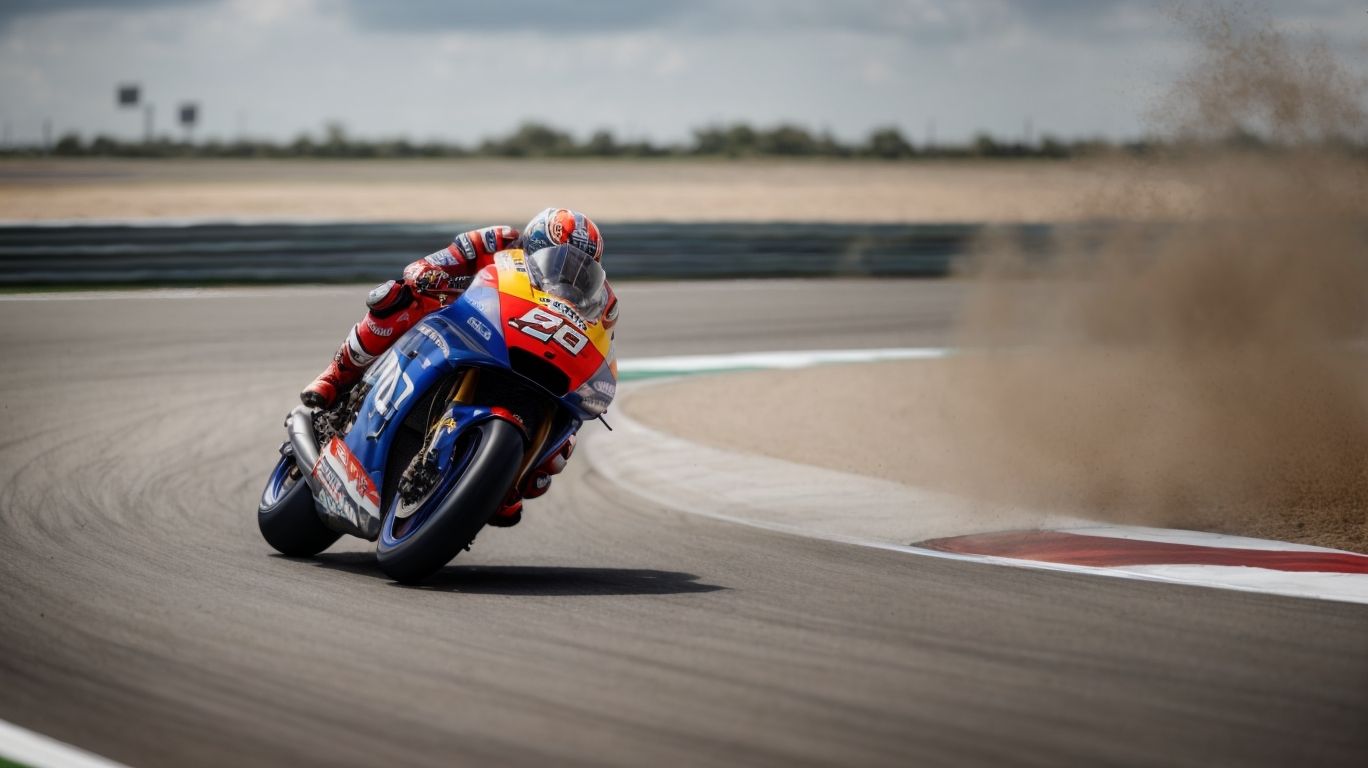
Cornering on a MotoGP bike demands precise braking control, body positioning, and throttle modulation to navigate tight turns at optimal speeds while maintaining stability and traction.
When approaching a corner in MotoGP racing, the rider’s suspension setup plays a crucial role in ensuring the bike’s stability and responsiveness. Different classes of bikes require varying suspension adjustments to accommodate their unique characteristics. In Moto3, for instance, where lightweight machines demand quick handling, softer suspension settings are preferred to absorb bumps and maintain grip.
The art of cornering also involves finding the perfect balance between leaning the body and bike to achieve the desired turn radius while maximizing cornering speed. Riders often use their bodies as counterweights to leverage the bike’s dynamics, allowing for sharper turns without losing grip.
Braking
Braking in MotoGP racing involves precise application of the brakes, often in conjunction with downshifting, to scrub speed efficiently while maintaining control and setting up for corner entry.
In MotoGP, riders employ advanced brake modulation techniques to manage speed effectively. By delicately applying the brakes, they can control the transmission and weight distribution, ensuring a smooth deceleration. Coordinating downshifting seamlessly with braking is crucial for matching engine speed and maximizing control.
The championship-winning riders in MotoGP are known for their mastery of cornering. As they approach a corner, their strategic corner-entry tactics involve precisely timing the release of brakes, downshifting, and body positioning, enabling them to carry optimal speed through the turn.
This synchronized interplay between braking, downshifting, and corner approach is a key factor in achieving the required speed management and turn-in precision needed to excel in the high-speed world of MotoGP racing.
Shifting
Gear shifting on a MotoGP bike demands seamless transitions between gears, often facilitated by advanced quick shifter systems, ensuring minimal power loss and maximum traction control during acceleration and corner exits.
The intricate design of quick shifters allows riders to shift up or down without the need to close the throttle or use the clutch, enabling continuous power delivery and acceleration. These systems are finely tuned to synchronize engine speed and wheel rotation, maintaining optimal performance across different speed ranges. Gear engagement strategies play a crucial role in ensuring that the engine’s power band is utilized efficiently, essential for achieving top speeds and maximizing points in MotoGP races.
Traction Control
Traction control systems in MotoGP bikes are paramount for maintaining grip and stability, particularly during aggressive acceleration phases, with advanced launch control features aiding in controlled race starts.
These systems play a vital role in optimizing acceleration performance by precisely modulating power delivery to the rear wheel, preventing excess wheel spin and ensuring efficient power transfer to the track surface. By continuously monitoring wheel speeds and adjusting traction levels accordingly, manufacturers like Yamaha and Ducati have been able to fine-tune their bikes for optimal grip levels in different track conditions.
In highly competitive MotoGP classes, such as the MotoGP, Moto2, and Moto3, where every millisecond counts, the implementation of cutting-edge traction control technologies has become a key differentiator between podium finishes and also-rans. Riders rely on these sophisticated systems to not only keep their bikes under control but also to extract maximum performance during rapid corner exits and straight-line speed bursts.
Launch Control
Launch control systems on MotoGP bikes enable precise management of acceleration during race starts, working in tandem with traction control to deliver controlled launches and rapid speed gains.
By utilizing advanced electronics and sensors, these systems monitor throttle input, wheel speed, engine rpm, and various other parameters in real-time to ensure optimal performance. This technology allows riders to focus on their technique and timing, rather than solely on throttle control, enhancing consistency in starts and minimizing the risk of wheel spin. In compliance with technical regulations, teams fine-tune the launch control settings during practice sessions to achieve the perfect balance between aggressive acceleration and maintaining traction.
What Are The Safety Measures In Place For MotoGP Bikes?
Safety measures for MotoGP bikes encompass a range of protocols and equipment designed to protect riders, including the use of advanced protective gear to mitigate the risks associated with high-speed racing.
Protective gear worn by MotoGP riders consists of specialized leather suits equipped with armor inserts, back protectors, gloves, boots, and helmets that meet stringent safety standards to safeguard against impacts and abrasions. The bikes are fitted with advanced electronic systems that aid in crash prevention and minimize risks during high-speed maneuvers. MotoGP tracks feature state-of-the-art safety barriers, runoff areas, and air fences strategically placed to provide cushioning and reduce the severity of accidents, ensuring rider well-being is prioritized at all times.
Protective Gear
Protective gear in MotoGP racing plays a crucial role in safeguarding riders against potential injuries, complemented by track safety features designed to minimize risks and enhance overall race safety.
One of the primary protective gear components worn by MotoGP riders is the helmet, which not only provides protection to the head but also houses advanced features like aerodynamics and visor systems to enhance visibility and reduce wind resistance. Specialized racing suits are crafted from high-quality materials that offer abrasion resistance and impact protection in case of crashes, ensuring maximum safety for competitors during high-speed races.
The importance of dedicated boots and gloves cannot be overstated, as they provide essential support and grip, especially in challenging track conditions. In prestigious events like FIM World Superbikes, where speeds reach incredible levels, the significance of top-notch protective gear is emphasized to maintain the highest levels of safety standards in the sport.
Crash Protocols
Crash protocols in MotoGP establish standardized procedures for managing on-track accidents, ensuring prompt medical attention, track clearance, and incident investigation for continuous safety improvement.
When a crash occurs during a MotoGP event, the immediate response is critical. Medical personnel rush to the scene equipped to provide rapid assessment and treatment to injured riders. Simultaneously, track marshals work efficiently to clear debris and ensure the safety of other riders. Following the incident, a thorough analysis is conducted to understand the factors leading to the crash and implement preventive measures for future events. The importance of these protocols cannot be overstated, as they play a crucial role in maintaining the safety of riders during both practice sessions and the intense sprint race.
Track Safety Features
Track safety features in MotoGP circuits encompass a range of protective barriers, run-off areas, and signaling systems designed to enhance rider protection, optimize race control, and uphold the championship’s safety standards.
In MotoGP, the barriers play a crucial role in absorbing energy and reducing impact forces during crashes, minimizing the risk of injuries to riders and ensuring the safety of both competitors and spectators.
The expansive run-off zones allow riders to safely navigate corners at high speeds by providing ample space for recovery in case of errors or mechanical failures, thus preventing potentially dangerous collisions with hard barriers or obstacles.
Frequently Asked Questions
How Does a Motogp Bike Work?
A Motogp bike is a highly advanced and specialized machine that is designed for maximum speed and performance on the race track. Here are six frequently asked questions about how a Motogp bike works.
What type of engine does a Motogp bike have?
Most Motogp bikes use a four-stroke, liquid-cooled, four-cylinder engine. These engines are highly tuned and can reach speeds of over 200 mph.
How is a Motogp bike different from a regular motorcycle?
A Motogp bike is specifically designed for racing and is much lighter and more powerful than a regular motorcycle. It also has advanced aerodynamics and suspension systems for better handling and control.
What type of fuel does a Motogp bike use?
Motogp bikes use a special type of racing fuel called unleaded 100 octane fuel. This fuel allows for maximum performance and power from the engine.
What is the role of electronics in a Motogp bike?
Electronic systems on a Motogp bike help to control the power delivery, traction, and braking of the bike. They also provide valuable data to the rider and team for performance analysis and adjustments.
How does the suspension system work on a Motogp bike?
Motogp bikes have highly advanced suspension systems that allow for precise tuning and control. The front suspension consists of a fork with adjustable compression and rebound settings, while the rear suspension has a shock absorber with similar adjustments.
What makes a Motogp bike so fast?
Motogp bikes are designed and engineered for maximum speed and performance. They have lightweight and powerful engines, advanced aerodynamics, and state-of-the-art electronics and suspension systems. They are also piloted by some of the most skilled and daring riders in the world.