Are All Nascar Cars the Same?
Nascar, short for the National Association for Stock Car Auto Racing, is a thrilling and competitive motorsport that captivates fans around the world.
We explore the different types of Nascar races, rules and regulations that govern the sport, and whether all Nascar cars are truly the same.
From car specifications to the building process and maintenance involved, we provide an inside look at the world of Nascar and the costs associated with owning a Nascar car.
Get ready to rev your engines and dive into the exciting world of Nascar!
Key Takeaways:
What Is NASCAR?
NASCAR, the National Association for Stock Car Auto Racing, is a premier American auto racing series known for its high-speed, adrenaline-pumping races featuring stock cars.
Founded in 1948 by Bill France Sr., NASCAR initially started as a way to organize and regulate stock car racing in the United States. What began as a regional sport primarily in the Southern states quickly grew in popularity and became a national phenomenon. Over the years, NASCAR has expanded to include several series, such as the NASCAR Cup Series, Xfinity Series, and Truck Series, each offering unique racing experiences for both drivers and fans.
The NASCAR Cup Series, formerly known as the Winston Cup Series and Sprint Cup Series, is the most prestigious and well-known of all NASCAR series. Events like the Daytona 500, Coca-Cola 600, and Southern 500 have become iconic fixtures in the racing calendar, attracting millions of viewers worldwide. With top-notch drivers like Richard Petty, Dale Earnhardt, and Jimmie Johnson leaving their mark on the sport, NASCAR has cemented its status as a powerhouse in the world of auto racing.
What Are the Different Types of NASCAR Races?
NASCAR offers various types of races that cater to different audiences, including the Sprint Cup Series, Xfinity Series, and Camping World Truck Series, each with its unique track configurations and racing challenges.
The Sprint Cup Series, now known as the NASCAR Cup Series, features high-performance cars and fiercely competitive racing on both oval and road courses, attracting top drivers such as Chase Elliott and Denny Hamlin.
The Xfinity Series, on the other hand, serves as a stepping stone for young talents to hone their skills before advancing to the Cup Series, with cars that closely resemble those in the premier division.
Meanwhile, the Camping World Truck Series showcases pickup trucks racing on shorter tracks, fostering intense wheel-to-wheel battles and drafting tactics.
Sprint Cup Series
The NASCAR Cup Series, formerly known as the Sprint Cup Series, is the pinnacle of NASCAR racing, featuring top drivers like Chase Elliott and Kyle Larson competing in high-performance vehicles from manufacturers like Ford, Chevrolet, and Toyota.
With roots tracing back to the inaugural season in 1949, the NASCAR Cup Series is a premier racing competition that captures the heart of motorsport enthusiasts worldwide. It consists of a demanding schedule of races at iconic tracks such as Daytona International Speedway, Talladega Superspeedway, and Darlington Raceway. The series is not only about raw speed but also strategy and teamwork, where pit crews play a crucial role in ensuring split-second decisions can make or break a race.
Xfinity Series
The Xfinity Series is a NASCAR racing series known for its competitive races featuring the Next Gen cars from Chevrolet, Ford, and Toyota, offering a platform for emerging talents to showcase their skills on various tracks.
As a stepping stone to the upper echelons of NASCAR, the Xfinity Series serves as a crucial training ground for aspiring drivers looking to make their mark in professional racing. These young talents not only learn the ropes of competitive racing but also get the opportunity to experience the advancements in race car technology first-hand.
The manufacturer contributions in terms of engineering support and innovative enhancements play a significant role in shaping the performance of these Next Gen cars, pushing the boundaries of speed and aerodynamics.
Camping World Truck Series
The Camping World Truck Series showcases thrilling races with Modified trucks like Chevrolet Silverado, Ford F-150, and Toyota Tundra, navigating challenging tracks to test the limits of both drivers and vehicles.
These Modified trucks are specially designed to endure the rigors of racing on various terrains, from short tracks to superspeedways, providing fans with heart-pounding action and fierce competition.
Drivers in the series display exceptional skill in handling the unique characteristics of each truck model, fine-tuning their strategies to maximize performance and precision on the track.
What Are the Rules and Regulations for NASCAR Races?
NASCAR races adhere to strict regulations governing car specifications, race formats, and points systems, ensuring a fair and competitive environment for drivers and teams.
In NASCAR, the car templates are strictly enforced to maintain parity among the teams. Each car must adhere to specific dimensions, including the height, width, and length, as outlined by NASCAR’s rulebook. Aerodynamic packages play a crucial role in determining a car’s performance on the track. Teams must follow the guidelines set by NASCAR regarding aerodynamic setups to ensure fair competition.
NASCAR races award points not only for finishing position but also for leading laps and winning stages. The points distribution system is aimed at rewarding consistency and performance throughout the race, enhancing the strategic element of each event.
Car Specifications
NASCAR car specifications encompass various systems like engines, transmissions, and aerodynamics, with horsepower and speeds playing crucial roles in defining the performance capabilities of these racing vehicles.
Regarding engine power, NASCAR cars often boast robust V8 engines that can produce over 750 horsepower, allowing them to reach mind-blowing speeds of up to 200 mph on oval tracks. The transmission setups are typically manual, with four-speed manuals being the norm for many years before the introduction of modern six-speed sequential transmissions. These advanced transmissions enable drivers to shift gears swiftly and smoothly, optimizing acceleration and overall performance.
The aerodynamic enhancements on NASCAR cars are meticulously designed to improve handling, reduce drag, and enhance overall stability at high speeds. Features like splitters, spoilers, and diffusers are strategically incorporated to generate downforce, ensuring that the cars hug the track tightly during high-speed cornering. Advancements in technologies like wind tunnel testing and computational fluid dynamics have revolutionized the aerodynamic performance of NASCAR vehicles, allowing teams to fine-tune every aspect of their cars for optimal speed and control.
Race Format
NASCAR races feature diverse formats such as oval tracks, road courses, and super speedways, challenging drivers to showcase their skills in different types of vehicles under varying race conditions.
Each race format in NASCAR presents unique challenges that test the drivers’ abilities to adapt to the specific demands of the track. Oval tracks, for example, emphasize high-speed driving and require vehicles with aerodynamic designs to maximize performance. Road courses, on the other hand, demand precise handling and braking skills as drivers navigate twists and turns. Super speedways provide an extreme environment for drivers, where drafting and strategic positioning play a crucial role in securing success on the track.
Driver performances in these varied race formats demonstrate their versatility and expertise, showcasing their ability to excel across different types of tracks and race conditions. The adaptability of drivers in NASCAR is a key factor in achieving success, as they must quickly adjust their driving styles to suit the demands of each race format.
Points System
NASCAR employs a comprehensive points system that rewards drivers and manufacturers based on their race performances, influencing championship standings and overall competitiveness throughout the season.
Drivers earn points based on their finishing positions in each race, with the winner receiving the most points followed by subsequent positions in decreasing order. Drivers can accumulate bonus points for leading a lap or leading the most laps during a race, emphasizing the importance of consistent performance throughout the event.
These points contribute to the driver standings, reflecting their overall performance across multiple races. The top-performing drivers consistently scoring high points often find themselves at the top of the standings, positioning themselves as front-runners in the championship race.
The points system also plays a crucial role in determining manufacturers’ standings. Manufacturers earn points based on the performance of the cars they supply to teams, showcasing their engineering prowess and technological advancements in the sport, ultimately impacting their branding and commercial engagements.
Are All NASCAR Cars the Same?
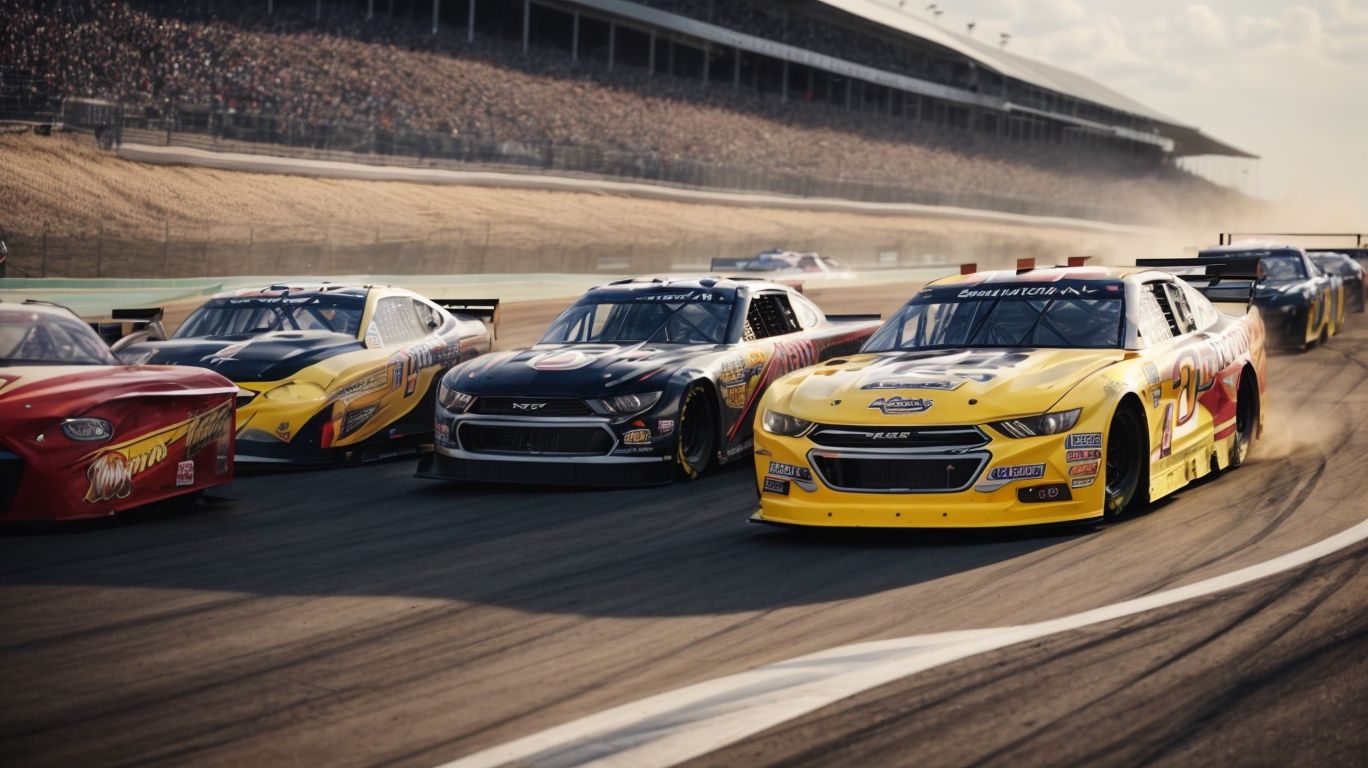
While NASCAR cars share common components to ensure fair competition, they also feature customized features and performance enhancements tailored to each team and driver, leading to variations in speed and handling on the track.
Stock cars used in NASCAR races follow strict regulations, requiring them to have similar chassis, engine blocks, and safety features for parity among competitors. Where the real difference lies is in the customization and fine-tuning carried out by teams. Through specialized modifications to the engine, aerodynamics, and suspension, drivers can gain an edge in crucial areas like cornering speed and straight-line acceleration.
These enhancements often come down to the expertise of the engineers and mechanics behind the scenes, who must balance performance gains with reliability and durability over long race distances. It’s this delicate balance between standardized components and tailored upgrades that makes each NASCAR car both a product of collective rules and individual team strategies.
Common Components
NASCAR cars share common components like engines, chassis, and safety features mandated by manufacturers, ensuring a level playing field and emphasizing safety standards across all racing teams.
In NASCAR, engines form the heart of these high-speed machines. These powertrains are subject to strict regulations to maintain parity among teams. Chassis design, including suspension systems, aerodynamics, and frame construction, plays a crucial role in handling and performance optimization. Safety features encompass roll cages, seat belts, and fire suppression systems, prioritizing driver protection on the track. Each component is fine-tuned to merge innovation with safety, showcasing the collaborative efforts of manufacturers in pushing the boundaries of motor racing technology.
Customized Features
NASCAR teams customize features like aerodynamics, templates, and suspension setups to fine-tune their cars for specific tracks and racing conditions, optimizing performance and handling based on driver preferences and team strategies.
Regarding aerodynamics, teams focus on reducing drag and increasing downforce by tweaking elements such as spoilers, splitters, and air ducts. The right combination of these modifications can enhance the car’s stability at high speeds, crucial for maintaining control on the track.
Additionally, template variations play a significant role in optimizing the car’s performance. Teams utilize wind tunnel testing and computer simulations to create templates that maximize speed and cornering ability, ensuring the vehicle is well-suited for the specific race circuit.
Furthermore, suspension adjustments are tailored to each track’s unique characteristics. Fine-tuning the shocks, springs, and sway bars can greatly affect how the car handles corners and bumps, allowing for precise control and improved overall performance.
Differences in Performance
The differences in NASCAR car performance stem from variations in horsepower, engine systems, and handling characteristics, influencing driver strategies and team dynamics on different tracks and race conditions.
Regarding NASCAR cars, the horsepower output plays a crucial role in determining their on-track performance. Cars with higher horsepower generally have more speed and acceleration capabilities, allowing them to dominate straightaways and gain an advantage over competitors. Variations in engine tuning, such as cylinder head design and fuel delivery systems, impact power delivery and overall performance. Efficient systems contribute to optimal engine performance, translating to better acceleration and top-end speed on the racetrack.
How Are NASCAR Cars Built and Maintained?
NASCAR cars are meticulously built and maintained through a collaborative effort involving engineers, mechanics, and team personnel, ensuring optimal performance and safety standards on the racetrack.
Engineering teams play a crucial role in the development of NASCAR vehicles, focusing on designing aerodynamically efficient chassis and advanced suspension systems. These teams leverage cutting-edge technology and extensive testing to enhance speed and handling. Meanwhile, maintenance crews are responsible for regular inspections, repairs, and adjustments to maximize each car’s durability and performance.
Effective communication and teamwork are essential in the NASCAR environment, as engineers, mechanics, and drivers work together to fine-tune vehicles during practice sessions and make strategic decisions based on real-time data. Collaboration and shared expertise drive continuous improvement in car settings and race strategies for competitive advantage.
Building Process
The NASCAR car building process involves a meticulous team effort where engineers, mechanics, and designers collaborate to construct high-performance vehicles that meet the stringent requirements of NASCAR regulations and safety standards.
Every step of the NASCAR car assembly is a sophisticated dance between innovation and adherence to strict guidelines. From initial concept to final inspection, every detail is scrutinized and refined to ensure optimal speed, safety, and performance. Engineers utilize cutting-edge technology and advanced materials to push the boundaries of design, while mechanics fine-tune every component to precision. Team coordination plays a crucial role in orchestrating the seamless integration of various specialized skills, allowing for efficient problem-solving and continuous improvement throughout the entire process.
Maintenance and Repairs
NASCAR cars undergo regular maintenance and repairs to ensure peak performance and reliability during races, with specialized teams focusing on engine tuning, chassis adjustments, and aerodynamic enhancements to optimize car capabilities.
One of the critical aspects of NASCAR car maintenance is the systematic upkeep of key components to prevent mechanical failures during high-speed races. Regular inspections of the suspension system, braking system, and tire condition are paramount to address any issues proactively. These checks not only enhance safety on the track but also contribute to the overall endurance of the vehicle.
Regarding repair protocols for NASCAR cars, a meticulous approach is essential. Teams meticulously document and analyze data from previous races to identify performance bottlenecks and develop targeted solutions. Through fine-tuning engines and integrating lightweight materials, NASCAR teams constantly strive to enhance power output, handling, and fuel efficiency, staying ahead of the competition.
Team Effort
NASCAR car success is a result of cohesive team efforts where engineers, mechanics, and drivers collaborate to fine-tune vehicle setups, optimize race strategies, and overcome technical challenges on and off the track.
Engineers play a vital role in designing and upgrading the car components, utilizing aerodynamic principles and sophisticated simulation tools to enhance performance. Mechanics are the unsung heroes, working tirelessly to ensure the vehicle is finely tuned and meticulously maintained for optimal speed and reliability.
Meanwhile, drivers are the face of the team, utilizing their skills, experience, and intuition to navigate the high-speed demands of each race, making split-second decisions that can determine victory or defeat.
What Are the Costs Involved in Owning a NASCAR Car?
Owning a NASCAR car entails significant costs, including initial purchase expenses, ongoing race investments, and the critical role of sponsorships and advertising deals in sustaining the financial viability of racing teams.
Regarding acquiring a NASCAR vehicle, the costs can be substantial. The initial purchase of a competitive car alone can run into the millions, which is just the start. Race participation further adds to the financial burden, encompassing expenses for equipment, crew salaries, transportation, and maintenance. This underlines the importance of securing lucrative sponsorship deals to help offset these high costs and ensure the team’s operational sustainability. Sponsorship deals not only provide financial support but also offer exposure and branding opportunities for companies looking to reach a wide audience through the high-profile platform of NASCAR racing.
Initial Purchase
The initial purchase of a NASCAR car involves substantial expenses, encompassing the costs of acquiring a competitive racing vehicle, safety equipment, and essential components to meet NASCAR standards and regulations.
When contemplating investing in a NASCAR car, potential buyers need to be prepared for the considerable upfront financial outlay required to secure a high-performance machine that can withstand the rigors of professional racing. These vehicles are engineered for speed and endurance, featuring specialized components such as powerful engines, aerodynamic bodywork, and advanced suspension systems.
Plus the car itself, there are expenses associated with outfitting the vehicle with mandated safety gear, including helmets, fire-retardant suits, gloves, shoes, and more. Ensuring compliance with NASCAR rules is paramount, necessitating adherence to specific equipment specifications and standards set forth by the sanctioning body.
Race Expenses
Race expenses for NASCAR teams encompass a wide range of costs, including travel logistics, pit crew salaries, track fees, and equipment maintenance, all crucial components in ensuring competitive readiness and performance on race day.
Logistical considerations involve intricate planning of transportation, accommodation, and schedules, often spanning vast distances between race locations.
Crew compensation constitutes a significant portion of the budget, reflecting the high skill levels and demanding nature of pit crew roles.
Track expenditures cover licensing fees, facility rentals, and race-specific expenses, contributing to the overall operational costs.
Equipment upkeep is essential for maintaining top performance, encompassing regular maintenance, upgrades, and replacements when necessary.
Sponsorship and Advertising
Sponsorship and advertising play a pivotal role in offsetting NASCAR car costs, with corporate partnerships, brand endorsements, and promotional deals providing essential funding and exposure opportunities for racing teams to thrive in a competitive landscape.
When examining the landscape of NASCAR, it becomes evident that without the financial support and visibility garnered through sponsorships and advertising, many teams would struggle to stay afloat and compete at the highest level. The collaboration between racing teams and sponsors goes beyond just financial transactions; it is a strategic partnership that enhances brand recognition, expands market reach, and drives fan engagement. Through innovative advertising strategies and tailored sponsorship agreements, teams can secure the necessary resources to optimize performance on and off the track, ensuring their financial sustainability in the fast-paced world of racing.
Frequently Asked Questions
Are All Nascar Cars the Same?
No, all Nascar cars are not the same. Each team builds their own unique car based on Nascar regulations and their own preferences.
What are the main differences between Nascar cars?
The main differences between Nascar cars include engine size, weight, and aerodynamic features. Each team also has their own custom paint scheme and sponsor logos.
Do Nascar cars have the same engine?
No, Nascar teams can use different engine brands and sizes, as long as they meet the power and performance requirements set by Nascar.
Are there any restrictions on Nascar car design?
Yes, Nascar has strict regulations on car design to ensure fair competition. This includes limits on aerodynamic features, weight, and engine specifications.
Can Nascar teams modify their cars during the race?
No, Nascar teams are not allowed to make any major modifications to their cars during the race. This ensures that all teams are competing with the same car they started with.
Do Nascar drivers have any say in the design of their cars?
Yes, Nascar drivers often work closely with their team’s engineers to create a car that suits their driving style and preferences. However, Nascar regulations must still be followed.