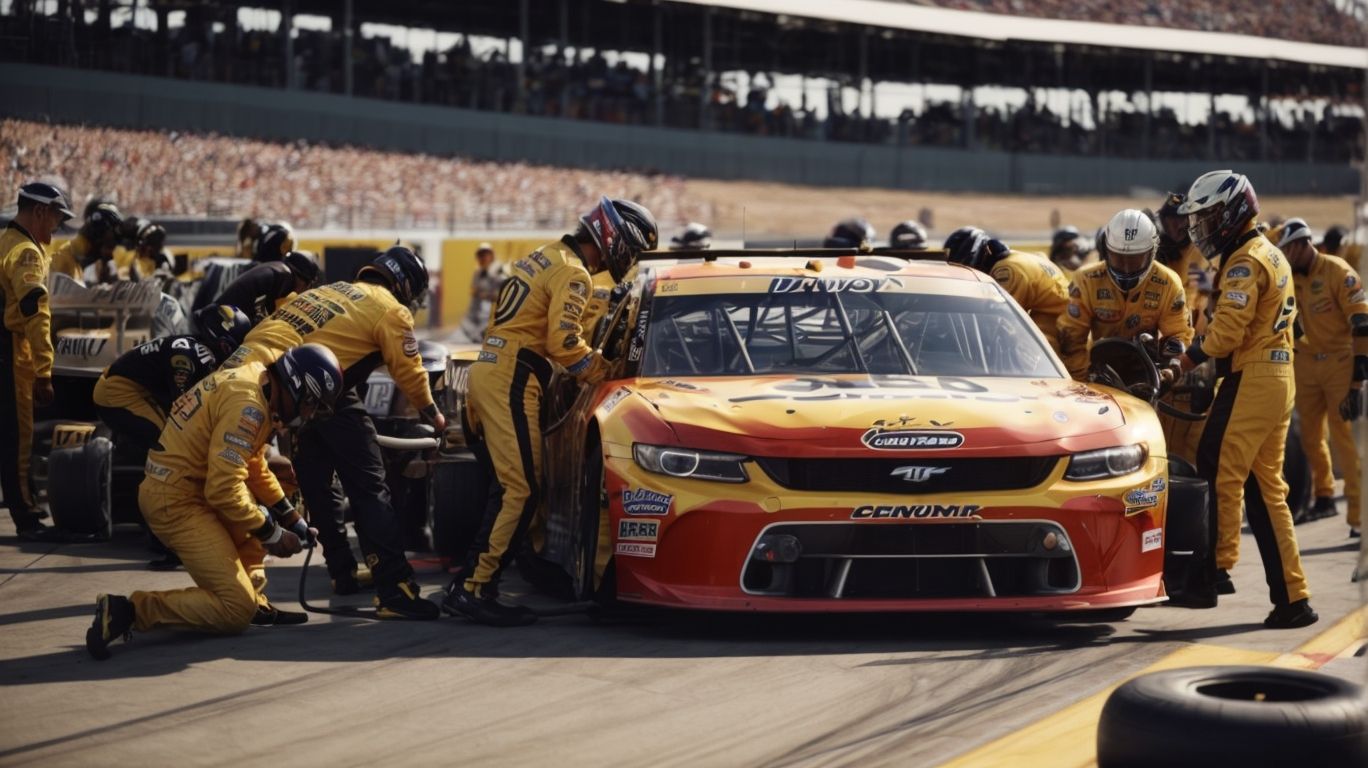
How Long Does a Nascar Pit Stop Take?
Nascar pit stops are a crucial aspect of a race, where teams have to execute a series of tasks in a limited amount of time to ensure their driver can get back on the track as quickly as possible.
Have you ever wondered how long a pit stop typically takes in Nascar?
We explore the history of pit stops in Nascar, factors that affect their duration, the fastest recorded pit stop time, and how pit crews practice for these high-pressure moments.
Let’s uncover the ins and outs of Nascar pit stops!
Key Takeaways:
What is a Nascar Pit Stop?
A NASCAR pit stop is a critical aspect of racing that involves a well-coordinated team of pit crew members working swiftly to refuel the car, change tires, and make adjustments to enhance the vehicle’s performance.
The efficiency of a pit stop is paramount in shaving off crucial seconds from the total race time, potentially making a significant difference in the final standings. Each member of the pit crew has a specific role, such as tire changers, fuelers, jackmen, and mechanics, all working together seamlessly to ensure a lightning-quick stop. The strategy behind when to come in for a pit stop can be make or break in a race, as fresher tires and a topped-up tank can give the driver the edge needed to overtake opponents.
History of Pit Stops in Nascar
The history of pit stops in NASCAR dates back to the early days of racing when quick pit maneuvers became a game-changer in the NASCAR Championship, revolutionizing race strategies and team dynamics.
Over the years, pit stops have evolved from simple tire changes to intricate choreographed routines that involve changing multiple tires, refueling the vehicle, and making crucial adjustments to improve performance on the track. In the 1950s and 1960s, pit stops in NASCAR were more about efficiency and speed, with limited technology available to assist the pit crews.
As the sport progressed, advancements in equipment, such as air guns for faster tire changes and sophisticated communication systems, transformed pit stops into a highly synchronized and strategic operation. The introduction of specialized pit crew members, such as tire changers, fuelers, and crew chiefs, added layers of expertise to the pit stop process.
How Long Do Pit Stops Typically Take?
Pit stops in NASCAR typically range in duration depending on the tasks performed, with NASCAR pit stop times varying from lightning-fast stops under 10 seconds to more comprehensive stops that can exceed 20 seconds.
Several factors come into play when it comes to the speed of NASCAR pit stops. The efficiency of the pit crew members, the precision of equipment handling, and the smooth coordination between the crew and the driver all contribute to shaving off crucial seconds during a pit stop. Teams often practice tirelessly to perfect these maneuvers, as even the slightest delay can cost a race. Quick turnarounds in the pits can make or break a driver’s chances of winning, showcasing the critical role these pit stops play in the overall strategy of NASCAR racing.
What Factors Affect the Duration of a Pit Stop?
Several factors impact the duration of a pit stop in NASCAR, such as the efficiency of the tire changers, the speed of the refueling process, and the mechanical adjustments made to the vehicle by the mechanics.
The tire changers play a crucial role in the pit stop, as their speed and precision can make a significant difference. They carefully remove the old tires and swiftly install new ones, ensuring they are securely fastened to endure the high speeds of the race. The refueling specialists work in tandem with the tire changers, swiftly inserting the fuel nozzle and filling the tank with precision to minimize any spills or delays.
What is the Fastest Recorded Pit Stop Time?
The fastest recorded pit stop time in NASCAR stands as a testament to the precision and teamwork of pit crews, showcasing an incredible display of speed and efficiency that set a new standard in NASCAR pit stop performance.
One of the key memorable achievements in NASCAR pit stop history was set by the Hendrick Motorsports team in 2013, achieving a stellar pit stop time of just 11.468 seconds. This record-breaking feat not only highlighted the exceptional skills of the crew members but also underlined the technological advancements and meticulous planning that go into executing a flawless pit stop. Analyzing the techniques employed during such lightning-fast stops reveals a choreographed ballet of tire changers, fuelers, and jackmen working in perfect harmony to shave off precious seconds from the pit stop time.
How Are Pit Stops Timed?
Pit stops in NASCAR are meticulously timed using advanced technology and precision instruments to track the duration of each stop, ensuring accuracy and fair competition among teams.
The timing mechanisms in NASCAR pit stops are crucial, with each team aiming to complete their pit stops swiftly and effectively. To achieve this, teams rely on sophisticated tools such as radio-frequency identification (RFID) systems and high-speed cameras to capture every second of the stop with precision. These technologies provide real-time data that helps in evaluating the efficiency of the pit crew and making split-second decisions during the race. The accuracy of timing is not just about performance, but it also plays a significant role in maintaining the integrity of the race, ensuring that all teams are adhering to the rules and regulations.
What Happens During a Nascar Pit Stop?
During a NASCAR pit stop, a choreographed sequence of actions unfolds as the pit crew swiftly attends to tasks such as refueling the car, changing tires, and making adjustments, all while the driver, like Chase Elliott, awaits in the vehicle.
These pit stops are a crucial element in a NASCAR race as seconds saved or lost can have a significant impact on the race outcome. As the car pulls into the pit lane, each crew member has a designated role to play, working in harmony to minimize the stop time.
One important role is that of the tire changers who deftly remove and replace the tires with precision and speed, ensuring optimal grip for the driver.
The fueler swiftly inserts the fuel canister into the car, expertly filling the tank to capacity in a matter of seconds. Meanwhile, the crew chief communicates with the driver, discussing any necessary adjustments to enhance the car’s performance for the upcoming stint.
High-pressure situations in the pit require not only technical expertise but also seamless teamwork among the crew members. Once all tasks are completed, the crew signals to the driver who accelerates back into the race, aiming to gain a competitive edge over opponents.
Driver Enters Pit Lane
As the driver enters the pit lane, the pit crew at Joe Gibbs Racing springs into action, showcasing their skills and precision in pit crew competitions as they prepare to execute a flawless pit stop.
The initial moments of a NASCAR pit stop are crucial, filled with a buzz of activity and intense focus. The pit crew members, each assigned specific roles, move in synchronization to change tires, refuel the car, and make any necessary adjustments. This ballet of precision and speed is not just a routine task; it’s a competitive battleground where every second counts. Joe Gibbs Racing is renowned for their pit crew efficiency, often setting the bar high for other teams to follow.
Car is Jacked Up
The pit crew members at Hendrick Motorsports swiftly jack up the car, showcasing their coordination and precision in executing this crucial step, led by experienced crew members like Scott Brzozowski.
During a NASCAR pit stop, the process of jacking up the car requires a seamless choreography of movements. As the car pulls into the pit, crew members armed with specialized tools converge with remarkable speed and skill. Each member has a designated role, whether it is operating the jack, changing tires, or refueling the vehicle.
Notable crew leaders like Scott Brzozowski guide their teams with a blend of expertise and leadership. Their experience in handling the complexities of pit stops ensures a well-oiled machine that aims for lightning-fast efficiency.
Tires are Changed
The tire changers swiftly replace the worn-out tires, ensuring each lug nut is securely fastened to optimize the performance of vehicles like the Chevrolet Camaro NAPA Auto Parts car in NASCAR pit stops.
During a NASCAR pit stop, the tire changers are vital in executing precise and rapid tire changes. These highly skilled individuals work with precision and speed, swiftly removing the old tires and fitting the new ones onto the vehicle.
Lug nut security is a crucial aspect of their job, as ensuring each lug nut is properly fastened is essential for the safety and performance of the car. Any loose lug nut can result in catastrophic consequences during a high-speed race.
The Chevrolet Camaro NAPA Auto Parts car relies on these tire changers to execute flawless pit stops, allowing the driver to get back on the track swiftly with optimal performance and grip.
Fuel is Added
The pit crew swiftly refuels the car with precision, optimizing fuel efficiency and performance as part of their assigned roles, contributing to the success of drivers like Chase Briscoe on the NASCAR circuit.
During a NASCAR pit stop, the refueling process is a well-orchestrated ballet of teamwork and split-second timing. The fuel man must accurately insert the nozzle into the fuel cell, ensuring no spills or wastage. Meanwhile, the gasman is in charge of monitoring the fuel flow and communicating with the rest of the crew. Each member has a specific duty, from securing the gas can to handling any issues that may arise.
With skilled execution, the pit crew can refuel a car in a matter of seconds, allowing drivers like Chase Briscoe to stay competitive on the track. Briscoe, known for his impressive performances, relies on the efficiency and expertise of his crew to make quick pit stops that can give him an edge over his competitors.
Car is Lowered and Driver Exits Pit Lane
After the final adjustments, the car is lowered, and the driver exits the pit lane smoothly, adhering to NASCAR rules and showcasing the efficient teamwork and expertise of the pit crew mechanics in competitive pit crew competitions.
Lowering the car signifies the culmination of the pit stop process, with the driver poised to rejoin the race with confidence. This seamless transition from the pit lane back onto the track is not only a testament to the skill of the driver but also to the precision and speed at which the mechanics operate. It is vital for the team to ensure they comply with NASCAR regulations at all times, avoiding penalties that could impede their performance.
The pit crew’s coordinated efforts are crucial in these high-pressure moments, where split-second decisions and flawless execution are essential. Each member plays a specific role in the pit stop, whether it’s changing tires, refueling, or making adjustments to enhance the car’s performance. The synchrony and efficiency displayed by the pit crew underscore their dedication to excellence and their commitment to supporting the driver in every possible way.
How Do Pit Crews Practice for Pit Stops?
Pit crews in NASCAR hone their skills through rigorous practice sessions that focus on enhancing coordination, speed, and precision in executing pit stops, ensuring seamless performance during high-pressure race scenarios.
These training sessions typically involve simulation drills where crews practice pit stops repeatedly, striving for seamless synchronization between members. Each crew member has a specific role, be it changing tires, fueling the car, or adjusting aerodynamics, and they must execute their tasks with split-second precision.
Pit crew coaches analyze footage of practice sessions to pinpoint areas for improvement, allowing for targeted skill refinement. This attention to detail and commitment to constant skill development are what elevate pit crews to a level where split-second pit stops can make all the difference in a race.
What Are the Risks and Challenges of Pit Stops?
Pit stops in NASCAR pose inherent risks and challenges, including the potential for human errors, mechanical failures, and safety concerns that can impact race outcomes and the well-being of pit crew members.
Human errors are a significant risk during pit stops; a miscommunication in the hurry of changing tires or refueling can lead to a car being released too early, endangering both the crew and other racers. Mechanical challenges, such as faulty equipment or parts failing under pressure, can cause delays that affect a driver’s position in the race standings. Safety considerations are paramount, with crew members working in close quarters, exposed to fast-moving vehicles and hot equipment, emphasizing the need for strict protocols and vigilance during this high-pressure environment.
Human Error
Human errors during pit stops can have significant consequences, underscoring the importance of meticulous training, supervision, and leadership within pit crews, as emphasized by experienced figures like NASCAR coach Chris Krieg.
Ensuring seamless pit stops in NASCAR involves a delicate dance of speed and precision. A single misstep, a missed lug nut, or a delayed tire change can turn the tide of a race. The ripple effect of mistakes can be felt not just in seconds lost but in positions surrendered.
Coaching and supervision play a critical role in curbing these errors. Chris Krieg, with his wealth of expertise, stress the significance of constant practice, clear communication, and meticulous attention to detail.
Mechanical Issues
Mechanical issues can pose formidable challenges during pit stops, necessitating the expertise of skilled mechanics who play a vital role in addressing and resolving technical problems, particularly in demanding races like endurance racing.
The efficiency and speed of a pit stop can significantly impact a driver’s position and ultimately, race outcomes. Imagine a scenario where a car experiences sudden gearbox failure, and it’s up to the mechanics to quickly diagnose and rectify the issue. Their ability to troubleshoot complex problems under intense pressure highlights their crucial role on race day. In endurance racing, where teams rely on seamless pit stops to maintain competitiveness over long distances, the importance of skilled mechanics becomes even more pronounced.
Safety Concerns
Safety concerns loom large in NASCAR pit stops, prompting stringent safety protocols, training, and adherence to regulations to safeguard pit crew members, mirroring the safety focus seen in competitions like the World Rally Championship.
Within the high-octane environment of NASCAR pit stops, the need for quick and efficient servicing of cars clashes with the paramount importance of crew safety.
Regulations mandate the use of safety equipment such as fire-resistant suits, helmets, and gloves to mitigate risks during pit lane activities.
Extensive training programs are conducted to ensure that crew members are well-versed in emergency procedures and equipped to handle any unforeseen circumstances.
How Have Pit Stops Evolved in Nascar?
Pit stops in NASCAR have undergone significant evolution, drawing inspiration from the techniques and innovations seen in other racing series such as Formula 1 and V8 Supercars, leading to enhanced efficiency and performance in pit crew operations.
This evolution has seen NASCAR pit crews develop synchronized choreography akin to a well-oiled machine, with tire changers, fuelers, and jackmen working seamlessly together under immense pressure. By studying the rapid pit stops in Formula 1, NASCAR teams have adopted strategies like the ‘two-tire’ or ‘no-tire’ stop, strategically deciding when to prioritize fuel, tires, or track position. These tactics have revolutionized pit stop strategies, allowing teams to gain precious seconds in races. The advent of high-tech tools and equipment, such as impact wrenches and automated jacks, further exemplifies the shift towards efficiency and precision in modern pit stops.
Frequently Asked Questions
How long does a NASCAR pit stop take?
A typical NASCAR pit stop lasts anywhere between 12-16 seconds, depending on how many tires need to be changed and the amount of fuel needed.
What factors affect the length of a NASCAR pit stop?
The number of tires being changed, the amount of fuel needed, and any necessary adjustments or repairs to the car all contribute to the length of a pit stop.
How do teams practice pit stops?
NASCAR teams practice pit stops through repetition and drills, using a mock pit wall and car to simulate real race conditions.
Why are pit stops important in a NASCAR race?
Pit stops allow teams to make necessary adjustments to the car and refuel, helping maintain the car’s performance throughout the race. A quick pit stop can also give a driver an advantage on the track.
How have pit stops changed over the years?
In the early days of NASCAR, pit stops could take up to a minute or more. With advancements in technology and strategy, they have become much quicker and more efficient, with teams focusing on shaving off fractions of a second.
Are there any rules or regulations for NASCAR pit stops?
Yes, NASCAR has strict regulations for pit stops, including equipment and crew member limitations, as well as penalties for any violations or unsafe practices.