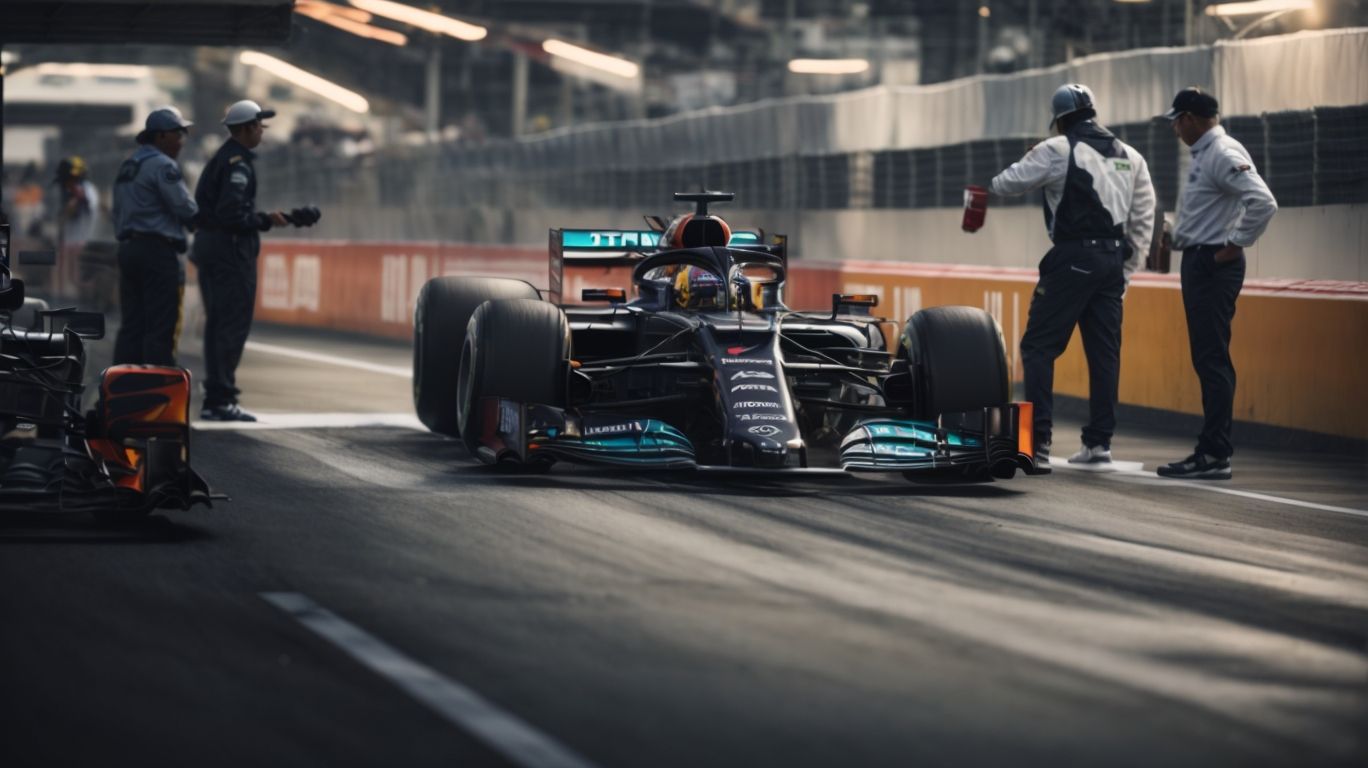
Do F1 Tires Get Reused?
Ever wondered what happens to F1 tires after a race? Are they reused or recycled? How many tires does an F1 team use in a race, and what is their lifespan?
In this article, we will explore the world of F1 tires, from how they differ from regular tires to how they degrade during a race. We will also discuss the safety measures for F1 tires and whether they are environmentally friendly.
Join us as we delve into the fascinating world of F1 tires!
Key Takeaways:
What Are F1 Tires?
Formula 1 (F1) tires, commonly referred to as ‘tyres’ in motorsport, are specially designed rubber components used on F1 cars during races.
These tires play a crucial role in maximizing performance on the track, serving as the only contact point between the vehicle and the road surface. The Italian manufacturer Pirelli holds the exclusive tire supply contract for F1 races, developing various compounds to meet the demands of different track conditions.
The construction of F1 tires includes intricately layered materials with specific tread patterns to optimize grip, durability, and responsiveness. Tire pressure and temperature are meticulously monitored and adjusted to ensure peak performance and safety during high-speed maneuvering on the track.
How Are F1 Tires Different From Regular Tires?
F1 tires differ from regular tires in terms of composition, construction, and performance characteristics, tailored specifically for the demands of Formula 1 racing.
Regarding composition, F1 tires are made from specialized rubber compounds that provide exceptional grip and heat-resistance during high-speed cornering. The construction of these tires includes intricate layers and designs to optimize performance and durability, allowing them to withstand the extreme forces experienced on the racetrack. The unique features of F1 tires also enhance handling precision, responsiveness, and overall stability, enabling drivers to push the limits of speed and control. These high-performance requirements set F1 tires apart from standard road car tires, emphasizing the importance of technological advancements in racing.
What Happens to F1 Tires After a Race?
After an intense F1 race, the fate of the used tires is a critical aspect of the post-race process, involving various disposal and recycling methods.
Once the race concludes, the team’s engineers meticulously inspect each tire to determine its condition. Those that are no longer fit for racing are carefully stored for proper disposal or recycling. Tires suitable for reuse in testing or other non-competitive activities are separated for future use. Before proceeding to the recycling facility, specialized removal techniques are employed to ensure that any remaining waste materials are safely extracted.
Do F1 Teams Reuse Tires?
F1 teams often explore the possibility of reusing tires under certain circumstances to optimize their tire strategy and performance in subsequent races.
One of the main reasons why teams consider reusing tires is to manage their allocation of compounds effectively, especially in races where tire wear is less severe. By using tires that have already been run, teams can sometimes gain valuable insights into how the tires perform and degrade over multiple laps, allowing them to adjust their strategy accordingly. Reusing tires also comes with challenges, as the wear and performance of each tire can vary based on the last race conditions and track surface, requiring teams to carefully assess the potential impact on their overall race strategy.
Do F1 Tires Get Recycled?
F1 tires undergo recycling processes at specialized facilities to minimize environmental impact, with options ranging from recycling into rubber pellets to energy recovery methods.
One common recycling route for F1 tires involves transforming them into rubber pellets, which can be used in various applications such as playground surfaces or athletic tracks due to their durability and flexibility. These pellets are typically produced at dedicated recycling facilities equipped with specialized machinery to process the tires efficiently while ensuring an eco-friendly approach.
Another method is utilizing the tires as tire-derived fuel (TDF) for energy recovery, where they are burned in controlled conditions to generate heat or electricity. This aligns with the racing industry’s commitment to sustainability by reducing waste and minimizing reliance on conventional fossil fuels.
How Many Tires Does an F1 Team Use in a Race?
An F1 team typically uses multiple sets of tires throughout a race weekend, with the exact quantity depending on factors like tire compounds, track conditions, and strategic decisions.
During a race, teams are allocated a specific number of each tire compound by the tire supplier based on regulations. These compounds, such as soft, medium, and hard, offer varying levels of grip and durability.
- Teams must strategically decide when to switch to different compounds to optimize performance, considering factors like weather and track conditions.
- Each team must ensure they manage tire wear effectively to maintain consistent handling and grip, crucial for overall race pace and strategy.
What Is the Lifespan of an F1 Tire?
The lifespan of an F1 tire is limited by factors such as wear and degradation during races, typically lasting for a specific distance or duration based on performance considerations.
The text is already properly formatted with the
tag. No changes are needed.
How Do F1 Tires Degrade During a Race?
F1 tires undergo gradual degradation during a race due to factors like tire wear, heat generation, and the demanding track conditions, affecting tire performance and grip levels.
One of the key factors influencing tire degradation in F1 races is the track surface. Different circuits feature varying abrasive levels, with rougher tracks causing tires to wear more quickly. The type of tire compound used plays a significant role in how tires degrade. Soft compounds tend to offer better grip but wear out faster compared to harder compounds.
Each driver’s driving style can also impact tire degradation. Aggressive driving, characterized by rapid acceleration and hard braking, can accelerate tire wear, while a smooth and consistent driving approach can help prolong tire longevity.
What Factors Affect the Wear and Tear of F1 Tires?
Several key factors contribute to the wear and tear of F1 tires, including track temperature, tire compounds, driving style, aerodynamic forces, and pit stop strategies.
Track temperature plays a crucial role in determining the performance and longevity of F1 tires. As the temperature rises or falls, the tire grip and wear characteristics change significantly. High track temperatures can lead to overheating of the tire compound, causing faster degradation and reduced grip levels. Conversely, in cooler temperatures, tire warm-up becomes a challenge, affecting the overall handling of the car.
Aerodynamic impacts also have a profound effect on tire wear patterns. The aerodynamic design of an F1 car generates downforce, pushing the tires onto the track surface for better grip. Excessive downforce can lead to increased tire wear, especially on the inner edges due to increased load. Finding the right balance between downforce and tire wear is crucial for optimal performance.
What Happens to F1 Tires at the End of the Season?
At the conclusion of an F1 season, the accumulated tires are managed through disposal, recycling, or reuse methods, ensuring sustainable practices in handling tire waste.
For F1 teams and suppliers, post-season tire management is not only a logistical necessity but also a crucial part of their commitment to eco-friendly initiatives. The worn-out tires that have served their purpose on the racetrack are carefully examined to determine the most suitable course of action. Recycling plays a significant role in this process, with many tires being sent to specialized facilities for shredding and repurposing. Some teams even opt to reuse tires, refurbishing them for training purposes or non-competitive events.
The shift towards sustainable practices extends beyond recycling. Some tires find their way to cement factories, where they are used as alternative fuel sources, reducing the environmental impact of traditional heating processes. This innovative approach not only minimizes waste but also contributes to the circular economy model that F1 is striving to embrace.
By actively engaging in eco-friendly post-season tire management strategies, F1 entities are showcasing their dedication to environmental stewardship while paving the way for a more sustainable future in motorsports.
How Are F1 Tires Tested and Approved?
F1 tires undergo rigorous testing and evaluation processes to ensure compliance with safety standards, performance benchmarks, and operational requirements before their approval for use in races.
During the development phase, renowned tire manufacturers like Pirelli subject these tires to a battery of tests including high-speed track simulations, durability assessments, and tread pattern optimizations. These stringent tests are crucial in determining the tire’s ability to withstand varying track conditions and temperature fluctuations during a race weekend.
Quality checks are then carried out to verify factors like compound consistency, sidewall durability, and overall grip levels. Any deviations discovered are promptly addressed and retested to meet the exacting standards set by the FIA (Fédération Internationale de l’Automobile).
Once the tires successfully pass all these stages, they move on to the final qualifying and safety validations, where performance metrics such as lap times, braking distances, and cornering capabilities are meticulously scrutinized. Only after these intensive procedures are completed do the F1 tires receive official approval for use in the championship races.
What Are the Safety Measures for F1 Tires?
Safety is paramount in F1 racing, and specific measures are in place to ensure the integrity and performance of tires, including pressure monitoring, temperature control, and structural integrity checks.
One of the critical components in F1 tire safety is precise pressure management. Teams meticulously adjust and monitor the tire pressure before and during races to optimize performance and ensure proper grip on the track.
Temperature also plays a crucial role in tire safety, as extreme heat can lead to tire degradation and loss of grip. Advanced sensors are employed to constantly track and manage tire temperatures, preventing overheating and potential blowouts.
Thorough structural integrity assessments are conducted using sophisticated technologies such as tire guns to detect any anomalies or potential weaknesses in the tire construction, ensuring compliance with stringent safety standards.
Are F1 Tires Environmentally Friendly?
F1 tire manufacturers have made significant strides in enhancing the eco-friendliness of tires through sustainable production methods, recycling commitments, and low-impact life cycles.
One of the key initiatives embraced by F1 tire suppliers is tyre recycling. By implementing state-of-the-art recycling technologies, they aim to repurpose used tires into various products, reducing waste and carbon footprint. These companies often explore alternative recycling options, such as converting worn-out tires into sports surfaces or playground materials. F1 tire manufacturers demonstrate their environmentally friendly practices by utilizing renewable resources, minimizing energy consumption, and prioritizing materials that are easily recyclable.
What Are the Alternatives to F1 Tires?
Exploring alternative recycling options for F1 tires, such as converting them into tire-derived fuel (TDF), rubber pellets, or utilizing them in cement factories for sustainable waste management.
Repurposing F1 tires offers a plethora of environmental benefits, with one prominent method being the conversion into tire-derived fuel (TDF), a process where tires are shredded into small pieces and used as fuel in various industries.
Plus TDF, these tires can undergo recycling to produce rubber pellets for manufacturing various rubber products, reducing the demand for new raw materials.
Another innovative approach involves utilizing these tires in cement factories to replace traditional fuels, contributing to a more sustainable and eco-friendly cement production process.
Frequently Asked Questions
Do F1 Tires Get Reused?
Do Formula 1 tires get reused during a race?
No, F1 tires are not reused during a race. They are changed multiple times throughout the race as they wear out.
How many times are F1 tires changed during a race?
How often are F1 tires changed during a race?
F1 tires are typically changed two to three times during a race, depending on track conditions and tire wear.
What happens to used F1 tires?
What is done with F1 tires after they are used?
Used F1 tires are collected by Pirelli, the official tire supplier for F1, and recycled into various products such as flooring tiles and playground surfaces.
Can F1 teams reuse tires from previous races?
Are F1 teams allowed to reuse tires from previous races?
No, F1 regulations require that teams use new tires for each race. Reusing tires from previous races is not allowed.
Do F1 teams have a limited number of tires for a race?
How many tires are F1 teams allowed to use during a race weekend?
F1 teams are limited to 13 sets of tires per car for a race weekend, including practice sessions and qualifying.
Why are F1 tires not reused?
What is the reason behind not reusing F1 tires?
F1 tires are not reused because they are specifically designed for each race, and reusing them could compromise performance and safety on the track.