
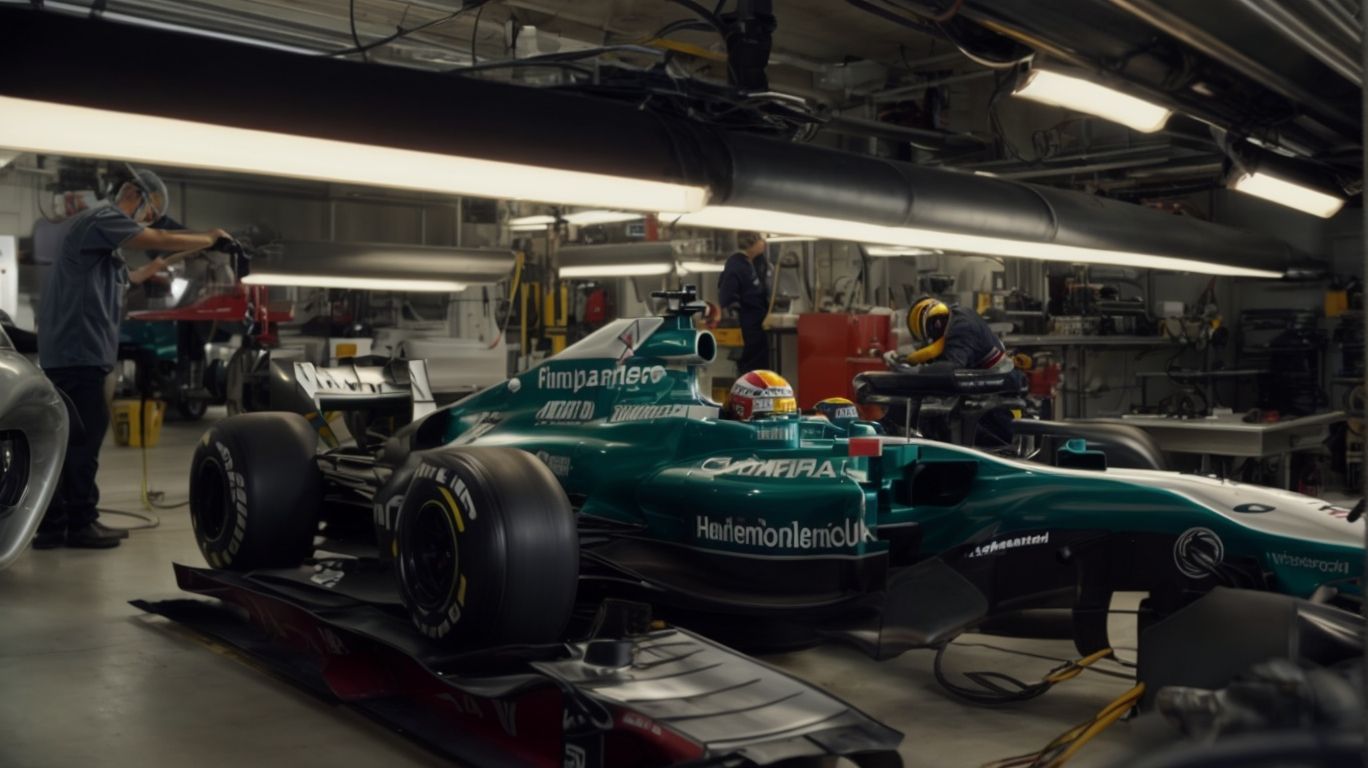
What Qualifications Do I Need to Be a F1 Mechanic?
Have you ever wondered what it takes to become an F1 mechanic? From technical skills to physical demands, there are a variety of factors that come into play in this high-pressure and fast-paced industry.
We will explore the roles and responsibilities of an F1 mechanic, the skills required to excel in this field, the education and training needed, as well as the qualifications and certifications that are essential.
If you’re considering a career in the world of Formula 1 racing, this article is a must-read!
Key Takeaways:
What is an F1 Mechanic?
An F1 Mechanic is a skilled professional responsible for maintaining and repairing Formula 1 cars during races and ensuring they perform at their peak.
These mechanics possess a wide array of expertise, ranging from understanding intricate vehicle systems to executing lightning-fast pit stops. They play a crucial role in strategizing race plans, analyzing telemetry data, and fine-tuning the car’s performance based on the driver’s feedback.
F1 Mechanics are proficient in working under immense pressure, often in high-stress environments, where split-second decisions can make all the difference in a race outcome. Their ability to swiftly diagnose and rectify technical issues can determine the success or failure of a team on race day.
What are the Roles and Responsibilities of an F1 Mechanic?
The roles and responsibilities of an F1 Mechanic encompass a wide range of tasks, including car maintenance, pit stops, and troubleshooting mechanical issues for the Formula 1 team.
F1 Mechanics play a crucial role in the success of a racing team, as they are responsible for ensuring the cars are in optimal condition before and during races. This includes meticulously checking and maintaining various components of the car, such as the engine, suspension, and brakes, to ensure peak performance on the track.
During pit stops, F1 Mechanics are the unsung heroes who work swiftly and efficiently to change tires, refuel the car, and make any necessary adjustments within seconds, playing a pivotal role in the race strategy. Their ability to perform these tasks flawlessly under immense pressure is a testament to their skill and dedication.
What Skills are Required to Become an F1 Mechanic?
Becoming an F1 Mechanic necessitates possessing technical expertise, mechanical knowledge, attention to detail, and strong teamwork capabilities.
Technical proficiency is a cornerstone of the F1 mechanic’s role, requiring in-depth knowledge of advanced systems, components, and technologies used in Formula 1 cars. Their adeptness in handling complex tools and machinery in high-pressure environments is crucial for ensuring the vehicles perform at optimal levels on the track.
Mechanical acumen plays a pivotal role as F1 mechanics are responsible for intricate tasks like engine tuning, suspension setup, and aerodynamic adjustments that directly impact the car’s performance. Their ability to troubleshoot mechanical issues swiftly and accurately is essential during races when every second counts.
Meticulousness is a key trait F1 mechanics must possess to meticulously inspect, maintain, and fine-tune race cars with precision. Attention to detail is paramount as the slightest oversight in the setup or maintenance process could have significant consequences during a race.
Teamwork skills are critical as F1 mechanics work closely with engineers, drivers, and other team members to ensure seamless coordination in implementing performance upgrades, analyzing data, and making strategic decisions during races. Effective communication and collaboration are vital for achieving collective success in the highly competitive world of Formula 1.
Technical Skills
Technical skills are paramount for an F1 Mechanic as they need to excel in operating advanced machinery, understanding complex systems, and diagnosing technical issues swiftly and accurately.
Proficiency in using diagnostic tools is a crucial aspect of their role. Mechanics must be adept at analyzing readings, identifying abnormalities, and making precise assessments to ensure peak performance of the race car.
The ability to interpret technical data from various sensors and telemetry systems is essential. This skill enables them to fine-tune the vehicle’s setup, address potential issues preemptively, and optimize performance on the track.
Troubleshooting intricate car components demands a keen eye for detail and a thorough understanding of mechanical and electrical systems. Mechanics must be able to swiftly identify and rectify issues to minimize downtime during race weekends.
Mechanical Knowledge
Mechanical knowledge is fundamental for F1 Mechanics, as they must comprehend the intricacies of F1 cars, understand aerodynamics, and optimize vehicle performance under varying conditions.
Without a deep understanding of vehicle dynamics, F1 Mechanics might struggle to fine-tune crucial components such as suspension setups, gear ratios, and brake systems, all of which play a pivotal role in the overall performance on the track. In the competitive world of Formula 1 racing, even the slightest adjustment can make a significant difference in lap times and overall race outcomes.
A solid grasp of aerodynamics is essential for maximizing downforce and reducing drag, ultimately enhancing cornering grip and straight-line speed. F1 Mechanics need to stay abreast of the latest advancements in aerodynamic design to ensure their cars maintain a competitive edge.
Attention to Detail
Attention to detail is a critical trait for F1 Mechanics, who must meticulously inspect and fine-tune every component of the F1 car to ensure optimum performance and safety.
From adjusting critical aerodynamic elements to fine-tuning engine settings, these skilled professionals leave no stone unturned in their pursuit of perfection. A minor miscalculation or oversight could have significant repercussions on the track.
Their precision extends beyond the track, as they meticulously prepare each race weekend by setting up the car with utmost care, focusing on every nut, bolt, and setting with meticulous accuracy.
Teamwork
Teamwork is a key attribute for F1 Mechanics as they collaborate closely with engineers, coordinators, and other team members to ensure seamless operations and optimal car performance.
In the fast-paced world of Formula 1 racing, the role of F1 Mechanics goes beyond just technical expertise; it requires effective communication and strong coordination across all levels of the team. These skilled technicians work collectively to analyze data, make split-second decisions, and execute precise adjustments during high-pressure race weekends. Their ability to work seamlessly together under intense time constraints is what sets top F1 teams apart on the grid.
What Education and Training is Required to Become an F1 Mechanic?
Becoming an F1 Mechanic typically involves pursuing a combination of high school education, vocational training, apprenticeships, and potentially higher education degrees in automotive or mechanical fields.
High school education forms the foundational stepping stone for aspiring F1 Mechanics, providing essential knowledge in subjects like mathematics, physics, and technology. Vocational programs in automotive repair or engineering can offer hands-on experience and specialized skills relevant to the racing industry. Apprenticeships with racing teams or automotive companies allow individuals to gain practical experience under the guidance of experienced professionals. Pursuing higher education degrees in mechanical engineering or automotive technology can further enhance technical expertise and open up advanced career opportunities within the competitive world of Formula 1.
High School Education
High school education serves as the foundation for aspiring F1 Mechanics, providing essential knowledge in mathematics, physics, and technical subjects crucial for a career in motorsport engineering.
By mastering these subjects during high school, individuals gain a solid understanding of the fundamental principles that form the basis of mechanics. A strong grasp of mathematics is essential for F1 Mechanics to calculate speeds, forces, and design components with precision. Physics knowledge allows them to comprehend the laws of motion and energy transformations crucial for optimizing race car performance. Technical disciplines such as automotive technology and engineering provide a practical framework that aspiring mechanics can later apply in professional settings.
Vocational Training
Vocational training programs offer practical hands-on experience and specialized knowledge in automotive mechanics, preparing individuals for the technical demands of a career as an F1 Mechanic.
Through these programs, aspiring F1 Mechanics have the opportunity to work with industry-standard tools and equipment, honing their skills through real-world applications. This practical experience helps students develop a deep understanding of automotive systems, including engine dynamics, chassis design, and aerodynamics.
Vocational training provides a comprehensive foundation in automotive technology, ensuring that potential F1 Mechanics are equipped to handle the complexities of high-performance racing vehicles. The hands-on approach fosters problem-solving abilities and critical thinking, essential traits for success in the fast-paced world of Formula 1.
Apprenticeship
Apprenticeships provide valuable hands-on experience for aspiring F1 Mechanics, allowing them to work alongside experienced professionals, gain practical skills, and understand the intricacies of Formula 1 car maintenance.
One of the key advantages of apprenticeship programs in the journey to becoming an F1 Mechanic is the opportunity for mentorship, where seasoned professionals guide and train apprentices in a real-world setting. This mentorship not only imparts technical knowledge but also instills the importance of precision and attention to detail in maintaining high-performance racing cars.
Apprenticeships offer a structured learning environment that combines classroom theory with on-the-job training, bridging the gap between textbook knowledge and practical application in the fast-paced world of motorsport.
Higher Education
Higher education degrees in automotive engineering or related fields can enhance the technical expertise and theoretical understanding of aspiring F1 Mechanics, providing a solid foundation for advanced roles within motorsport teams.
Academic qualifications not only contribute to in-depth knowledge of vehicle design, aerodynamics, and mechanical systems but also expose individuals to the latest technological advancements in the automotive industry. Pursuing a degree opens up opportunities for practical hands-on experience through internships and research projects, allowing aspiring F1 Mechanics to apply classroom knowledge to real-world scenarios.
- With a higher education degree, F1 Mechanics improve their problem-solving skills, critical thinking abilities, and decision-making capabilities, crucial for handling complex racing scenarios and optimizing team performance.
- This educational background not only boosts credibility and professionalism but also demonstrates a commitment to continuous learning and growth, qualities highly valued in the competitive motorsport environment.
What Qualifications and Certifications are Needed to Become an F1 Mechanic?
Becoming an F1 Mechanic often requires obtaining industry-specific certifications like Motorsport Industry Association (MIA) accreditation, Formula Student experience, and FIA Mechanics Accreditation to demonstrate competency and professionalism in the field.
While pursuing a career as an F1 Mechanic, individuals should aim for qualifications such as a degree in mechanical engineering or automotive technology to build a strong technical foundation.
Participation in Formula Student competitions not only enhances practical skills but also provides valuable experience in a competitive motorsport environment.
Obtaining the FIA Mechanics Certification further solidifies one’s expertise in the field and showcases a commitment to adhering to international standards.
Motorsport Industry Association (MIA) Accreditation
MIA accreditation is a recognized standard in the motorsport industry, demonstrating an F1 Mechanic’s adherence to professional standards, quality practices, and ethical conduct in their work.
For F1 Mechanics, achieving MIA accreditation is not only a testament to their technical skills but also signifies a commitment to excellence and continuous improvement. The certification process involves rigorous evaluation of an individual’s knowledge, experience, and competency in various aspects of Formula 1 racing. Holding this accreditation showcases a mechanic’s dedication to upholding industry standards, staying updated with advancements in technology, and contributing to the overall safety and performance of the racing vehicles. It sets them apart as professionals who are well-versed in the intricacies of the high-stakes world of motorsport engineering.
Formula Student Experience
Formula Student experience provides aspiring F1 Mechanics with hands-on exposure to motorsport engineering, collaborative teamwork, and real-world car design and racing challenges, preparing them for the dynamic environment of Formula 1.
Participating in Formula Student competitions nurtures students in the intricate world of motorsport engineering, offering a blend of theoretical knowledge and practical skills necessary for their dream job as an F1 mechanic. Through these projects, individuals gain invaluable insights into vehicle dynamics, aerodynamics, and material science, equipping them to tackle the complexities of Formula 1 cars.
The hands-on experience garnered from actual car assembly and testing not only hones technical abilities but also instills a deep appreciation for meticulous attention to detail and precision crucial in the high-stakes realm of F1 racing. The collaborative nature of Formula Student fosters teamwork and communication skills, mirroring the teamwork required in professional racing environments.
FIA Mechanics Accreditation
FIA Mechanics Accreditation certifies the technical proficiency and competencies of F1 Mechanics, ensuring adherence to safety standards, regulations, and best practices in the motorsport industry.
This accreditation is paramount in the highly competitive world of Formula 1, where split-second decisions can make all the difference on the track. The rigorous training and assessments that mechanics undergo for this accreditation validate their ability to handle the demands of the fast-paced and high-pressure racing environment.
By obtaining the FIA Mechanics Accreditation, individuals showcase their dedication to professionalism and excellence in the field. This credential not only validates their skills but also reassures teams and drivers that their safety is in capable hands.
What Experience is Required to Become an F1 Mechanic?
Acquiring experience in lower racing categories and working with teams in various motorsport events are crucial steps for aspiring F1 Mechanics to develop hands-on skills, operational knowledge, and teamwork dynamics.
Building a solid foundation through involvement in junior single-seater racing series or national championships sharpens technical competencies and fosters an understanding of race car components and setup intricacies.
Collaborating with teams during motorsport events enables future F1 Mechanics to grasp the importance of effective communication, problem-solving under pressure, and workflow coordination within high-paced environments.
Practical exposure to race car maintenance procedures further hones their craft, providing them with invaluable insights into the meticulous care and precision required at the pinnacle of motorsport.
Working in Lower Racing Categories
Working in lower racing categories offers aspiring F1 Mechanics a hands-on learning environment, exposure to diverse racing technologies, and the opportunity to refine their skills in a competitive motorsport setting.
By gaining experience in junior racing series, individuals can enhance their problem-solving abilities by dealing with the challenges that arise in the fast-paced world of motorsport. Hands-on experience with different car setups and configurations in lower categories allows them to understand the intricate details of vehicle dynamics and performance enhancements.
This exposure not only sharpens technical skills but also fosters adaptability, crucial when working within the high-pressure environment of Formula 1. Engaging in lower racing competitions provides valuable insights into the latest advancements in racing technology and offers networking opportunities with industry professionals.
Working with a Team in Other Motorsport Events
Collaborating with teams in various motorsport events allows aspiring F1 Mechanics to hone their teamwork skills, adapt to dynamic racing environments, and build a solid foundation for transitioning into Formula 1 setups.
Being a part of diverse motorsport events enables individuals to experience different racing conditions, enhancing their ability to work efficiently in ever-changing settings. Adaptability is a crucial skill in the fast-paced world of racing, where unexpected challenges are the norm.
Effective communication within a team is essential for success in motorsport. Clear and concise communication skills are vital for coordinating tasks, ensuring safety, and maximizing performance.
Collaborating with professionals from various backgrounds fosters technical readiness, as individuals learn different methods and approaches, broadening their knowledge and expertise in the field.
What are the Physical Demands of Being an F1 Mechanic?
Being an F1 Mechanic entails enduring long hours, high-pressure situations during races, working in extreme temperatures, and necessitating physical strength, endurance, dexterity, and hand-eye coordination for meticulous car maintenance under challenging conditions.
These professionals often work around the clock during race weekends, requiring them to be on their feet for extended periods as they fine-tune the cars. The high-pressure environment of the pit lane demands quick thinking and the ability to perform under immense stress. Extreme temperature variations, from scorching heat to cold and rainy conditions, further test their resilience and adaptability.
Physical attributes play a significant role in the effectiveness of F1 Mechanics. Strength is crucial for lifting heavy car parts and equipment, while endurance is essential for enduring the demanding schedules of the racing season.
Long Hours and High Pressure
F1 Mechanics often work extended hours under immense pressure during races, requiring resilience, focus, and quick problem-solving abilities to ensure the team’s success amidst intense competition.
These professionals must have the mental fortitude to handle high-stakes situations where split-second decisions can make all the difference in a race outcome. To successfully manage stress in such a fast-paced environment, they often utilize techniques like mindfulness, breathing exercises, and visualization to maintain their composure and focus. Fostering strong team dynamics and effective communication among crew members plays a crucial role in enhancing overall performance while under such demanding conditions.
Working in Extreme Temperatures
F1 Mechanics face the challenge of working in extreme temperatures, ranging from scorching heat to chilly conditions, necessitating adaptability, protective gear usage, and physical resilience to perform efficiently in varying climatic environments.
Extreme temperatures pose significant challenges for F1 Mechanics due to the demanding nature of their work environment. In scorching heat, the mechanics must contend with intense sunlight, high temperatures, and dehydration risks. They need to adapt by staying hydrated, taking frequent breaks, and wearing appropriate clothing to shield themselves from heat-related illnesses.
Conversely, in chilly conditions, mechanics face the challenge of staying warm and maintaining dexterity in their hands while working with intricate machinery. They utilize protective gear such as insulated clothing, gloves, and hats to ensure their safety and comfort.
Physical readiness is crucial for F1 Mechanics to operate effectively in diverse temperature ranges. They engage in fitness routines to build strength, endurance, and flexibility, enabling them to withstand the physical demands of their job in extreme weather conditions.
Physical Strength and Endurance
Physical strength, endurance, stamina, and dexterity are crucial attributes for F1 Mechanics, enabling them to handle heavy equipment, perform repetitive tasks, and sustain optimal performance levels throughout demanding race schedules.
Strength is vital for lifting and maneuvering parts swiftly, while endurance ensures mechanics can work long hours without fatigue impacting their precision. Their dexterity helps them navigate tight spaces within the cars, making quick adjustments during pit stops. With the racing season consisting of back-to-back events, optimal stamina allows mechanics to stay sharp and focused through the unforgiving pace of F1 competition.
Dexterity and Hand-Eye Coordination
Dexterity and hand-eye coordination are essential skills for F1 Mechanics, as they need precise motor skills to handle intricate components, perform meticulous tasks, and coordinate effectively during fast-paced pit stops and maintenance procedures.
Whether it’s swiftly changing a damaged wing, adjusting tire pressures with split-second decisions, or fine-tuning the aerodynamics of a race car, the role of dexterity and hand-eye coordination for F1 Mechanics cannot be overlooked.
These mechanics must navigate through complex systems, wield delicate tools with finesse, and engage in operational coordination that is not only accurate but also lightning-fast during the critical moments of a race.
Frequently Asked Questions
What qualifications do I need to be a F1 mechanic?
To become a F1 mechanic, you typically need a degree in mechanical or automotive engineering, along with experience working on high-performance vehicles.
What kind of degree do I need to be a F1 mechanic?
Most F1 teams require their mechanics to have a degree in mechanical or automotive engineering. This gives you the technical knowledge and skills necessary to work on complex race cars.
Is previous experience necessary to become a F1 mechanic?
While a degree is important, previous experience working on high-performance vehicles is also highly valued by F1 teams. This can include experience in other motorsports or even working at a dealership.
Do I need any additional certifications to be a F1 mechanic?
Additional certifications, such as specialized training in motorsports or certifications from specific car manufacturers, can also help you stand out as a F1 mechanic.
What skills are essential to become a F1 mechanic?
Aside from technical knowledge, F1 mechanics must also possess strong problem-solving skills, attention to detail, and the ability to work well under pressure in fast-paced and high-stress environments.
Are there any physical requirements to become a F1 mechanic?
While there are no specific physical requirements, being in good physical shape and having good hand-eye coordination can be beneficial for F1 mechanics, as the job can be physically demanding.


