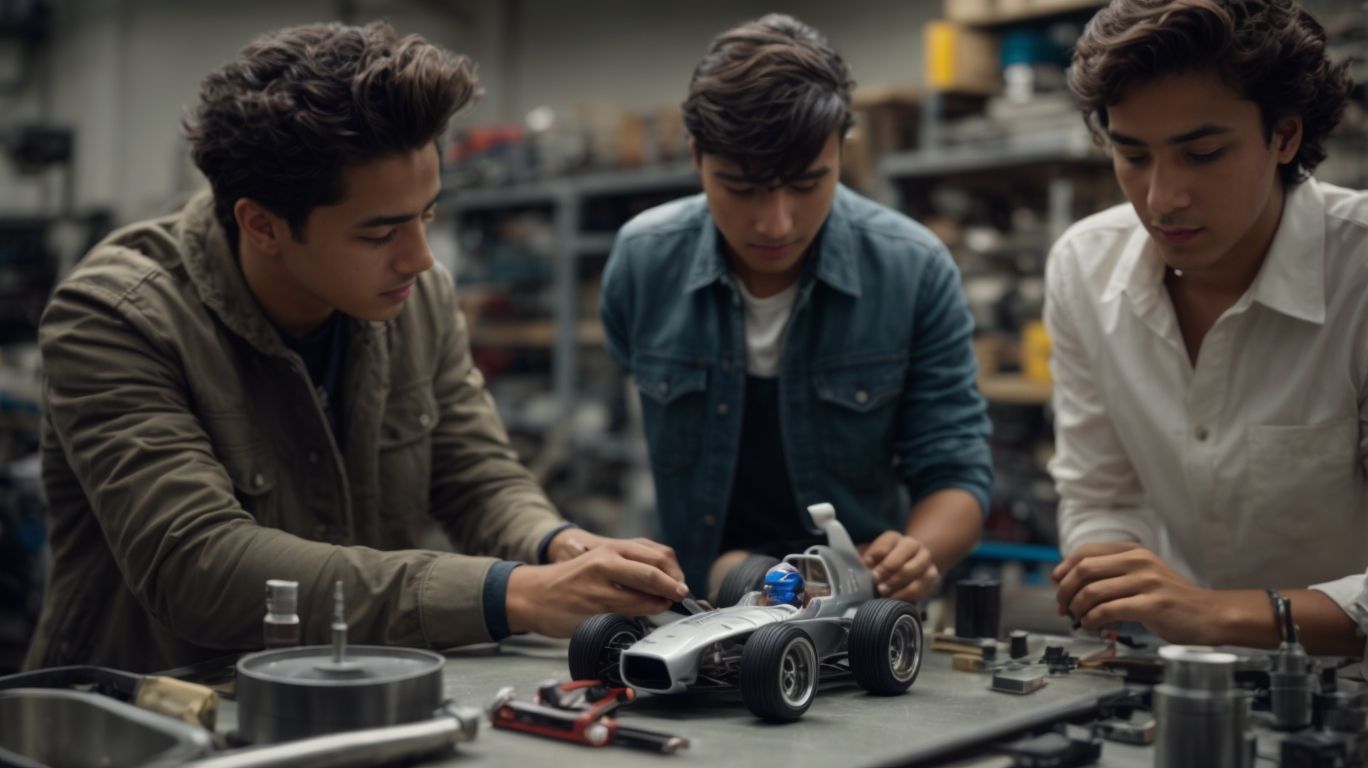
What Are F1 Schools?
Have you ever wondered what F1 Schools are all about?
We will explore the history, workings, benefits, and challenges of F1 Schools. From the design and construction phase to the race and presentation phase, we’ll take a closer look at how students are getting hands-on experience in engineering and technology.
Discover how schools can get involved, the future goals of F1 Schools, and hear some success stories of past world champions. Get ready to dive into the exciting world of F1 Schools!
Key Takeaways:
What Are F1 Schools?
F1 in Schools is a global STEM competition that challenges students to design and race miniature cars, fostering creativity and engineering skills.
The competitive nature of F1 in Schools drives students to push their limits in car design and engineering, honing their problem-solving abilities along the way. Teams work tirelessly to perfect their miniature cars, ensuring they meet strict performance and aerodynamic standards. This process not only emphasizes innovation but also cultivates valuable teamwork and project management skills.
History of F1 Schools
The History of F1 in Schools traces back to its inception by Andrew Denford, who founded Denford Ltd. and introduced the F1 Model Block, inspired by Formula 1 racing.
What started as a simple project in a UK classroom in the late 1990s soon evolved into a global educational program, fostering innovation and engineering skills among students worldwide. Denford’s vision to merge the thrill of F1 with educational activities revolutionized the way young minds approached STEM subjects. With the support of Formula 1, the competition gained momentum, attracting teams from different countries to compete in the challenging races to design and race miniature F1 cars.
How Does F1 Schools Work?
F1 in Schools operates through a series of phases involving designing, testing, and racing miniature cars, culminating in the World Finals where champions are crowned based on their CO2 cartridge-powered vehicles.
The regulations governing F1 in Schools ensure a level playing field for all competitors, setting strict guidelines for dimension, weight, and materials used in the construction of the miniature cars. The race track setup mirrors a professional F1 circuit, with tight turns, straights, and challenging elements to test the aerodynamics and performance of the vehicles. The World Finals, held annually, bring together the top teams from around the globe to compete for the prestigious title, attracting attention from industry professionals and potential sponsors seeking talent in engineering and design.
Design and Construction Phase
In the Design and Construction Phase of F1 Schools, students utilize advanced CAD/CAM design tools and software to create intricate designs for their miniature cars.
This phase marks the beginning of the students’ journey to transform their ideas into physical prototypes. CAD/CAM design tools enable them to visualize their concepts in a virtual environment before actual construction begins. By leveraging these technologies, participants can refine every detail, from aerodynamic elements to structural integrity, ensuring optimal performance on the racetrack.
The integration of CAD/CAM software streamlines the production process by providing precise measurements and specifications. It allows students to experiment with different design iterations and make informed decisions based on simulation results, enhancing their engineering skills and problem-solving abilities.
Testing and Development Phase
During the Testing and Development Phase, students fine-tune car features such as the front wing, rear wing, wheels, and cartridge chamber to optimize performance and aerodynamics.
Refining the front wing is crucial to enhance downforce and stability, ensuring the car hugs the track during high-speed cornering. At the rear, adjustments to the wing can impact overall grip and traction, vital for accelerating out of turns.
The wheels play a pivotal role in transmitting power to the track and require precise alignment and tire selection for optimal grip. Optimizing the cartridge chamber can improve fuel delivery efficiency and combustion, directly influencing engine performance and responsiveness.
Race and Presentation Phase
The Race and Presentation Phase of F1 Schools involves judging based on various criteria, including portfolio quality, pit display, verbal presentation, and racing performance.
During this phase, each team’s portfolio content is meticulously reviewed to assess the depth of research, design process, and innovative solutions presented. The pit display setup is scrutinized for its creativity, attention to detail, and alignment with the team’s branding. Verbal presentation skills play a crucial role as teams must effectively communicate their project journey, challenges faced, and engineering concepts to the judges. The actual racing performance on the track evaluates the car’s speed, design efficiency, and teamwork under pressure to secure a spot in the championship rounds.
What Are the Benefits of F1 Schools?
F1 Schools offer numerous benefits including opportunities for branding, marketing exposure, fostering teamwork skills, and enhancing STEM education programs.
Participating in F1 Schools opens doors to a global audience, providing exposure to diverse sponsors, media coverage, and a platform to showcase innovation. Collaborating with industry leaders in technology and engineering enhances participants’ problem-solving abilities and critical thinking skills. This hands-on experience translates into practical knowledge, preparing students for future careers in STEM fields. Engaging in the competition imbues students with leadership qualities and resilience, boosting their confidence and adaptability in challenging situations.
What Are the Challenges of F1 Schools?
While F1 Schools offer immense opportunities, challenges such as financial constraints, time limitations, and technical hurdles can pose obstacles for participating students.
Financial constraints often arise due to the high costs associated with materials, equipment, and competition fees, making it difficult for some students to fully engage in the program. Time management issues can also be a significant challenge as students juggle schoolwork, extracurricular activities, and F1 in Schools commitments, often leading to stress and burnout. Students may face technical challenges related to designing, testing, and optimizing their miniature F1 cars, requiring a deep understanding of engineering principles and problem-solving skills.
Financial Constraints
Financial Constraints in F1 Schools can be mitigated through partnerships with sponsors who provide essential funding for students to participate in the competition.
Securing financial support is crucial for the sustainability of teams in F1 in Schools, as the costs associated with designing, building, and racing a Formula One car can be substantial. Through strategic partnerships with sponsors, teams gain access to not only financial resources but also mentorship, industry expertise, and networking opportunities that are invaluable in enhancing their skillsets and project outcomes.
Sponsors play a pivotal role in elevating the overall experience for students by enabling them to compete on a level playing field with access to state-of-the-art technology, training workshops, and international competitions.
Time Constraints
Time Constraints in F1 Schools necessitate effective project management, adherence to deadlines, and structured schedules to ensure the successful completion of tasks within the designated timeframes.
These challenges can be particularly daunting in the high-pressure environment of F1 in Schools where students must juggle multiple tasks and goals simultaneously. To tackle these time constraints, students can implement various strategies such as utilizing project management software to track progress, setting clear deadlines for each milestone, and creating a detailed schedule outlining each step of the project.
By employing these techniques, students can stay organized, prioritize tasks efficiently, and mitigate the risks of delays or oversights. Fostering effective communication within the team and conducting regular progress meetings can also help in maintaining a steady pace of work and ensuring timely project completion.
Technical Challenges
Technical Challenges in F1 Schools revolve around adhering to regulations, meeting specifications, and implementing sound engineering principles to develop innovative and competitive miniature cars.
One of the key hurdles students face is ensuring that their designs comply with the strict size and weight restrictions outlined in the competition regulations. Striking a balance between aerodynamics and structural integrity becomes crucial in enhancing performance on the racetrack.
The requirement to utilize standardized components while still pushing the boundaries of creativity poses a significant challenge. Students must apply their understanding of engineering concepts such as material science and fluid dynamics to optimize their car’s design.
How Can Schools Get Involved in F1 Schools?
Schools can participate in F1 Schools by registering teams and engaging with universities like UCL, University of Huddersfield, and City, University of London to access resources and support.
Once a school has made the initial step of registering teams for F1 in Schools, the next vital action is establishing partnerships with renowned educational institutions. Universities play a crucial role in providing students with access to advanced technologies, expert guidance, and additional learning opportunities.
For instance, the University College London (UCL) not only offers technical support and mentorship but also provides access to sophisticated equipment and facilities necessary for F1 in Schools projects. Similarly, collaborating with prestigious universities like the University of Huddersfield and City, University of London can significantly boost the competitive edge of school teams by fostering innovation and skill development.
Registering a Team
Registering a Team for F1 Schools involves introducing students or school children to key concepts of the competition and preparing them for the upcoming competitions.
One crucial aspect of the registration process is selecting a team name that reflects the identity and spirit of the group. The team will also need to appoint roles such as team manager, design engineer, manufacturing engineer, graphic designer, and marketing manager to ensure smooth operation during the competition.
Understanding the rules and regulations governing the F1 in Schools competition is paramount. This includes adhering to weight restrictions, design specifications, and safety guidelines to ensure fair play and competitive integrity.
Finding Sponsors
Finding Sponsors for F1 Schools involves building partnerships with companies like Airbus, Aramco, and Bloodhound SSC to secure financial backing and resources for the competition.
These collaborations play a critical role in providing the necessary funding and technical support to ensure the success of F1 in Schools programs worldwide. By aligning with industry leaders such as Airbus, Aramco, and Bloodhound SSC, student teams gain access to top-tier resources and mentorship opportunities. This not only elevates the competition’s standard but also opens doors for aspiring engineers and innovators to network with professionals in the field.
- Partners like Airbus bring expertise in aerodynamics and engineering, enriching the educational experience for participants.
- Meanwhile, Aramco’s involvement offers insights into sustainable energy solutions and environmental practices, enhancing the competition’s focus on innovation and sustainability.
- Collaborations with entities like Bloodhound SSC provide students with hands-on experience in high-speed technology and inspire a passion for engineering excellence.
Attending Regional and National Competitions
Attending Regional and National Competitions in F1 Schools provides students with exposure to industry experts, opportunities to collaborate with organizations like FIA, Formula Student, and Jaguar, and experience racing at renowned venues like Silverstone Circuit.
Participating in these competitions not only allows students to showcase their engineering and design skills but also opens doors to potential career opportunities in the motorsport industry. The chance to interact directly with professionals from various fields within the F1 ecosystem can give a unique perspective on the workings of this high-paced and dynamic industry. Engaging with established organizations such as FIA, Formula Student, and Jaguar provides insight into the latest trends, technologies, and innovations driving the future of automotive engineering.
What Are the Future Goals of F1 Schools?
The Future Goals of F1 Schools include leveraging technology advancements, adapting to challenges like the COVID-19 pandemic, producing future World Champions, and enhancing the prestige of trophies awarded in the competition.
By embracing technological innovations, F1 in Schools aims to create a cutting-edge learning environment where students can apply STEM principles to real-world scenarios. Navigating through obstacles such as the global pandemic has pushed the program to explore virtual platforms, online collaborations, and remote competitions, ensuring continuity and growth amidst uncertainty.
The ultimate objective is to nurture the next generation of World Champions, providing them with the skills, knowledge, and experience to excel in the competitive realm of Formula 1. This focus on talent development aligns with the broader goal of elevating the significance of competition trophies, highlighting the achievements and dedication of student teams across the globe.
What Are the Success Stories of F1 Schools?
The Success Stories of F1 Schools feature notable achievements by teams from institutions like UCL, University of Huddersfield, and City, University of London, showcasing the impact of the competition on students and STEM education.
For instance, UCL’s F1 in Schools team ‘Velocity’ not only clinched the top spot in the National Finals but also went on to compete in the World Finals, impressing judges with their innovative designs and engineering prowess. The University of Huddersfield team ‘Quantum Racing’ made waves by developing a groundbreaking aerodynamic system, earning accolades for their commitment to excellence and creativity in the competition. Similarly, City, University of London’s team ‘Velocity Racing’ has consistently pushed boundaries, demonstrating the intersection of technology, teamwork, and determination in the F1 in Schools arena.
Past World Champions
Past World Champions of F1 Schools have demonstrated exceptional skills and innovation, earning prestigious trophies and accolades for their achievements in the competition.
These talented individuals showcased exemplary teamwork, precision engineering, and strategic thinking, setting new benchmarks in the F1 in Schools realm.
Their ability to combine speed with design prowess led to groundbreaking advancements in aerodynamics and materials science, revolutionizing the competition landscape.
Their dedication and perseverance paid off, as they triumphed over fierce rivals to claim the coveted championship titles, solidifying their status as legends in the F1 in Schools community.
The recognition and accolades they received served as a testament to their hard work and creativity, inspiring future generations of competitors to aim for greatness.
Impact on STEM Education
F1 Schools have made a significant Impact on STEM Education by engaging students in hands-on projects, fostering critical thinking, problem-solving skills, and encouraging participation in programs offered by institutions like City, University of London.
The involvement of students in these practical projects goes beyond the traditional classroom setting, allowing them to apply theoretical knowledge to real-world scenarios.
- Through this engagement, students develop critical thinking abilities, enhance problem-solving skills, and gain valuable experience in STEM fields.
- Initiatives like F1 in Schools foster a culture of innovation and teamwork, essential skills for future success in STEM-related careers.
Partnerships with Formula 1 Teams
Partnerships with Formula 1 Teams in F1 Schools offer students access to cutting-edge technology, insights from industry experts, and opportunities to explore the realms of engineering within the competitive environment of the sport.
Formula 1 Teams act as mentors, providing guidance and expertise that go far beyond textbooks and classroom teaching. Students get a taste of real-world applications of their theoretical knowledge, as they work alongside professionals honing their skills and understanding intricacies of aerodynamics, materials science, and vehicle dynamics. The collaboration creates a unique blend of theoretical learning and hands-on experience which is both inspiring and educational for the young minds involved.
Frequently Asked Questions
What Are F1 Schools?
F1 Schools is a global educational program that teaches students about the world of Formula 1 racing through hands-on projects and challenges.
How does F1 Schools work?
Students form teams and are given a set budget to design, build, and race miniature Formula 1 cars. They also create a business plan and marketing campaign for their team.
Who can participate in F1 Schools?
F1 Schools is open to students aged 9-19 from around the world. It is a great opportunity for students interested in engineering, design, and business.
How does F1 Schools promote STEM education?
By engaging students in hands-on projects and challenges, F1 Schools encourages an interest in science, technology, engineering, and math (STEM) subjects.
What are the benefits of participating in F1 Schools?
F1 Schools helps students develop valuable skills such as teamwork, project management, and problem-solving. It also offers opportunities for networking and mentorship.
Is F1 Schools only for students interested in racing?
No, F1 Schools is open to all students, regardless of their interest in racing. The program focuses on teaching skills that can be applied in a variety of industries.