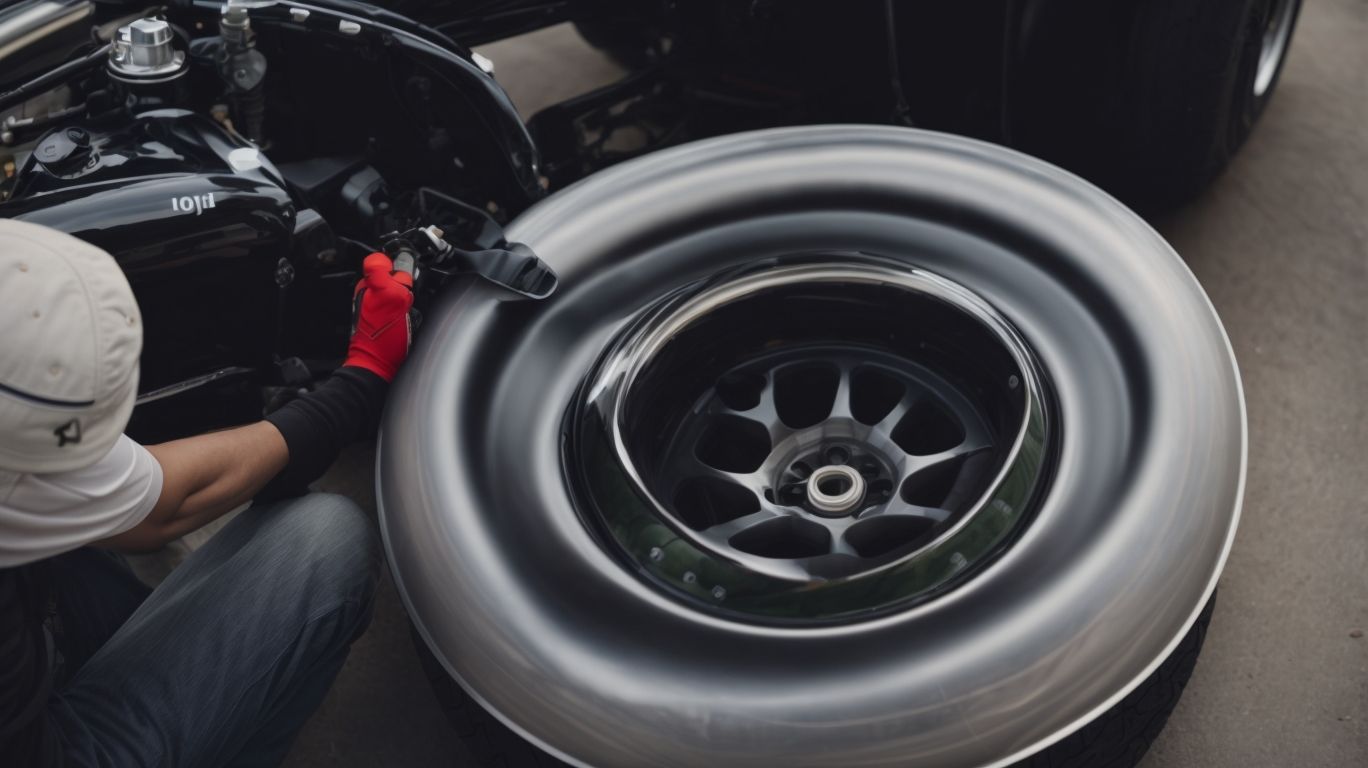
Can You Put F1 Wheels on Any Car?
Have you ever wondered what sets F1 wheels apart from regular car wheels? From the materials used to the design and size, F1 wheels are truly unique.
But can you put F1 wheels on any car? We will explore the challenges and benefits of using F1 wheels on a regular car.
Discover how you can customize your car with F1 wheels for improved performance, better handling, and enhanced aesthetics.
Key Takeaways:
What Are F1 Wheels?
F1 Wheels refer to the specialized wheels used in Formula 1 racing vehicles, designed to meet the rigorous demands of high-speed racing.
These cutting-edge wheels are meticulously crafted with lightweight materials such as carbon fiber and magnesium alloys to ensure maximum performance on the track. The construction of F1 wheels involves intricate engineering to minimize weight while maintaining strength and durability. One unique feature of these wheels is their quick-release mechanisms that enable rapid tire changes during pit stops, allowing for minimal downtime on the track. The aerodynamic design of F1 wheels plays a crucial role in enhancing the overall performance of the racing car by reducing drag and improving stability at high speeds.
What Makes F1 Wheels Unique?
F1 Wheels stand out due to their advanced materials, lightweight construction, and aerodynamic design tailored for optimal performance on the racetrack.
These cutting-edge wheels are meticulously engineered to withstand the high speeds and rigorous demands of Formula 1 racing. What sets them apart is their ability to provide exceptional grip and cornering capabilities, enhancing the overall handling of the race car.
The use of carbon fiber and other composite materials ensures a perfect balance between strength and weight, allowing for swift acceleration and improved fuel efficiency on the circuit. Their precise construction minimizes rotational inertia, contributing to quicker steering response and greater stability during cornering.
Material
F1 Wheels are typically crafted from high-strength lightweight materials such as carbon fiber and aluminum alloys to ensure strength, durability, and reduced rotational mass.
Carbon fiber, a highly sought-after material in Formula 1 wheel construction, boasts exceptional strength-to-weight ratio, offering rigidity without adding unnecessary bulk. This advanced composite material not only enhances the wheel’s performance by reducing weight but also contributes significantly to the overall structural integrity of the wheel.
On the other hand, aluminum alloys play a crucial role in providing robustness and resilience to the wheels, ensuring they can withstand the immense forces and stresses experienced during high-speed racing.
The combination of these materials results in wheels that are not only lightweight for improved acceleration and cornering but also strong enough to endure the demanding conditions of Formula 1 racing circuits.
Size and Weight
The size and weight of F1 Wheels are meticulously optimized to balance agility, responsiveness, and overall vehicle performance, with precise measurements and lightweight components.
In Formula 1, the size of the wheels directly influences how the car handles around corners and accelerates on straights. Wheels that are too large may increase rotational inertia, affecting the car’s ability to quickly change direction. On the other hand, wheels that are too light can lead to reduced stability, potentially compromising top speed and overall control.
The weight distribution of F1 wheels plays a critical role in aerodynamics, affecting the airflow around the car. By strategically placing the weight in specific areas of the wheel, engineers can optimize the vehicle’s overall balance, grip, and downforce levels, enhancing overall performance on the track.
Design
The aerodynamic design of F1 Wheels plays a crucial role in reducing drag, enhancing cooling, and improving overall vehicle stability during high-speed maneuvers on the track.
One key aspect of F1 wheel design is the incorporation of intricate airflow management features to manipulate how air flows around and through the wheels. This design optimization is essential for minimizing aerodynamic drag and increasing downforce, crucial for maintaining grip and control at high speeds.
Heat dissipation is another critical consideration in F1 wheel engineering. The wheels need to efficiently dissipate the heat generated from intense braking and cornering forces to prevent overheating, which could lead to tire degradation and performance issues.
Can You Put F1 Wheels on Any Car?
While technically possible, installing F1 Wheels on a regular car presents several challenges due to compatibility issues, cost considerations, and the need for significant modifications.
Compatibility is a key hurdle since F1 wheels usually have specialized dimensions and bolt patterns that may not align with standard car hubs. You may need adapters or custom modifications to make them fit seamlessly.
Expenses add another layer of complexity as F1 wheels are engineered for high-performance racing and come with a hefty price tag, far beyond what you’d pay for regular aftermarket wheels.
Substantial modifications to the suspension, brakes, and fenders might be necessary to accommodate the larger size and unique geometry of F1 wheels. This can lead to increased labor costs and potentially void warranties on certain components.
What Are the Challenges of Putting F1 Wheels on a Regular Car?
The challenges of installing F1 Wheels on a regular car include ensuring compatibility with the vehicle’s specifications, bearing the high costs associated with F1 components, and undertaking extensive modifications for proper fitment.
When attempting to mount F1 Wheels on a standard vehicle, one quickly realizes the substantial differences in dimensions and technical requirements between these high-performance racing components and typical road car setups. Ensuring that the wheels align with the suspension geometry, brake clearance, and overall dynamics of the car becomes a meticulous task. The financial implications are significant, as F1 wheels are crafted with cutting-edge materials, engineering precision, and advanced technologies that command a premium price tag. Custom alterations are often unavoidable, demanding skilled labor and specialized tools to achieve the desired fitment without compromising safety or performance.
Compatibility
The primary obstacle to using F1 Wheels on a regular car is the compatibility issue, as the intricate design and dimensions of F1 Wheels may not align with the standard wheel hubs and suspension systems of most vehicles.
When integrating these high-performance wheels with a standard vehicle, technical challenges arise. The aerodynamics and lightweight construction of F1 Wheels demand precise fitment to ensure optimal performance and safety.
Ensuring proper alignment, clearance, and load-bearing capacity becomes crucial. The unique requirements of F1 Wheels can put strain on regular components, affecting handling, braking, and overall driving experience.
Automotive engineers face the task of adapting the suspension geometry and wheel arches to accommodate the larger diameter and width of F1 Wheels without compromising the vehicle’s stability or structural integrity.
Cost
The high cost of F1 Wheels and associated components makes their installation on a regular car a prohibitive venture for many enthusiasts, considering the premium pricing and exclusivity of Formula 1 technologies.
These F1 Wheels are meticulously engineered using advanced materials and manufacturing processes to ensure high performance and precision on the racetrack. The integration of such cutting-edge technology into a regular vehicle requires significant modifications and adjustments, which can substantially increase the overall expenses involved in the conversion process.
The maintenance and upkeep of F1 Wheels on standard road conditions may prove to be challenging and costly due to the wear and tear associated with everyday driving. This further emphasizes the luxury and specialized nature of Formula 1 engineering, making it a premium choice for only the most dedicated automotive enthusiasts.
Modifications
Extensive modifications to the suspension, braking system, and wheel wells are necessary when installing F1 Wheels on a regular car to ensure proper clearance, alignment, and performance compatibility.
When transitioning from standard wheels to F1 Wheels, the suspension geometry needs to be adjusted to accommodate the larger size and different weight distribution. This involves tweaking the camber, toe, and caster angles to optimize handling and stability on the road.
The brake systems must be upgraded to handle the increased speeds and forces associated with F1 Wheels. High-performance brake calipers, rotors, and pads are essential to ensure efficient braking performance without compromising safety.
In terms of bodywork modifications, the wheel wells may need to be enlarged or reshaped to prevent tire rubbing and allow sufficient space for the F1 Wheels to articulate smoothly when turning or going over bumps.
What Are the Benefits of Using F1 Wheels on a Regular Car?
Using F1 Wheels on a regular car can lead to improved performance, enhanced handling, and a distinctive aesthetic appeal that sets the vehicle apart from conventional models.
When integrated into a standard vehicle, these high-performance wheels, known for their lightweight construction and advanced aerodynamics, can significantly enhance acceleration, braking, and overall driving dynamics. The reduced unsprung weight of F1 wheels translates to better responsiveness and agility on the road, allowing for quicker maneuvering around corners and better control at high speeds.
The sleek design and futuristic look of F1 wheels not only add a touch of sportiness but also give the car a unique and eye-catching appearance. This visual upgrade can elevate the overall aesthetics of the vehicle, making it stand out in a sea of ordinary cars.
Improved Performance
The utilization of F1 Wheels on a regular car can result in enhanced performance metrics, such as acceleration, braking efficiency, and cornering capabilities, due to the advanced engineering and lightweight properties of Formula 1 components.
By incorporating F1 Wheels onto a standard vehicle, drivers can experience a significant reduction in unsprung weight, leading to improved road holding and responsiveness.
These specialized wheels often feature cutting-edge materials like carbon fiber that enhance strength while maintaining a feather-light construction, enabling quicker changes in direction and enhanced overall agility.
This lighter wheel setup also reduces rotational inertia, translating into quicker acceleration and deceleration, ultimately elevating the vehicle’s performance potential on both straightaways and winding roads.
Better Handling
The adoption of F1 Wheels on a regular car can enhance handling precision, steering responsiveness, and overall stability, providing drivers with a more engaging and dynamic driving experience on various road conditions.
These specialized F1 Wheels are designed to optimize performance through their lightweight construction and aerodynamic properties, allowing for quicker acceleration and sharper cornering abilities.
The reduced unsprung mass of the F1 Wheels improves suspension responsiveness, translating to better steering feedback and enhanced control over the vehicle’s movements.
The increased grip levels offered by F1 Wheels enhance the road-holding capabilities of the car, enabling drivers to push the limits with confidence while maintaining stability at high speeds.
Enhanced Aesthetics
The visual appeal of F1 Wheels on a regular car elevates its aesthetic profile, giving the vehicle a sportier, more aggressive look that captures attention and showcases a distinct automotive style.
These wheels, with their sleek design and lightweight construction, not only enhance the appearance but also improve the performance and handling of the car. The aerodynamic efficiency and racing-inspired technology that come with F1 wheels add a touch of sophistication and exclusivity to any vehicle they are fitted on.
The distinctive design elements, such as the intricate spoke patterns and bold finishes, ensure that the car stands out from the crowd, making a strong statement about the owner’s passion for automotive styling.
How Can You Put F1 Wheels on a Regular Car?
Installing F1 Wheels on a regular car requires customization through specialized conversion kits or professional installation services to ensure proper fitment, alignment, and performance optimization.
Customizing a vehicle with F1 Wheels involves various steps to achieve that sleek, high-performance look. Conversion kits specifically designed for this purpose are available in the market, allowing enthusiasts to make this advanced upgrade. For those not confident in their DIY skills, seeking professional assistance from skilled technicians is advisable. These experts possess the know-how to securely mount and align the wheels, minimizing the risk of any issues down the road. By opting for customization, car owners can significantly enhance the aesthetics and handling of their vehicle.
Customization
Customizing a regular car for F1 Wheel installation involves tailored modifications to the chassis, suspension, and bodywork to accommodate the unique dimensions and mounting requirements of Formula 1 wheels.
These modifications go beyond mere aesthetic changes, delving deep into the performance realm. The chassis may need reinforcement to withstand the increased stresses from the high-performance wheels. Suspension tuning becomes crucial to maintain stability and responsiveness at high speeds typical of F1. Alignment adjustments are crucial to ensure optimal handling and tire wear. Structural enhancements, like roll cage installation, may be necessary for safety compliance. Customizing a car for F1 Wheels is a meticulous process that requires expertise and attention to detail.
Conversion Kits
Conversion kits designed for F1 Wheel installations on regular cars provide comprehensive solutions that include compatible components, hardware, and instructions for a seamless and effective transformation.
These conversion kits cater to the rising demand among automotive enthusiasts to experience the high-performance feel of F1 racing wheels on their everyday vehicles. Within the package, essential components such as hub adapters, quick-release mechanisms, paddle shifters, and wiring harnesses are typically included. Detailed instructions and diagrams are also part of the kit, guiding users through the installation process step by step. Users are required to have basic mechanical knowledge and access to standard tools to successfully complete the conversion.
Professional Installation
Seeking professional installation services for F1 Wheels on a regular car ensures precision fitting, alignment accuracy, and performance optimization, with expert technicians handling the intricate process of upgrading wheel components.
Professional installation not only guarantees a secure fit but also ensures that the F1 Wheels are aligned correctly with the suspension system, enhancing safety and stability on the road. Expert technicians bring a wealth of experience and knowledge to the table, allowing them to identify and address any potential issues during the installation process swiftly. This attention to detail not only improves the overall performance of the vehicle but also extends the lifespan of the F1 Wheels by minimizing wear and tear.
Frequently Asked Questions
Can you put F1 wheels on any car?
Yes, you can put F1 wheels on any car. However, there are certain factors to consider before doing so, such as wheel size and compatibility.
What size F1 wheels are compatible with most cars?
F1 wheels are typically 13 inches in diameter, but they can vary depending on the car. It is important to check the wheel size and compatibility before attempting to put F1 wheels on your car.
Will putting F1 wheels on my car affect its performance?
Yes, putting F1 wheels on your car can affect its performance. F1 wheels are designed for high-speed racing and may not be suitable for everyday use. They may also alter the handling and braking of your car.
Can I use F1 wheels on my street-legal car?
Technically, yes, you can use F1 wheels on your street-legal car. However, it is not recommended as they may not be street-legal or safe for everyday driving.
Do I need any special equipment to put F1 wheels on my car?
Yes, you will need special equipment such as adapters and spacers to fit F1 wheels on your car. It is important to consult a professional mechanic before attempting to do so.
Will putting F1 wheels on my car void my vehicle’s warranty?
It is possible that putting F1 wheels on your car may void your vehicle’s warranty. It is best to check with your manufacturer before making any modifications to your car.